Decanting is two different jobs
They get talked about as one thing, and they are opposites.
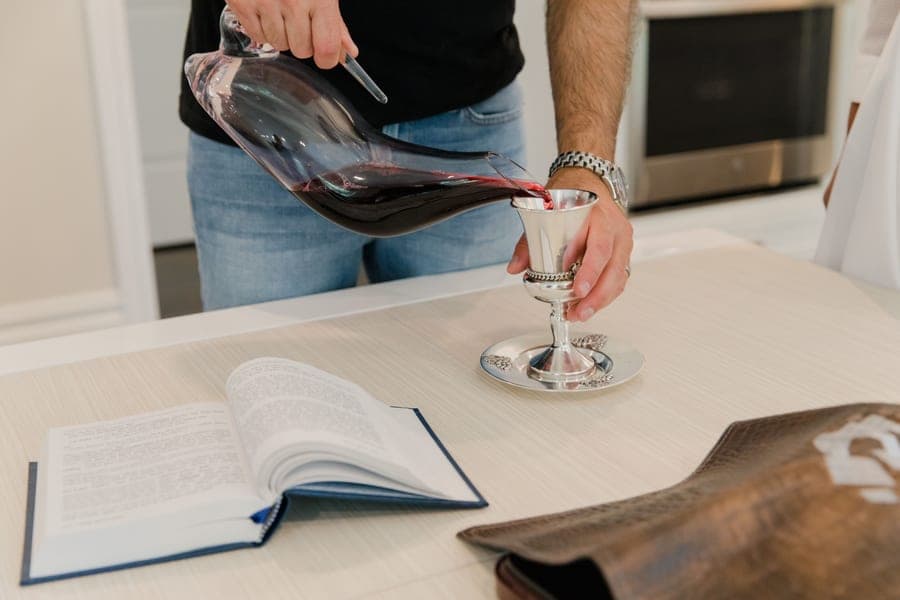
Separating sediment. An older red throws a deposit. Decanting means pouring the wine off that deposit carefully and completely, leaving the sediment in the bottle. Here air is incidental — an old wine can be fragile, and too much air can flatten it. You want control.
Aerating. A young, tannic, closed red opens up on contact with oxygen. Here air is the entire point. You want surface area, and you are not worried about being gentle.
One decanter can do both adequately. But the shapes that do each job best are different, which is why these two Riedel pieces are both here.
Why the shape follows the job
The Riedel Cabernet Decanter is the sediment decanter: a shape that gives you a controlled, steady pour so you can stop at exactly the moment the deposit reaches the neck. That control is the whole skill of decanting an old bottle.
The Riedel Ultra Decanter is the aerator: a wide base spreads the wine thin and exposes far more of it to air, so a young closed red opens faster. On a genuinely tight young wine the difference over half an hour is not subtle.
A practical note on both: a wide-based decanter is harder to clean and much harder to dry, which is the real-world cost of all that surface area.
Which wines actually need it
Most wine does not need decanting, and saying so is more useful than selling you glassware.
If you decant an old bottle, stand it upright for a day first so the sediment settles to the base, and pour in one continuous motion against the light. Storing bottles horizontally is otherwise correct — flat or upright covers why, including this exception.
The unglamorous part: drying it
Nobody mentions this before you buy a decanter and everybody discovers it afterward. A decanter is a large glass vessel with a narrow neck, and getting it dry is genuinely awkward. Put it away damp and you get water spots, or worse a musty note that will taint the next bottle.
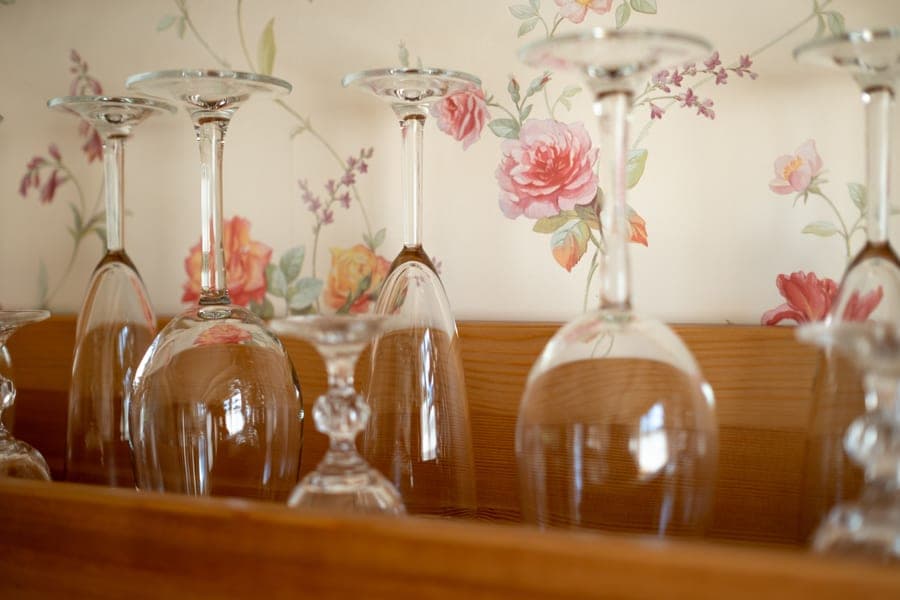
Which is why the Oenophilia Fusion Stemware & Decanter Rack is on this page alongside two decanters. It holds sixteen glasses and gives you somewhere to invert the decanter to drain and dry. It is the least exciting item here and the one you would use every single time.
Rinse with hot water and no detergent — detergent residue in a narrow-necked vessel is hard to remove and shows up in the wine. Then invert and let it drain. More under-cabinet options are in under-cabinet racks.