Choose metal for maximum capacity in minimum space, for wall mounting, and for anywhere damp - it takes more load per unit of material and does not move with humidity. Choose wood where the rack is furniture, where bottles go in and out constantly, and where a slightly softer cradle protects labels.
How this page is funded. Cork & Cool earns a commission if you buy through the Amazon links below, at no extra cost to you. It never changes the order of this list — see our editorial policy and affiliate disclosure. We do not publish prices, because a stale number helps nobody.
Our picks
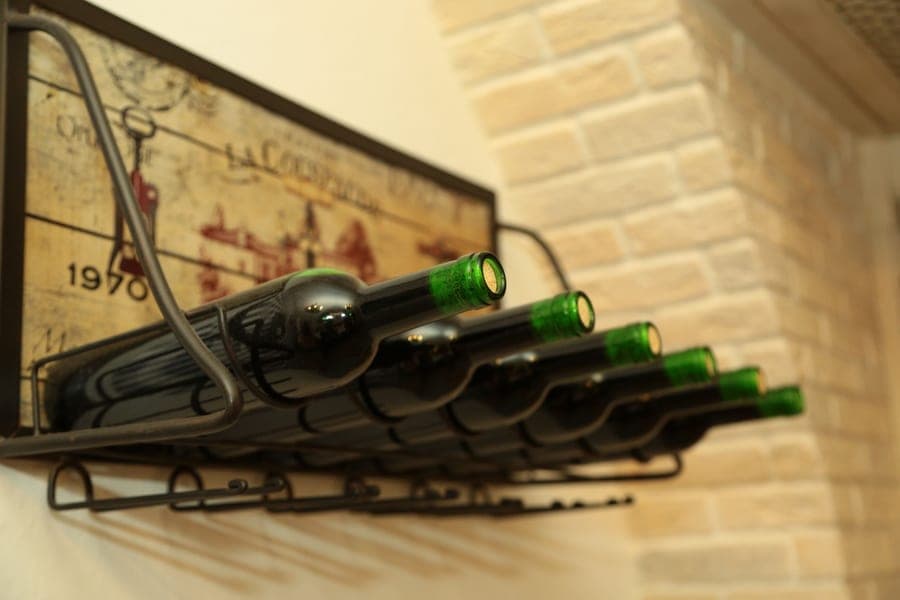
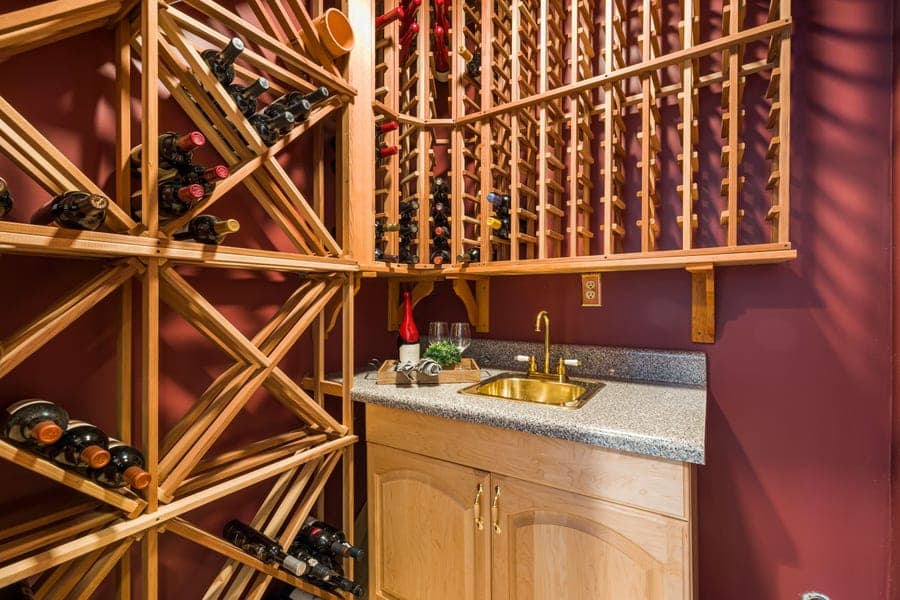
The cleanest illustration available: two Sorbus wall racks that hold the same nine bottles, one in mahogany and one in welded metal. The Halfpipe and the 150-bottle floor rack show how the same trade-offs play out at countertop and cellar scale.
How this page is funded. Cork & Cool earns a commission if you buy through the Amazon links below, at no extra cost to you. It never changes the order of this list — see our editorial policy and affiliate disclosure. We do not publish prices, because a stale number helps nobody.
#1 — Arranging around a doorway
Sorbus Wall Mounted Wood Wine Rack (set of 3)
Three separate three-bottle units in a mahogany finish, so the layout is yours rather than the manufacturer's.
Illustrative photograph — not an image of the Sorbus Wall Mounted Wood Wine Rack (set of 3).
Bottles sit horizontal, keeping corks in contact with wine
What does not
Needs studs or proper anchors — nine full bottles is roughly 25 lb
Open racking gives no protection from light
Who should skip it. Skip it if the wall gets direct sunlight. Light is a real wine fault mechanism and an open wall rack offers none of the UV glass a cabinet does.
Cost per bottle stored is a fraction of any powered cabinet
Labels stay readable, so you can actually find a bottle
No power, no compressor, nothing to fail
What does not
No temperature control, no humidity control, no UV protection — the room does all of that or nothing does
150 full bottles is roughly 400 lb; the floor has to take it
Who should skip it. Skip it if the room swings more than a few degrees across the year, or gets above the mid-60s°F in summer. A rack in the wrong room ages wine faster than no rack at all.
Metal wins, clearly. Steel or iron carries far more load per unit of material than wood, so a metal rack holds the same bottles in thinner sections — more capacity in the same footprint, or the same capacity in something visually lighter.
The construction method matters more than the material here, and it is the specification most buyers overlook. The Sorbus metal wall rack is welded rather than bolted, which means its joints cannot work loose as the load shifts. Bolted racks — in any material — can, and a rack that loosens while holding glass on a wall is the failure you do not want. Where a listing states welded construction, that is worth more than any finish.
Humidity, which only affects one of them
Wood is hygroscopic: it takes up and gives off moisture with the air around it, and it moves as it does. In a stable interior room that movement is invisible and irrelevant. In a damp basement, a garage or an unheated outbuilding, it is not — joints loosen over years, finishes lift, and in genuinely damp conditions untreated wood can develop mold.
Metal does not care about humidity in the same way. It can corrode in wet conditions, but a powder-coated or painted steel rack in a normal basement will simply sit there. So: damp or unconditioned space, choose metal. This matters most for exactly the rooms that are otherwise ideal for wine — basements are cool and stable and often humid. What humidity does to the wine itself is a separate question, covered in wine fridge humidity.
What happens to your labels
The trade-off nobody mentions, and the reason wood persists in a category where metal is mechanically better.
Bare metal is harder than glass and much harder than paper. Slide a bottle in and out of a metal cradle a few dozen times and the label scuffs — a real irritation on bottles you are keeping, and worse on anything whose label you care about. Wood is softer and cradles the bottle over a wider contact area, so it is gentler. Coated or padded metal racks narrow the gap, but bare iron does not.
So the rule of thumb: bottles that move constantly favor wood; bottles that sit still favor metal. A countertop rotation rack in metal is fine, because those bottles get opened. A long-term rack holding wine you will move in and out over years has a case for wood.
Deciding
Wood or metal, by situation
Your situation
Choose
Why
Maximum bottles in minimum space
Metal
More load per unit of material, thinner sections
Wall-mounted
Metal, welded if possible
Load concentrated at fixings; welded joints cannot loosen
A damp basement or unconditioned room
Metal
Wood moves with humidity; metal does not
The rack is furniture in a living space
Wood
Reads warmer; the mahogany set looks like joinery, not shelving
Bottles in and out constantly
Wood
Softer, wider contact area — kinder to labels
A countertop rotation rack
Either
These bottles get opened; label wear is irrelevant
And one thing neither material changes: a rack of any kind inherits the room’s climate. If the room is the problem, the material is not the answer — rack vs fridge is the page you want.
Questions people actually ask
▸ Are wooden or metal wine racks better?
Metal for capacity, wall mounting and damp rooms; wood where the rack is furniture or where bottles move in and out often enough for label wear to matter. Neither is better in the abstract.
▸ Do metal wine racks scratch labels?
Bare metal can, over many insertions, because it is harder than paper and contacts the bottle over a narrow area. Coated or padded racks are much gentler; wood is gentlest.
▸ Can I use a wooden wine rack in a basement?
If the basement is dry, yes — and basements are otherwise excellent for wine, being cool and stable. If it is damp, wood will move over time and can develop mold. Choose metal for a damp space.
▸ Does welded or bolted construction matter?
More than the material. Welded joints cannot work loose as the load shifts; bolted ones can. On a wall-mounted rack holding glass, that is the specification to look for.