This hub exists because of a gap. We fetched nine competitors while researching this site and not one of them has a dedicated page on installation or clearance — even though “under counter wine fridge” is one of the highest-value searches in the whole category. The most expensive mistake a buyer can make here is also the least-documented one, so we documented it.
The mistake: enclosing a freestanding unit
Freestanding and built-in wine cabinets look nearly identical from the front. They are not the same appliance. A freestanding unit vents its heat out of the back or the sides and needs open air around it. A built-in unit vents forward, through a grille at the base or the top of the door, so it can sit inside a sealed cabinet opening with no gap behind it.
Put a freestanding unit into a tight cabinet opening and the heat it is trying to reject has nowhere to go. The compressor runs longer and longer against rising trapped-air temperature, the cabinet never reaches its set point, and the compressor eventually fails. Manufacturers exclude exactly this from warranty coverage, which tells you how often it happens. Our page on built-in versus freestanding answers the question directly, and the ventilation and clearance guide covers what each installation type actually needs.
Three numbers, measured in this order
Width. A “24-inch” cabinet is a category, not a measurement. Real units in that class range from about 23.4 inches to a full 24, and several publish a second, larger figure that includes the handle. If your opening is exactly 24 inches, a 24-inch unit does not fit — you need the unit width plus the manufacturer’s side clearance.
Depth. This is where undercounter projects actually fail. Standard base cabinetry is about 24 inches deep, but that space is also carrying the counter overhang, and if there is plumbing or a gas line at the back, usable depth drops fast. Summit’s ASDW2412 is under 18 inches deep for exactly this reason, and shallow-depth units are worth knowing about before you assume you have no options.
Height. Undercounter height is not one number either. A standard US counter sits at 36 inches with a 1.5-inch worktop, so the opening is typically around 34 inches. ADA-compliant counters are lower. Units that adjust — legs plus a sliding kickplate cover — work in both, and units that do not will leave you with a gap or, worse, a unit that does not go in. The dimensions guide lays out the measurements to take before you order.
Panel-ready, and when it is worth it
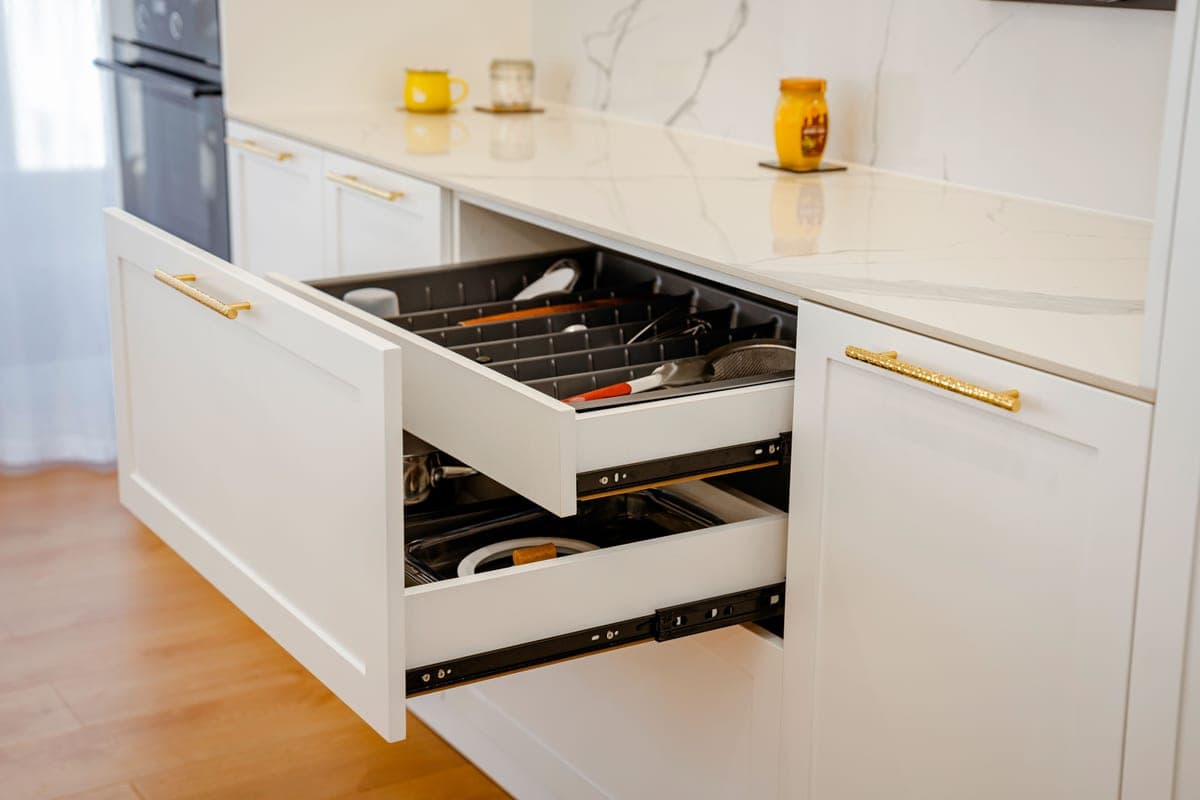
Some undercounter units are sold panel-ready: they accept a custom door front so the appliance disappears into the cabinet run. That is a real aesthetic upgrade in a finished kitchen and a complete waste of money in a garage or a utility room, where nobody sees the door and the extra spend buys you nothing functional.
Panel-ready also means a second purchase. The door panel is made by your cabinetmaker, not the appliance manufacturer, so budget for it and get the appliance dimensions to them before anything is cut.
What you give up by going built-in
Built-in cabinets are usually the same external size as freestanding ones but hold slightly fewer bottles, because forward venting takes internal volume. They are also harder to service: pulling a unit out of a cabinet run is a different job from wheeling one away from a wall. And because they are sized to cabinetry rather than to rooms, the range of available capacities is narrower.
None of that is a reason not to do it. A built-in unit in a properly measured opening is the best-looking and quietest way to store wine in a kitchen. It just needs the measuring done first.