No. Published draws for cabinets on this site run from 65 W for a small thermoelectric unit to 160 W for a 164-bottle compressor cabinet - and neither runs continuously at that figure. Your actual cost depends on duty cycle, which depends on the room, and on your own electricity rate.
This page sits in Wine Storage Guides, where the rest of the category is compared the same way.
How this page is funded. Cork & Cool earns a commission if you buy through the Amazon links below, at no extra cost to you. It never changes the order of this list — see our editorial policy and affiliate disclosure. We do not publish prices, because a stale number helps nobody.
Our picks
These are the four cabinets on this site whose manufacturers publish a rated power draw. Everywhere else in the category the figure is simply not published, and we are not going to estimate one.
How this page is funded. Cork & Cool earns a commission if you buy through the Amazon links below, at no extra cost to you. It never changes the order of this list — see our editorial policy and affiliate disclosure. We do not publish prices, because a stale number helps nobody.
#1 — Silence in a quiet room
Whynter WC-201TD
Twenty bottles cooled thermoelectrically, so there is no compressor to cycle and nothing to transmit vibration into the bottles.
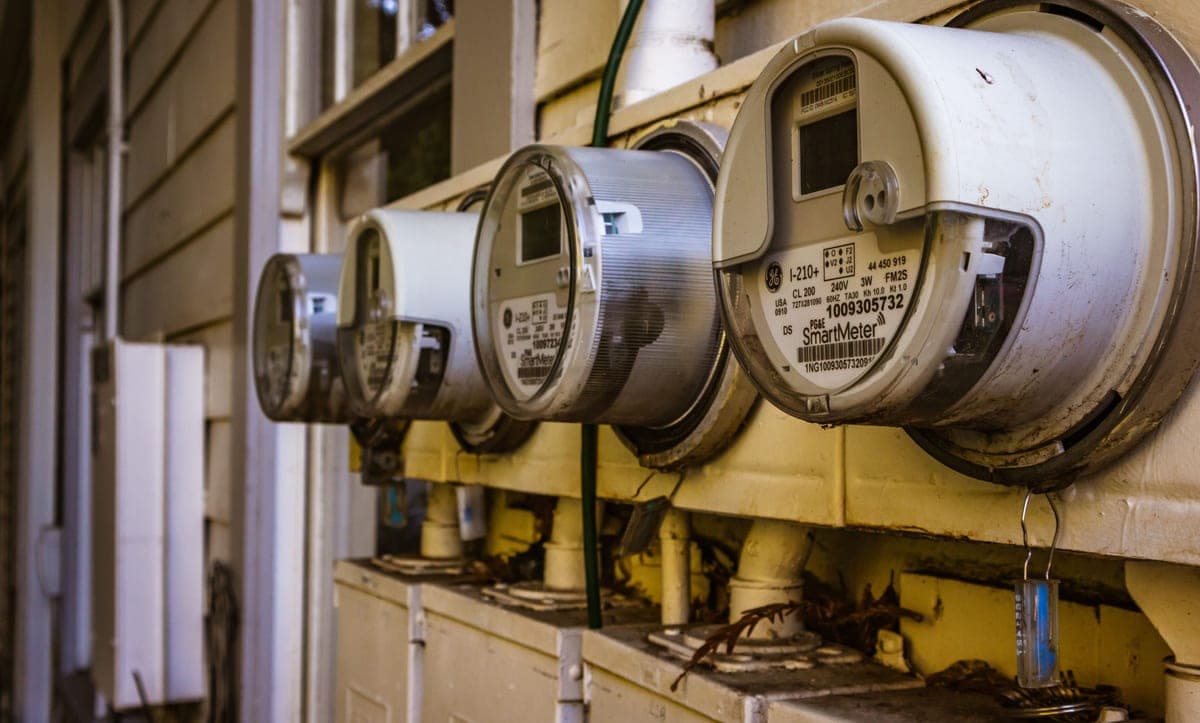
Illustrative photograph — not an image of the Whynter WC-201TD.
No compressor means no start-up thump and no vibration path into the wine
65 W is a fraction of a compressor cabinet's draw
46°F floor is cold enough for sparkling service
What does not
Thermoelectric cooling works against ambient temperature, so a warm room raises the achievable minimum
Freestanding only — it must not be enclosed
Who should skip it. Skip it if the unit will live anywhere that gets hot: a garage, a conservatory, or a cabinet run with no air gap. Thermoelectric units lose the argument above roughly 77°F ambient.
Start with the honest state of the data. Most wine fridge makers do not publish a power figure at all, and almost none publish an annual kWh estimate. Four cabinets on this site publish a rated draw:
Published rated power draw (manufacturer figures)
Cabinet
Cooling
Bottles
Rated power
Whynter WC-201TD
Thermoelectric
20
65 W / 1.1 A
Ivation 18-Bottle Dual-Zone
Thermoelectric
18
65 W
Whynter BWR-1662SD
Compressor
166
140 W / 2.0 A
Whynter BWR-1642DZ
Compressor
164
160 W
For scale: 160 W is roughly two old-fashioned incandescent light bulbs, for a cabinet holding 164 bottles. These are not heavy loads. Where a manufacturer publishes nothing, this site says so rather than inferring a figure from a similar cabinet.
Rated power is not continuous consumption. A rated figure is what the unit draws while actively cooling. A compressor cabinet cycles — it runs, satisfies the thermostat, stops — so its average draw is a fraction of its rating. That fraction is the duty cycle, and it is the number that actually decides your bill.
Working out your own cost
We are not going to print a dollar figure, because it would be wrong for almost everyone reading it: electricity rates vary by more than a factor of three across the US and change constantly. Here is the arithmetic instead, which stays true.
Annual cost = (watts ÷ 1,000) × 8,760 hours × duty cycle × your rate per kWh
Worked through, for the 160 W compressor cabinet at a 40% duty cycle:
160 W ÷ 1,000 = 0.16 kW
0.16 kW × 8,760 hours = 1,402 kWh if it never stopped
× 0.40 duty cycle = 561 kWh per year
× your rate per kWh = your annual cost
Get your rate from your own bill — it is printed there, usually as cents per kWh. If you want a benchmark for your state, the EIA’s Electric Power Monthly publishes current average residential prices. Multiply and you have a figure that is actually yours rather than a number from a listicle.
Do the same with the 65 W thermoelectric cabinet and the result is a small fraction of that — though with a catch, which is the next section.
Why the room decides it
Duty cycle is where the real variation lives, and it is a property of the installation, not the appliance. The cabinet only works when it has to.
Ambient temperature is the dominant factor. A cabinet holding 55°F in a 68°F room is doing far less work than the same cabinet in an 85°F garage. This is why a garage installation costs more to run (wine fridge in a garage).
Ventilation. A blocked heat path means the cabinet can never satisfy its thermostat, so it runs continuously — duty cycle approaching 100%. A freestanding unit built into a cabinet is the classic case, and the electricity bill is the least of that problem (built-in vs freestanding).
How cold you set it. 40°F costs meaningfully more than 55°F, because the temperature difference the cabinet maintains is larger.
Door openings. Each one exchanges cool air for room air. Relevant for a serving cabinet, irrelevant for a storage one.
Interior lighting left on. Display lighting adds heat inside the cabinet, so the cooling system removes it again. Switch it off for storage.
The counterintuitive consequence: a thermoelectric cabinet is not automatically cheaper to run. In a cool room it barely works and costs very little. In a warm room it runs continuously without ever reaching its setting — a 65 W draw at a 100% duty cycle can beat a 160 W compressor cycling at 30%. The mechanism is in compressor vs thermoelectric.
How to reduce it
Put it somewhere cool. The single largest lever, and it is free. An interior location beats a sunny kitchen wall or a garage by a wide margin.
Respect the clearances. Good ventilation is the difference between cycling and running constantly (ventilation and clearance).
Set 55°F, not 40°F, unless you genuinely need the cold end. For storage 55°F is correct anyway (temperature settings).
Keep the condenser clear of dust where it is accessible. It is effectively the only maintenance these appliances need.
Keep it reasonably full. A full cabinet has more thermal mass, so it holds temperature through each door opening with less work.
Switch the interior light off when you are not showing the cabinet off.
And the zero-consumption option, for completeness: a rack in a cool room uses no electricity at all and has nothing to fail. If your room can hold a steady temperature, that is the cheapest wine storage there is — rack vs fridge.
Questions people actually ask
▸ Do wine fridges use a lot of electricity?
No. Published draws on this site run 65–160 W, and nothing runs continuously at its rated figure. A 164-bottle compressor cabinet at 160 W is roughly two old incandescent bulbs while it is actually cooling.
▸ How much does it cost to run a wine fridge per year?
Work it out rather than trusting a published figure: (watts ÷ 1,000) × 8,760 × duty cycle × your rate per kWh. At 160 W and a 40% duty cycle that is about 561 kWh a year, and your own tariff turns that into dollars.
▸ Are thermoelectric wine coolers cheaper to run?
In a cool room, yes — they draw less and work little. In a warm room they can cost more, because they run continuously without reaching their setting while a compressor cabinet simply cycles.
▸ Does a wine fridge need its own circuit?
Many manufacturers specify a dedicated grounded circuit, and it is stated per unit in the installation manual. That is about safe startup current rather than running cost — have an electrician confirm what your installation needs.