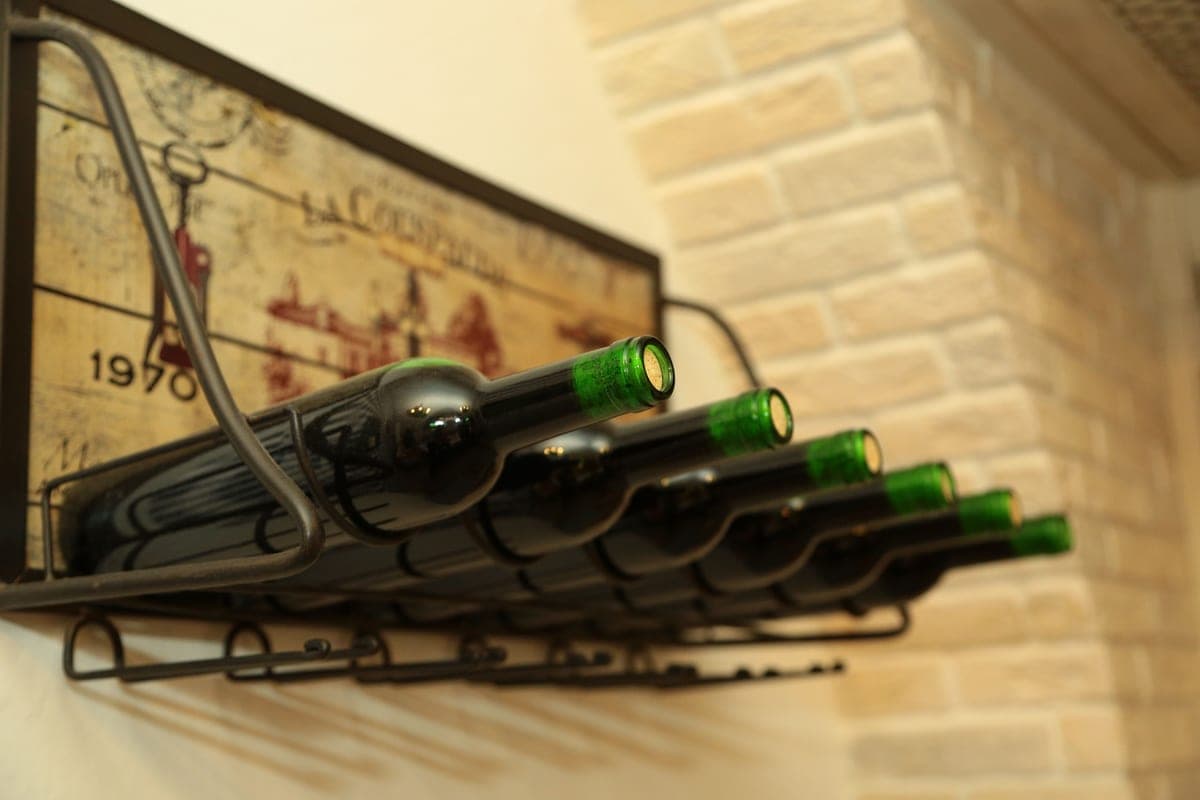
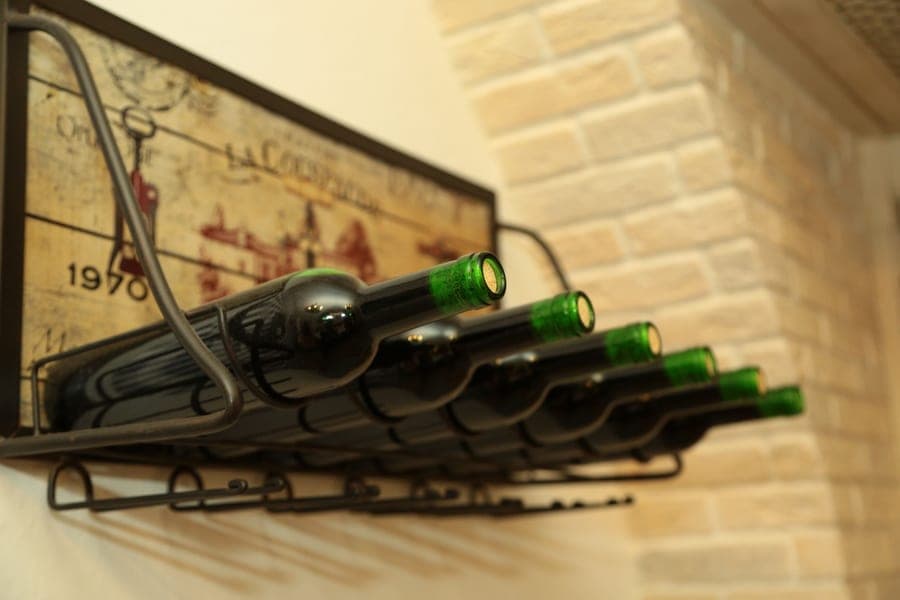
When a wall rack is the right answer
Wall racks solve one specific problem: you have bottles and no floor. A small kitchen, a galley, a flat where a floor rack would be furniture you have to walk around. They use vertical space that is otherwise doing nothing.
They also display wine, which is a real reason to buy one and worth being honest about. The trade is light exposure: open wall racking gives bottles no protection from it, and light degrades wine over time. For bottles you are drinking within weeks that does not matter. For anything you are keeping, put the rack on a wall that does not face a window, or accept that this is display storage rather than cellaring. If the room itself is the problem, the fix is a cabinet — see rack vs fridge.
The fixing question
This matters more than which of these two racks you buy, and neither listing addresses it.
Nine bottles of wine plus the rack is a meaningful load hanging off a wall, concentrated at a few points. Neither of these racks publishes a load rating, and the fixings in the box are generic hardware chosen to suit a box, not your wall.
- Into studs or masonry, always, where you possibly can. A stud finder costs very little next to the cost of the wine.
- If you must fix into plasterboard alone, use anchors rated for well above the loaded weight, and spread the load across more fixing points rather than fewer.
- Load it and check it a week later. Fixings that are going to move do it early.
One fixing or three
That is genuinely the whole choice between these two racks.
The Sorbus 9-bottle metal rack is one unit, one mounting job, nine bottles, in commercial-grade welded black metal. Welded rather than bolted is the specification worth having: bolted racks can work loose as the load shifts, welded ones cannot. If you want nine bottles on a wall with the least work and the most durability, this is it.
The mahogany set of three is three separate racks of three bottles each. Three mounting jobs, and only three bottles per fixing — but you can arrange them around a doorway, up a stairwell or in a stepped line, and buy a second set to extend the pattern. The wood finish reads warmer than bare steel in a dining room. You are paying in installation effort for flexibility and looks.
On material generally, the trade-offs run deeper than appearance — wood vs metal racks covers them.