
What Coravin does, in its own words
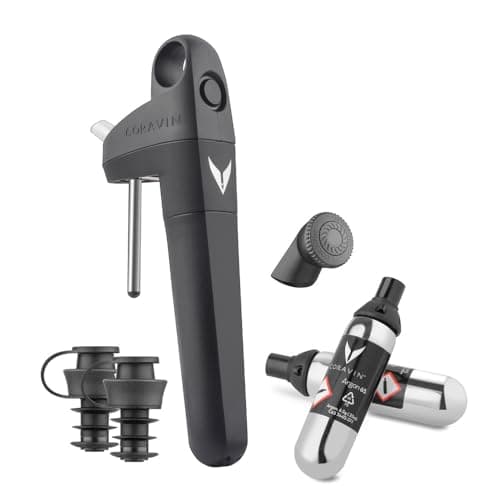
Coravin’s Timeless system passes a hollow needle through the cork and pressurises the bottle with argon, so wine comes out and oxygen never goes in. The cork reseals when the needle is withdrawn. Coravin states that wine stays protected for weeks, months or years, and the system works on cork-finished bottles; a separate accessory is needed for screwcaps. Argon is already used in winemaking, so nothing exotic is being introduced into the bottle.
That is a genuinely different mechanism from everything else in the category, and it is worth saying so clearly: every alternative on this page slows oxidation, while the Timeless is designed to prevent it. The cost of that is an argon capsule per pour and a purchase price several times anything below. If you own bottles you want to drink a glass at a time over months, the alternatives on this page do not replace it, and the mechanism argument is set out in full in Coravin against Vacu Vin.
The vacuum alternative
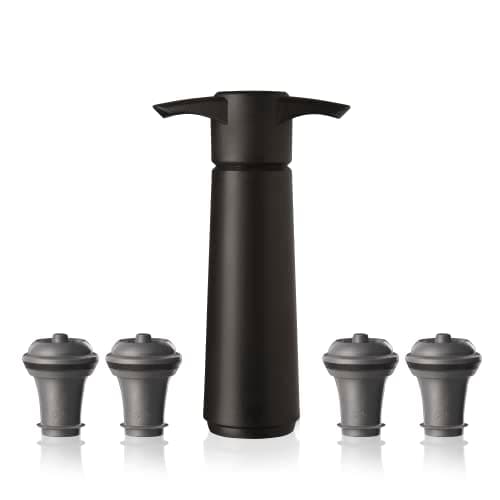
The Vacu Vin Wine Saver is the alternative most people are looking for when they search this. A hand pump pulls air out through a reusable rubber stopper; Vacu Vin claims up to ten days. There are no capsules, no refills and nothing to run out of, and it costs less than a single bottle of the wine it protects.
Two honest caveats, both mechanical rather than about build quality. A vacuum slows oxidation; it does not stop it, because you cannot pull a perfect vacuum through a stopper by hand. And pulling air out also pulls out aromatics, which is noticeable on a delicate wine — a young Pinot or an aromatic white loses something a Cabernet does not. For a bottle you will finish inside a week, neither caveat matters. For a first-growth you are rationing over a month, both do.
Argon without the Timeless
If the appeal of Coravin is specifically the argon rather than the brand, the cheapest route to it is Coravin’s own Pivot: a replacement stopper that lays an argon blanket over the wine, with a stated window of up to four weeks rather than years. It is not limited to natural cork, which the Timeless effectively is, and it costs a fraction of it.
Four weeks covers almost every real-world “we did not finish it” situation, and this is the honest middle of the page: the same gas, a shorter window, a far lower entry price, and the same ongoing capsule cost. We include a Coravin product on a page about alternatives to Coravin deliberately, because a reader asking for a cheaper way to get argon deserves to be told that the maker sells one. All three preservation systems on this site, including the Timeless, are compared in best wine preservation systems.
If you are finishing it this week
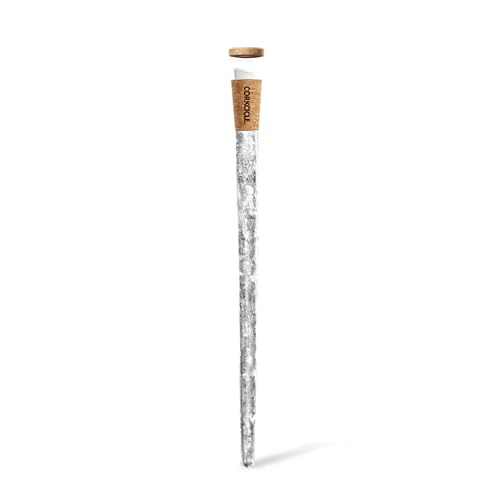
A great many opened bottles do not need preserving at all; they need to be drinkable tonight and tomorrow. The Corkcicle Air is the pick for that: a freezable gel stick that goes into the bottle, chills it from the inside and aerates as you pour through the head. Corkcicle publishes elapsed times rather than preservation windows — a room-temperature red chilled in about fifteen minutes, whites kept cold for about an hour — and makes no claim to slow oxidation, so we make none for it either.
What it does is reduce the reason bottles get wasted in the first place: wine that is at the wrong temperature does not get finished. Keeping the bottle in the fridge door and chilling before serving is the no-cost version of the same idea, and the realistic timelines by style are in how long does wine last and how to store opened wine.
What every alternative gives up
Three things, and they are worth stating together so nobody buys the wrong one. You give up the multi-month window: ten days and four weeks are real numbers, and neither is “years”. You give up pouring without opening— the Timeless pours through the cork, so the bottle is never technically opened, and both alternatives here require the cork to come out. And you give up the consistency of a sealed system: a hand pump is only as good as the stopper seating and the arm pumping it.
In exchange you get no capsule cost, no closure restriction and a price that does not need justifying. For most households that is the right trade; for a cellar of bottles worth aging, it is not.
Which alternative fits which household
Vacu Vin if you open a bottle or two a week and finish them inside ten days — the cheapest credible answer and the one that never runs out. Coravin Pivot if you want argon specifically and four weeks is long enough, which it almost always is. Corkcicle Air if the real problem is temperature rather than oxidation. And if you genuinely need to pour one glass from a serious bottle and come back to it in six months, there is no alternative to the Timeless on this page or anywhere else — that is what the needle and the argon buy, and it is priced accordingly.