What actually makes a space small
“Small space” is not a bottle count. Every rack on this page would be comfortable in a house with a pantry. What makes a kitchen small is that one particular class of space has run out, and which one it is changes the answer completely.
No counter. The most common version. There is technically room beside the toaster, but you need that space for cooking three nights a week. A rack that permanently occupies it is a rack you will resent. This is the only constraint where a folding rack is the right answer rather than a gimmick.
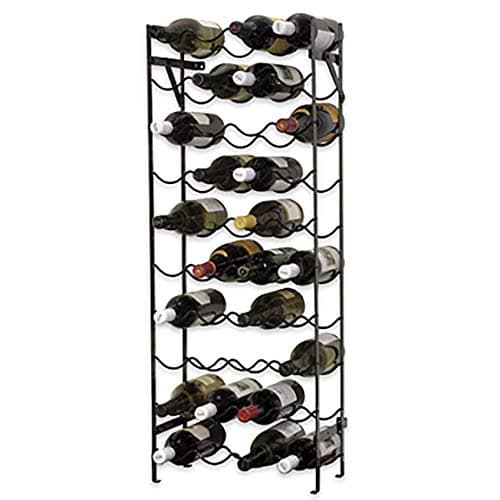
No floor. A studio or a galley kitchen where nothing can stand on the ground without being walked into. Here the floor racks that dominate the category are simply out, and the choice is wall or under-cabinet.
No permission. A rental. You can put something on a shelf and you cannot drill into a wall, or you can but you will be filling the holes later. This constraint quietly eliminates four of the seven racks here, and no listing mentions it.
No depth. Shallow shelving, a narrow windowsill, the eight inches between a cabinet run and a doorway. Depth is the dimension that fails, and it is the one dimension most wine rack listings do not publish at all.
Work out which of those four you have before reading any further. A rack that solves one of them is usually useless for the others, and the published specification tells you which — when there is one.
The published footprints, side by side
Three of the seven racks here publish full exterior dimensions. Four do not. That is not an oversight on our part: we only print numbers a manufacturer or retailer actually states, so an empty cell below means the figure does not exist on the listing we checked rather than that we did not look.
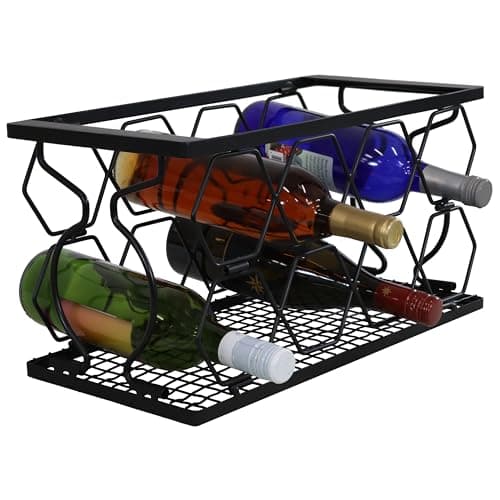
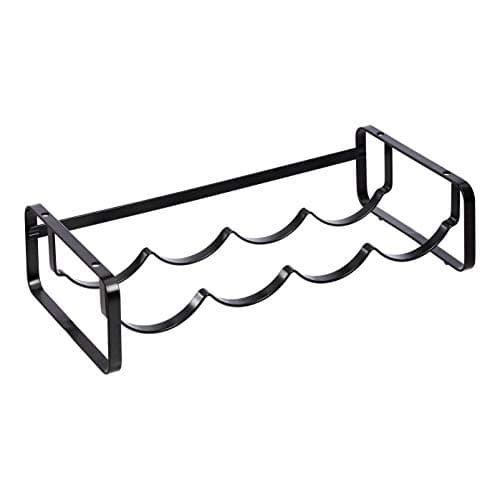
Two numbers in that table matter more than the rest. The Amazon Basics tier is 3.74 inches deep, which is shallower than a standard wine bottle is wide — the bottles lie across the rack rather than along it, so it will sit on a shelf that nothing else here fits on. And the Sunnydaze rack folds to 1.75 inches, which is a drawer rather than a cupboard.
The flip side is the honest one. Both of those racks are small in capacity as well as in footprint: four bottles a tier and eight bottles respectively. If you own thirty bottles, neither is your answer and you should read the floor rack comparison instead, accepting that a floor rack needs floor.
Vertical is the only free space you have
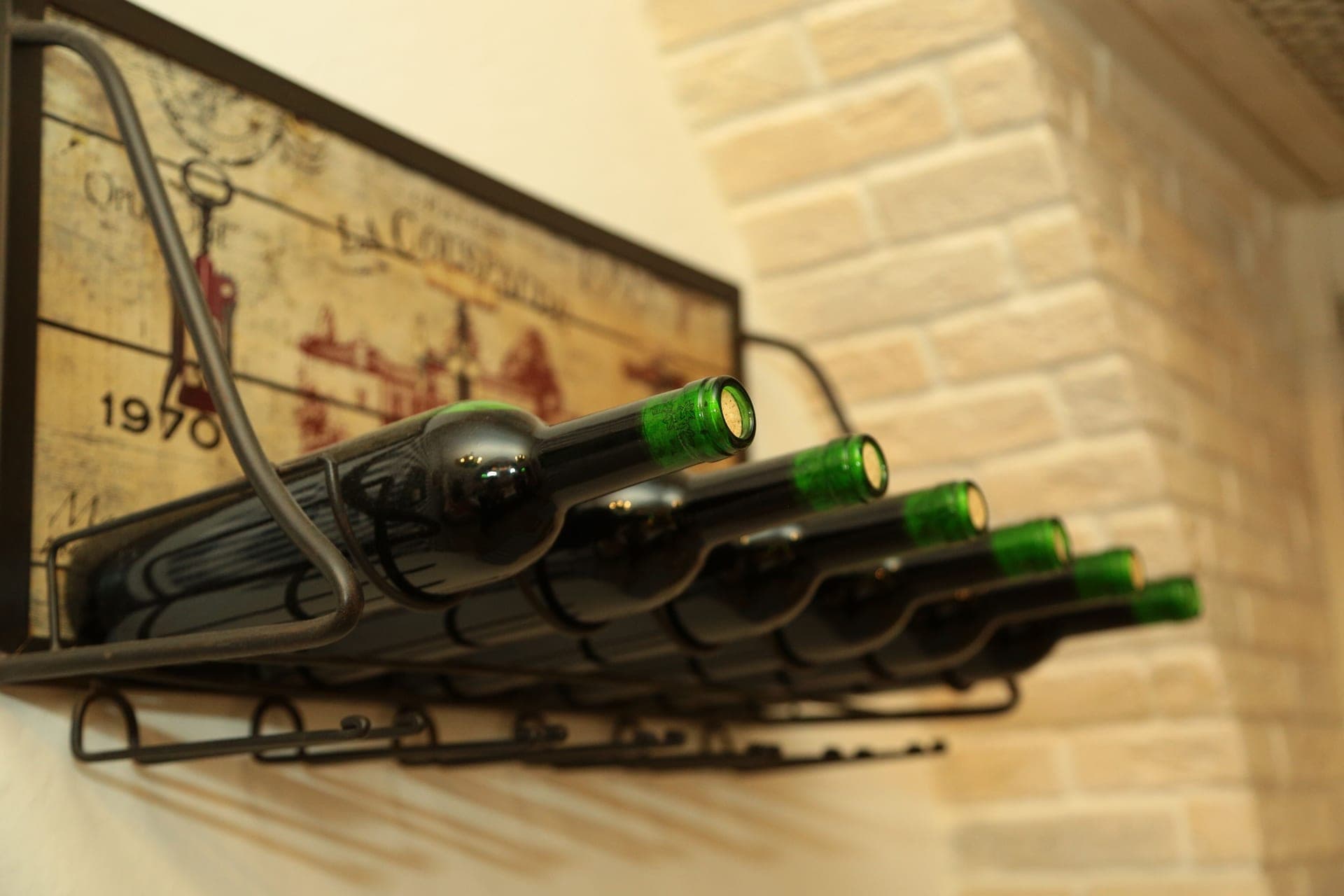
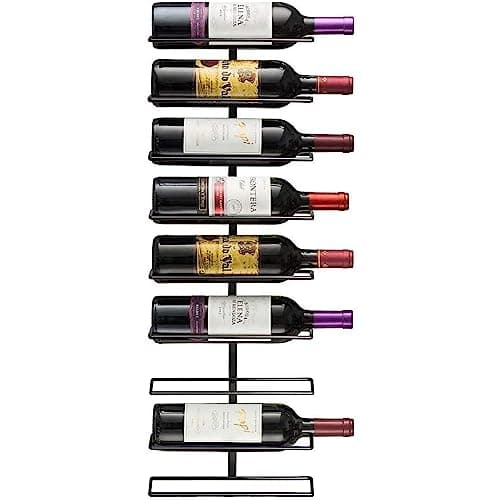
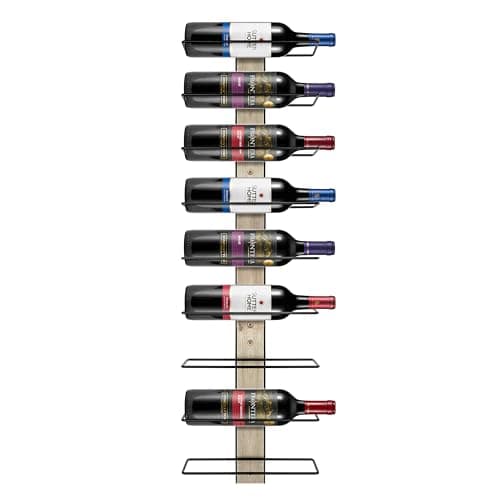
In a kitchen where the counter and the floor are both committed, the space between the worktop and the wall cabinets is usually empty, and so is the wall of the dining area next door. That is the entire argument for a wall rack, and it is a strong one: nine bottles on a wall consume no square footage whatsoever.
What the listings do not say is what the wall has to take. Nine full 750 ml bottles is roughly 25 lb of load hanging off a few fixings, which means studs or proper cavity anchors rather than the plasterboard plugs in the box. We cover the fixing question properly in the wall-mounted rack comparison, because it genuinely matters more than the choice between the two racks.
The modular wood set earns its place here for a reason specific to small rooms. It is three independent three-bottle units rather than one nine-bottle unit, so it can be arranged around a light switch, a window reveal or a boxed-in pipe — the obstacles that make small walls awkward. The cost is three separate drilling jobs instead of one, and only three bottles per fixing point.
A wall rack is also the one choice here with an exposure problem. Bottles on an open wall rack sit in whatever light the room gets, and light is a documented wine fault mechanism, not a cosmetic concern. If the wall catches afternoon sun, put the bottles somewhere else or accept that they are for drinking within months, not keeping.
Glasses are the other half of the problem
Small-kitchen advice almost always stops at the bottles, which is strange, because stemware is the thing that actually breaks. Wine glasses are tall, fragile and awkward to stack, and in a kitchen with four cabinets they compete with plates for the one shelf deep enough to hold them.
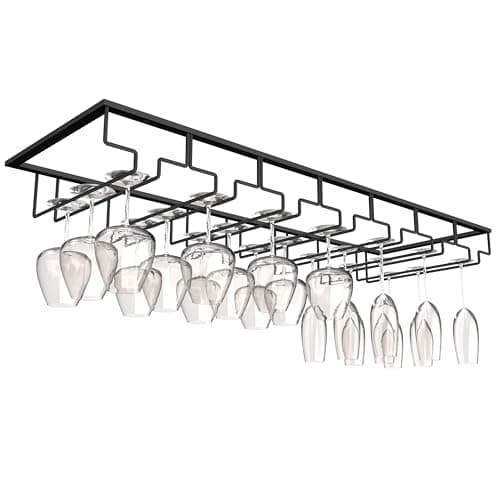
Two racks here address that rather than bottle storage, and we have kept them in the list because in a genuinely small kitchen they often free up more space than a bottle rack does. The SereneSpace under-cabinet rack uses the dead air beneath a wall cabinet — 2.28 inches of height that is doing nothing in every kitchen in the country — and takes up to twenty-two glasses out of the cupboard entirely. It needs 27.5 inches of cabinet underside to screw into, so measure that before anything else.
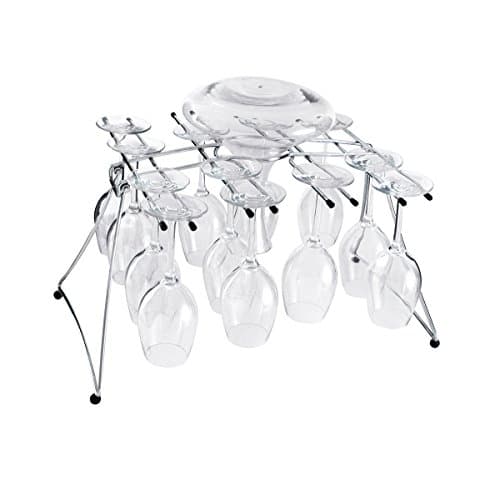
The Oenophilia Fusion rack solves the narrower problem of a decanter that will not dry, holding sixteen glasses and a decanter on a frame that folds. It wants counter space while it is in use, which in a small kitchen is a real cost, but it only wants it while it is in use.
Neither is wine storage. We say so in both entries above, and the reason they are ranked below the bottle racks rather than above them is exactly that. If you came here for bottles, the first four picks are your list.
What none of these racks can do
Every rack on this page is unpowered, which means the room supplies all of the storage conditions or nothing does. In a small apartment that is a bigger caveat than it sounds, because small rooms with a working kitchen in them are the warmest rooms in a home. A studio that reaches the high seventies in summer is aging the wine on the rack faster than a cellar would, and no rack changes that.
Three specific things an unpowered rack does not give you: a stable temperature, any humidity control, and any protection from ultraviolet light. A powered cabinet gives you all three, and the 15-inch class now starts at a width most small kitchens can actually find — the 30-bottle cabinets are the band those kitchens usually land on. If you are weighing the two, the rack versus fridge comparison sets out where the crossover sits, and wine storage temperature explains what the room is actually doing to the bottles.
The one thing a rack does better than any cabinet is keep bottles horizontal for almost no money, and that is not a small thing: a cork in contact with wine does not dry out. Whether it matters for your bottles depends on how long they are staying, which storing wine flat or upright goes through in detail.
Choosing by the constraint you have
Four constraints, four different answers. This is the whole page in one table.
If none of those is your constraint — if what you actually have is a normal kitchen and a growing collection — the main wine rack roundup compares the category without the footprint filter, and the stackable options cover the grow-as-you-go approach in more depth.