The three numbers to get right first
A wine rack is a simple piece of carpentry and an unforgiving one, because the thing it holds is round, heavy, fragile and not a standard size. Three measurements decide everything downstream, and all three are easy to check with the bottles you already own.
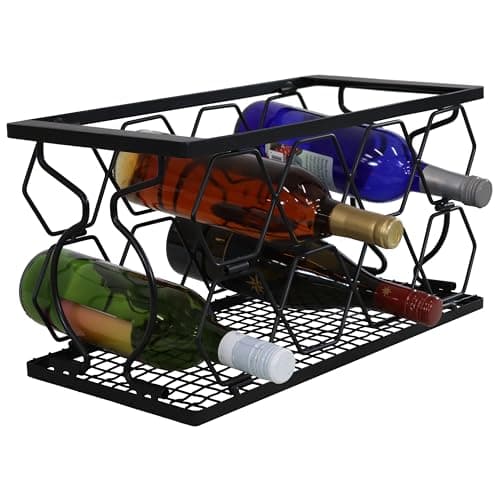
- Bottle diameter. A standard Bordeaux bottle sits around 3 to 3.5 inches across. Burgundy, Pinot Noir and Champagne bottles are wider. For a sense of how tight the tolerances are in commercial racks: the Sunnydaze folding rack publishes slots of 3.25 inches square, and states plainly that a wide Champagne bottle will not seat in them. If a manufacturer can get caught by half an inch, so can you.
- Bottle length. Around 12 inches for a standard bottle, more for sparkling and for some Italian and Rhone shapes. Your cradle depth has to let the bottle sit fully supported without the neck taking the load.
- Bottle weight. Roughly 2.5 to 3 pounds full. Multiply by the number of bottles before you choose timber thickness or a wall fixing, not afterwards.
Measure your own widest bottle and design to that, not to the standard. A rack built to Bordeaux dimensions that will not take the Burgundies you actually buy is a rack you will rebuild. The wine rack sizes guide has the dimensional detail, and the large-format bottle page explains how much capacity bottle shape costs in a cabinet, which is the same arithmetic.
Cradle spacing, and the mistake everyone makes
The classic home-build error is spacing cradles to the bottle diameter exactly. Two things go wrong. The bottle binds going in and out, which is annoying; and more importantly, bottles that touch each other transmit knocks, and a rack where every bottle is wedged against its neighbors is a rack you cannot get one bottle out of without disturbing six.
Three design decisions worth making deliberately:
- Allow clearance, not an interference fit. The bottle should slide in and rest, not be pushed. Add enough that your widest bottle moves freely.
- Keep the bottles horizontal, or very close to it. The point of lying a bottle down is to keep the wine in contact with the cork so the cork stays swollen and seals. A rack that tips bottles neck-up defeats that. Slightly neck-down is fine; level is the safe default. Flat or upright covers why, and the exceptions for screwcaps and sparkling.
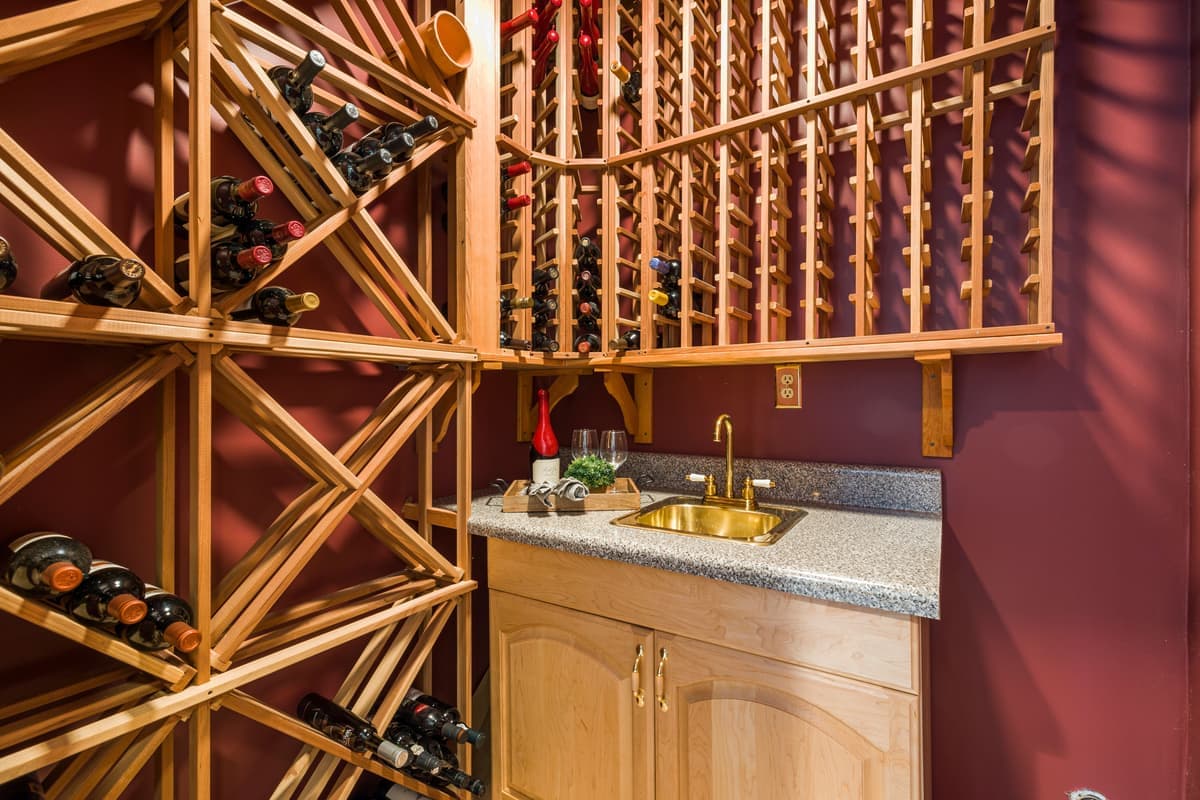
- Design the front edge so labels stay readable. A rack you cannot read is a rack you dig through, and digging is how bottles get knocked. Open fronts and diamond-bin layouts both solve this; a deep solid-fronted cubby does not.
Timber, finish and what not to use
Wood is the obvious material and most of it is fine, but a few choices matter because the rack sits with the wine for years.
- Avoid strongly aromatic timbers. Cedar and some pines give off a persistent smell in an enclosed space. Corks breathe slowly, and a closet full of aromatic timber is a smell you have introduced into the storage environment deliberately. Beech, poplar, birch ply and ordinary kiln-dried softwood are all unremarkable in the right way — which is why commercial cabinets use beech shelving so consistently.
- Finish lightly, and let it cure. A heavily varnished rack put into service while it still smells of solvent is doing the same job as cedar. If you finish it at all, finish it early and leave it somewhere ventilated until it is odorless.
- Mind the humidity. A rack destined for a basement will take up moisture and move. Sealing all faces rather than only the visible ones reduces how much it cups.
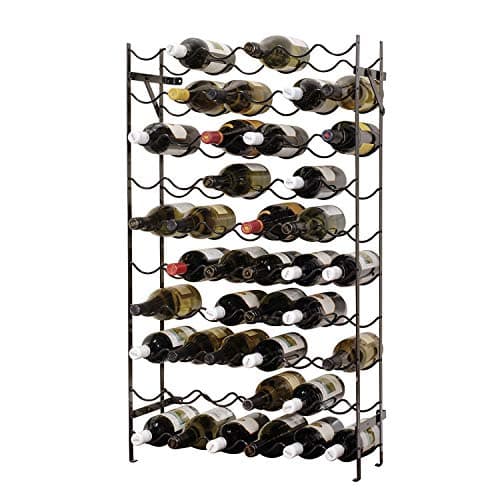
- Metal is a legitimate answer. Welded steel does not move, does not smell and takes up almost no space per bottle. The trade is that it conducts, looks industrial and marks labels if the contact edges are sharp. Wood versus metal racks is the full comparison.
Load: the part that is not woodwork
This is where a home-built rack is most likely to fail, and it fails all at once rather than gradually.
Two rules that follow from the table. First, a wall rack has to be fixed into structure, not into board — and note that even commercial racks at this scale often publish no load rating, which means the fixing is entirely your problem either way. Second, a tall freestanding rack wants to be tied to the wall at the top: a loaded rack has a high center of gravity, and a bottle pulled from an upper row is exactly the moment it wants to tip.
When building is the right call, and when it is not
Building is clearly right when the space is odd: an alcove, a sloping void under the stairs, a chimney breast recess, a shallow run that no commercial rack depth matches. Those are the cases where you are buying fit rather than hardware, and nothing off a shelf will do it.
It is also right when you want a specific material or finish to match cabinetry, or when the rack is part of a built-in bar and has to be made in place. Built-in ideas covers the cases where racking and a cabinet get designed together.
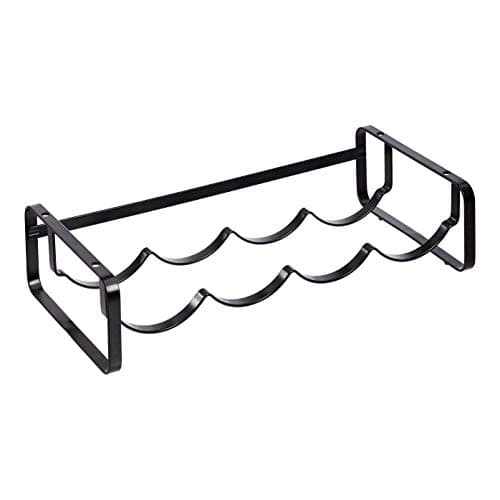
It is usually the wrong call for three situations. If you want a standard rectangle in a standard spot, a commercial rack costs less than the timber and arrives square. If the rack has to be modular because you do not yet know how big the collection gets, a stackable tier like the Amazon Basics unit solves that better than a fixed frame — stackable racks covers the class. And if the rack needs to disappear between dinners, a folding rack does something joinery cannot.
One last point that has nothing to do with carpentry: a rack does not control temperature, humidity or light, however well it is built. If the room is not already suitable, the best rack in the world is storing wine badly in a nicer-looking way. Settle the location first — where to put a wine rack — and then decide whether to build or buy.