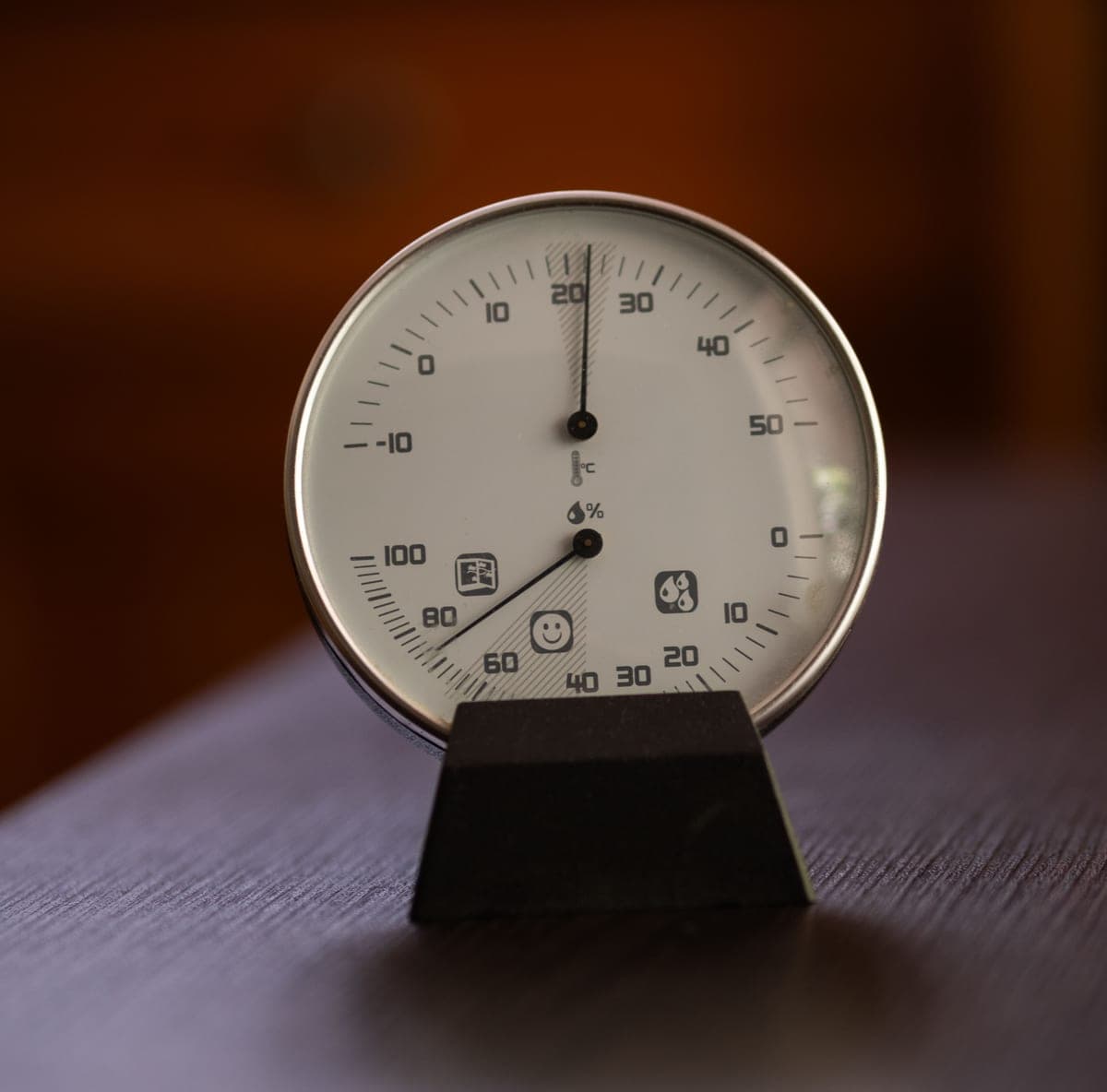
Most wine fridges do not actively control humidity; they buffer it, because a sealed cool cabinet naturally holds more moisture than a heated room. Published guidance puts the useful band at 55-75% relative humidity. It matters for cork-sealed bottles stored for years, and very little otherwise.
This page sits in Wine Storage Guides, where the rest of the category is compared the same way.
How this page is funded. Cork & Cool earns a commission if you buy through the Amazon links below, at no extra cost to you. It never changes the order of this list — see our editorial policy and affiliate disclosure. We do not publish prices, because a stale number helps nobody.
Our picks
None of these publishes a humidity percentage, and we are not going to invent one. What they can be judged on is whether the cabinet was designed around long-term aging at all, and what it does about air and light.
How this page is funded. Cork & Cool earns a commission if you buy through the Amazon links below, at no extra cost to you. It never changes the order of this list — see our editorial policy and affiliate disclosure. We do not publish prices, because a stale number helps nobody.
#1 — A real cellar in a cabinet
EuroCave Pure L
Up to 110 reds, or 60 whites in the same cabinet — a French-built aging cellar rather than a serving fridge.
Illustrative photograph — not an image of the EuroCave Pure L.
Published specifications
Capacity
110 bottles
Zones
1
Cooling
compressor
Temperature range
Not published
Noise rating
Not published by the manufacturer
Installation
freestanding
· Capacity: up to 110 red wines, or up to 60 whites
· Multi-purpose wine storage cabinet from the Pure collection
· 5-year warranty; made in France
· Glass door with stainless steel trim variant available
Designed around long-term aging rather than service
Five-year warranty, which is unusual in this category
The capacity figure is honestly split by bottle type, which most brands do not do
What does not
Costs multiples of anything else on this page
Sold through a single US distributor, so servicing is not a local-appliance-shop matter
Who should skip it. Skip it if you are storing wine you intend to drink within a year or two. The engineering you are paying for only pays back over a decade of aging.
Twelve bottles, wooden grid shelves, and a compressor Liebherr specifically develops for low vibration — the small cabinet that treats wine as aging stock.
Illustrative photograph — not an image of the Liebherr WS1200.
Published specifications
Capacity
12 bottles
Zones
1
Cooling
compressor
Temperature range
Not published
Noise rating
Not published by the manufacturer
Installation
freestanding
· Exterior width: 16 3/4 in
· Capacity: 12 bottles on 3 wooden grid shelves
· Electronic touch control with digital temperature display
Humidity acts on the cork, not on the wine. A natural cork seals because it is slightly compressed and slightly moist. Take the moisture away over years and it hardens, shrinks, and stops sealing — then air reaches the wine and oxidation begins.
The two failure modes sit at either end and they are different problems:
Too dry (sustained, well below about 50%): the cork dries from the outside in, shrinks, and the seal fails. This is the one that ruins wine. Note the exposed end of the cork dries even though the inner end is in contact with wine — which is precisely why cork-sealed bottles are stored on their side (flat or upright).
Too damp (sustained, well above about 80%): the wine is fine, but labels foxes and lift, and mold grows on labels, capsules and wooden shelving. An aesthetic and resale problem rather than a wine problem.
The useful band
Published guidance for climate-controlled wine storage puts relative humidity in a broad 55–75% range, with figures around 70–75% commonly cited as ideal.
It is a wide band, and that is the point: this is a variable with generous tolerances, unlike temperature stability. Anywhere in it and the cork is fine indefinitely.
What cabinets actually do
Here is the honest position, and it is not what most listings imply.
Very few wine fridges actively control humidity, and almost none publish a figure. Not one cabinet covered on this site publishes a humidity percentage. Where a spec is unpublished, this site says so rather than estimating it — which is why our tables read “not published by the manufacturer” in that field.
What cabinets do instead is buffer, and mostly as a by-product:
A sealed, cool cabinet naturally holds more moisture than a heated room, because cool air with the same water content has a higher relative humidity. Most cabinets land somewhere reasonable without trying.
Wooden shelving takes up and releases moisture, damping swings. Wire shelving does not.
Door seal quality decides how much moisture is lost to the room every time the cabinet cycles.
Charcoal filtration and UV-treated glass address air quality and light rather than humidity as such, but both bear on the condition of corks and labels over years. The Liebherr WS1200 has both.
Of the cabinets here, the EuroCave Pure L is the one designed around long-term cellar conditions rather than service — it even states capacity honestly split by bottle type, which most brands do not. That design intent is a better signal than any humidity claim on a box. The fuller comparison is in best wine fridges for humidity control.
When it genuinely matters
Be honest about which situation you are in, because most buyers are in the second one.
Does humidity matter for you?
Your situation
Does it matter?
What to do
Cork-sealed bottles kept 5+ years
Yes
Store on their side; prefer a cabinet designed for aging; check the cabinet's own humidity with a cheap hygrometer
Bottles cycled within a year or two
Barely
Ignore it; buy on temperature, capacity and noise instead
Mostly screw caps
No
There is no cork to dry out
Very dry climate or a heated room, long-term storage
Yes
The most genuine case for concern — measure before you assume
Damp basement with a rack
Only for labels
Wine is fine; expect label and mold problems, and prefer a metal rack
The practical advice: do not let humidity drive your purchase. Buy on temperature range and stability, capacity, installation type and noise — the specifications that are published and that genuinely differ. Then, if you are storing long-term, put a hygrometer in the cabinet for a week and find out what it actually does. That measurement is worth more than any claim on the box, and it costs very little.
Questions people actually ask
▸ Do wine fridges control humidity?
Most buffer it rather than control it — a sealed cool cabinet naturally holds more moisture than a heated room. Very few control it actively, and almost none publish a figure, so this site reports it as unpublished rather than estimating.
▸ What humidity should wine be stored at?
Published guidance puts the useful band at 55–75% relative humidity, with 70–75% often cited as ideal. It is a wide tolerance, unlike temperature stability.
▸ What happens if humidity is too low for wine?
Over years a natural cork dries from the outside in, shrinks and stops sealing, letting air reach the wine. It is a long-term risk for cork-sealed bottles and irrelevant for screw caps.
▸ Should I put a bowl of water in my wine fridge?
No. Standing water in a cabinet with active cooling invites mold and can interfere with drainage. If a cabinet is genuinely too dry for long-term storage, it is the wrong cabinet for the job.