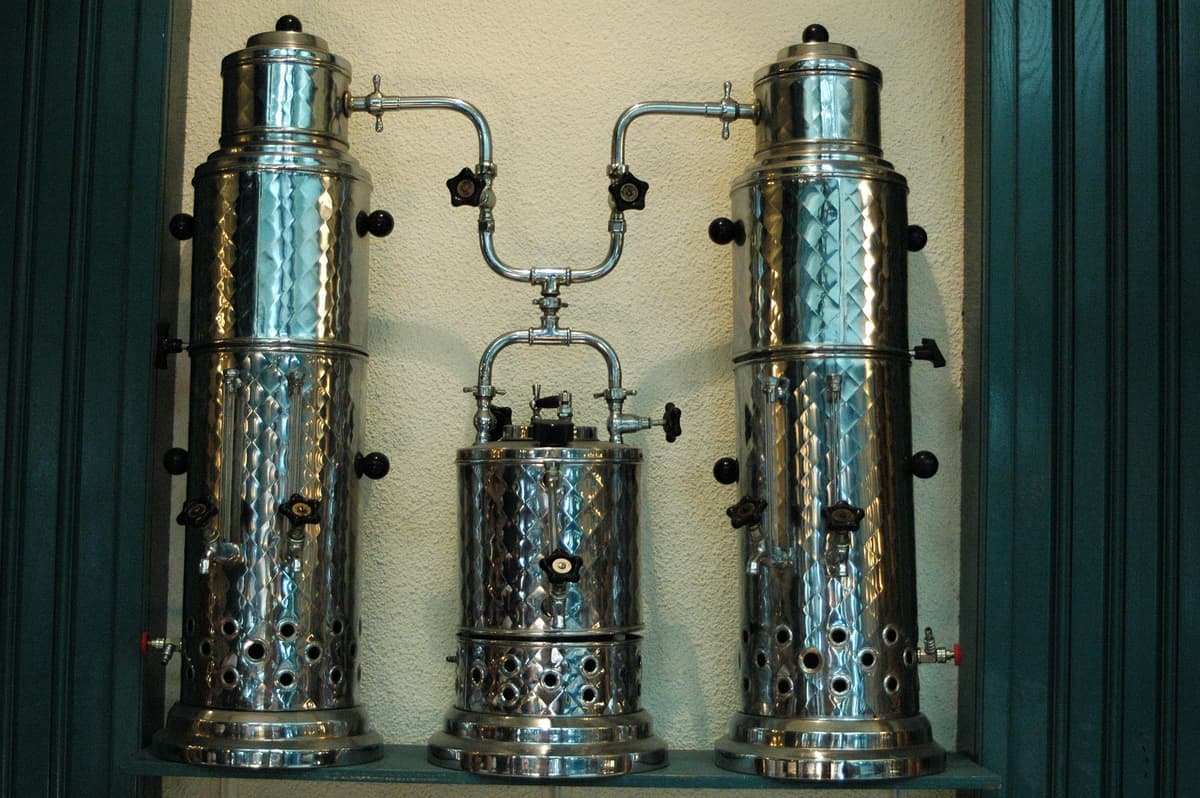
There is no published lifespan figure for these units, and we will not invent one. What is documented is what shortens their life: insufficient ventilation and operating outside the rated ambient temperature range. Both are installation errors, and both are excluded from most warranties.
This page sits in Wine Storage Guides, where the rest of the category is compared the same way.
How this page is funded. Cork & Cool earns a commission if you buy through the Amazon links below, at no extra cost to you. It never changes the order of this list — see our editorial policy and affiliate disclosure. We do not publish prices, because a stale number helps nobody.
Our picks
Where longevity genuinely differs, it shows up in what the maker commits to rather than in a lifespan claim. The EuroCave Pure L carries a five-year warranty, which is unusual in this category.
How this page is funded. Cork & Cool earns a commission if you buy through the Amazon links below, at no extra cost to you. It never changes the order of this list — see our editorial policy and affiliate disclosure. We do not publish prices, because a stale number helps nobody.
#1 — Low vibration in a narrow cabinet
Liebherr WS1200
Twelve bottles, wooden grid shelves, and a compressor Liebherr specifically develops for low vibration — the small cabinet that treats wine as aging stock.
Illustrative photograph — not an image of the Liebherr WS1200.
Published specifications
Capacity
12 bottles
Zones
1
Cooling
compressor
Temperature range
Not published
Noise rating
Not published by the manufacturer
Installation
freestanding
· Exterior width: 16 3/4 in
· Capacity: 12 bottles on 3 wooden grid shelves
· Electronic touch control with digital temperature display
Designed around long-term aging rather than service
Five-year warranty, which is unusual in this category
The capacity figure is honestly split by bottle type, which most brands do not do
What does not
Costs multiples of anything else on this page
Sold through a single US distributor, so servicing is not a local-appliance-shop matter
Who should skip it. Skip it if you are storing wine you intend to drink within a year or two. The engineering you are paying for only pays back over a decade of aging.
Rated for built-in installation, so the front vent is designed for an enclosed opening
23.4-inch width drops into a standard 24-inch cabinet run
Two independently set zones across the full 40-66°F span
What does not
No published dB rating, so noise cannot be compared numerically against rivals
46 bottles is the manufacturer's count using standard Bordeaux bottles — heavy Burgundy or Champagne bottles reduce it
Who should skip it. Skip it if your opening is under 24 inches, or if you need more than about four dozen bottles — stepping up to a 160-bottle cabinet costs less per bottle.
You will find “10 to 15 years” and similar figures repeated confidently across this category. None of the manufacturers covered on this site publishes a lifespan figure, so any specific number is someone’s estimate presented as a specification. We are not going to add to that.
What is documented, and far more useful, is the warranty a manufacturer is willing to stand behind and the operating conditions they specify. The EuroCave Pure L’s five-year warranty is notable precisely because it is unusual in a category where shorter terms are the norm — a maker’s warranty length is a real signal about expected service life, in a way that a round number in an article is not.
The more actionable framing: the same cabinet can last a few years or many, depending almost entirely on how it is installed. That variable is under your control, and it matters more than which brand you buy.
What kills them early
Two causes dominate, and both are installation errors rather than manufacturing defects.
1. Insufficient ventilation
The mechanism, in short: heat cannot escape, so the air around the condenser warms, so the condenser cannot reject heat, so the cabinet never reaches its setting, so the compressor never stops running — at a higher operating temperature than it was designed for. A component built to cycle intermittently now runs constantly and hot. Wear accelerates sharply.
The worst version is a freestanding unit built into a cabinet, which is the most expensive mistake in this category and the one manufacturers explicitly exclude from warranty coverage (built-in vs freestanding, clearances).
2. Operating outside the rated ambient range
Too hot, and the cabinet works permanently at maximum effort. Too cold — the half nobody expects — and refrigerant behavior and lubricant viscosity fall outside the design envelope. An unheated garage does both across a single year (wine fridge in a garage).
Both of these are also standard warranty exclusions, which is the practical sting: the failure arrives early and uncovered.
What extends their life
Install it where the manual says it can live. Right cooling type, right room, specified clearances actually present. This single decision outweighs everything else on the list.
Keep the condenser clear of dust where it is accessible. A dust blanket is thermally identical to blocked ventilation, and it is effectively the only routine maintenance these appliances need.
Let it cycle. A cabinet that regularly reaches its setting and stops is a cabinet doing a fraction of the wear of one that never does. If yours never stops, treat it as a problem now (not cooling).
Set 55°F rather than the bottom of the range unless you need the cold end. Less temperature difference to maintain, less work, less wear.
Keep it level. A rocking cabinet transmits vibration into its own structure and the building, and vibration is wear (noise and vibration).
Check the door seal occasionally. A failing gasket makes the cooling system work continuously to replace lost cold air. The paper test takes ten seconds.
Notice that five of those six are free, and none involves buying a more expensive cabinet.
What actually fails
Common failure points
Component
Typical cause
Economic to repair?
Door gasket
Age, deformation, a cabinet out of level
Yes — usually a replaceable part
Circulation or condenser fan
Wear, dust, bearing failure
Often yes
Thermostat or control board
Electronic failure
Sometimes, if parts are available
Thermoelectric module
Degradation over time, or sustained overwork in a warm room
The pattern is worth noticing: the cheap failures are the serviceable ones, and the expensive failures are the ones caused by poor installation. Compressor death from continuous running is the single most avoidable expensive failure in the category, and avoiding it costs nothing but getting the ventilation right on day one.
When replacement time does come, treat it as a chance to fix the original error — choose by installation type in undercounter cabinets, or by cooling type for the room you actually have in compressor vs thermoelectric.
Questions people actually ask
▸ How long does a wine fridge last?
No manufacturer covered here publishes a lifespan figure, so any specific number is an estimate rather than a specification. What is documented is what shortens life: poor ventilation and operating outside the rated ambient range — both installation errors, and both usually excluded from warranty.
▸ Do wine fridges need maintenance?
Very little. Keep the condenser clear of dust where it is accessible, keep the cabinet level, and check the door seal occasionally with the paper test. That is essentially the whole list.
▸ Are expensive wine fridges more reliable?
Longer warranties and documented low-vibration engineering are real signals, and a five-year warranty is unusual in this category. But installation still dominates: a well-installed mid-range cabinet will outlive a badly installed expensive one.
▸ What is the most common wine fridge failure?
Door gaskets and fans are the most common, and both are often repairable. The most expensive failure is a compressor worn out by running continuously, which is nearly always caused by blocked ventilation or an out-of-range room.