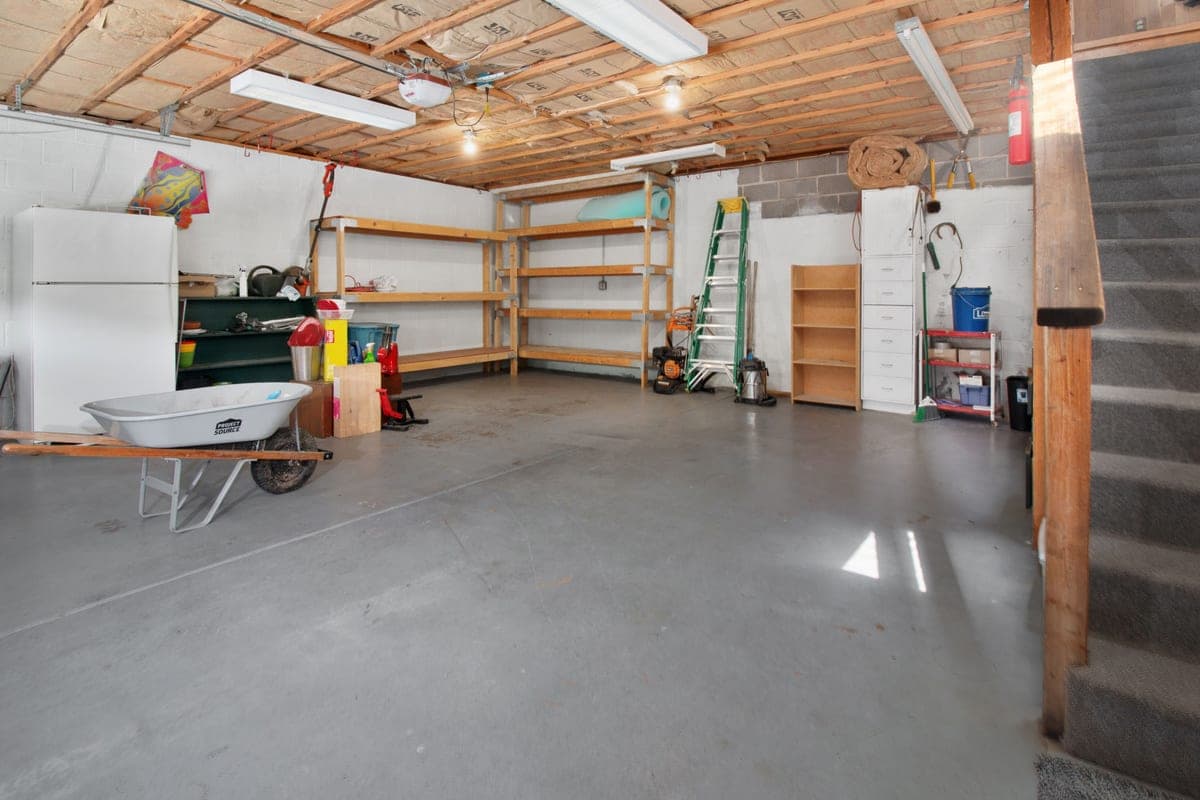
Only with a compressor unit, and only if your garage stays within the unit's rated ambient temperature range year-round. Thermoelectric coolers cannot cope with a hot garage because they cool relative to the room. The overlooked risk is winter: most units also have a minimum ambient temperature below which they stop working.
This page sits in Wine Storage Guides, where the rest of the category is compared the same way.
How this page is funded. Cork & Cool earns a commission if you buy through the Amazon links below, at no extra cost to you. It never changes the order of this list — see our editorial policy and affiliate disclosure. We do not publish prices, because a stale number helps nobody.
Our picks
If the garage is the answer, the cabinet has to be compressor-cooled — that is the disqualifying spec. These three are, and all reach the low forties regardless of what the room is doing.
How this page is funded. Cork & Cool earns a commission if you buy through the Amazon links below, at no extra cost to you. It never changes the order of this list — see our editorial policy and affiliate disclosure. We do not publish prices, because a stale number helps nobody.
#1 — The 24-inch slot
Newair AWR-460DB
Forty-six bottles across two zones in a 23.4-inch cabinet rated for built-in or freestanding use — the default answer for a standard kitchen opening.
Illustrative photograph — not an image of the Newair AWR-460DB.
Published specifications
Capacity
46 bottles
Zones
2
Cooling
compressor
Temperature range
40–66°F
Noise rating
Not published by the manufacturer
Installation
both
· Exterior: 23.40 in W x 22.40 in D (24.00 in with handle) x 33.00 in H
Rated for built-in installation, so the front vent is designed for an enclosed opening
23.4-inch width drops into a standard 24-inch cabinet run
Two independently set zones across the full 40-66°F span
What does not
No published dB rating, so noise cannot be compared numerically against rivals
46 bottles is the manufacturer's count using standard Bordeaux bottles — heavy Burgundy or Champagne bottles reduce it
Who should skip it. Skip it if your opening is under 24 inches, or if you need more than about four dozen bottles — stepping up to a 160-bottle cabinet costs less per bottle.
41°F floor is cold enough for sparkling wine service
Compressor cooling holds its setting regardless of room temperature
A lock, which most units this size omit
What does not
One zone only
A compressor in a small cabinet is audible in a quiet room
Who should skip it. Skip it if the unit will sit in a bedroom or a quiet home office. At this size the compressor is close to you and there is no published dB figure to reassure you.
A garage is an unconditioned space: its temperature tracks the outdoors, amplified by solar gain through the door and the roof. In much of the US that means 90°F or well beyond in summer.
A thermoelectric cooler cannot work there, and this is not a matter of degree. Thermoelectric cooling moves heat relative to ambient, so as the room warms the achievable minimum rises with it. Above roughly 77°F ambient these units generally stop being able to hold a setting at all — not “struggle”, stop. Every thermoelectric cabinet is disqualified from an unconditioned garage.
A compressor cabinet can, because it pumps heat out absolutely and reaches its target regardless of the room — within its rated limits. That is the single most important consequence of the cooling-type decision, worked through in compressor vs thermoelectric.
A compressor unit in a hot garage still works harder: more cycling, more running time, higher consumption than the same cabinet indoors (running costs). And it needs its ventilation clearances respected more strictly than anywhere else, because it is rejecting heat into air that is already warm (ventilation and clearance).
The winter problem nobody mentions
Everyone asks about summer. The failure that actually surprises people happens in January.
Most wine fridges specify a minimum ambient temperature as well as a maximum. Below it, two things go wrong. The thermostat may simply never call for cooling — the cabinet is already colder than its setting, so it does nothing, and your wine sits at whatever the garage is doing. And in a compressor unit, refrigerant behavior and lubricant viscosity change at low temperatures in ways the design did not anticipate.
So in an unheated garage in a cold climate, the cabinet is not protecting the wine in winter at all — it is a box. If the garage goes below freezing, wine can freeze, expand, and push corks or crack bottles. No wine fridge prevents that unless it has a heating capability, which domestic units generally do not.
Check the rated ambient range
The figure is per unit and lives in the manual, not on the marketing page. Where a manufacturer does not publish it, this site says so rather than guessing — and for a garage installation, an unpublished ambient range is a genuine reason to choose a different cabinet.
Then decide honestly:
Garage installation by climate
Your garage
Verdict
What to do
Attached, insulated, mild climate
Usually fine
Compressor unit, clearances respected, check both seasonal extremes
Attached but uninsulated, hot summers
Marginal
Compressor only; expect high consumption and shortened life
Detached, uninsulated, freezing winters
No
Winter is the problem, not summer — the cabinet stops protecting anything
Garage with any heating or cooling
Fine
This is effectively an indoor installation
Any garage, thermoelectric unit
No
Cannot hold a setting as ambient rises; disqualified
And is a garage good for the wine?
Worth asking even when the appliance can cope, because the cabinet is not the only variable.
A garage is the most variable space in a house, and variability is what damages wine — temperature cycling works the cork until the seal degrades (wine storage temperature). A working compressor cabinet insulates the wine from that, which is exactly why it is the requirement. But garages also bring vibration from the door mechanism, and fumes — and a cork is a semi-permeable seal, so a space that smells of petrol and solvent is not ideal for bottles kept for years.
The honest recommendation: if there is any interior alternative — a closet, a basement, the space under the stairs — it is a better home for wine than a garage, and often needs no appliance at all. If the garage is genuinely the only option, buy a compressor cabinet, confirm both ends of its ambient range, and keep it away from the door mechanism.
Questions people actually ask
▸ Can you put a wine fridge in a garage?
A compressor unit, yes, provided the garage stays inside the unit’s rated ambient temperature range all year. A thermoelectric cooler, no — it cools relative to the room and cannot hold a setting in a hot garage.
▸ What happens to a wine fridge in a cold garage?
Most units specify a minimum ambient temperature. Below it the thermostat may never call for cooling, so the cabinet stops protecting the wine, and compressor behavior falls outside its design range. Below freezing, wine itself can freeze and push corks.
▸ Do I need a garage-ready wine fridge?
You need a compressor unit whose published ambient range covers your garage at both seasonal extremes. “Garage-ready” is a marketing phrase; the rated ambient range in the manual is the specification that matters.
▸ Is a basement better than a garage for wine?
Almost always, yes. Basements are thermally buffered, dark and stable, which is exactly what wine wants — and often good enough that a rack does the job with no appliance at all.