First, find out what you are lifting
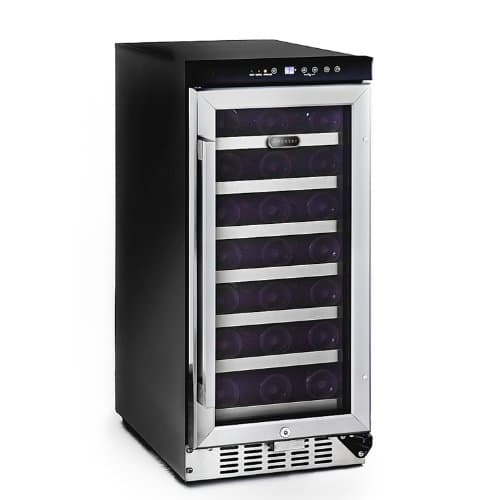
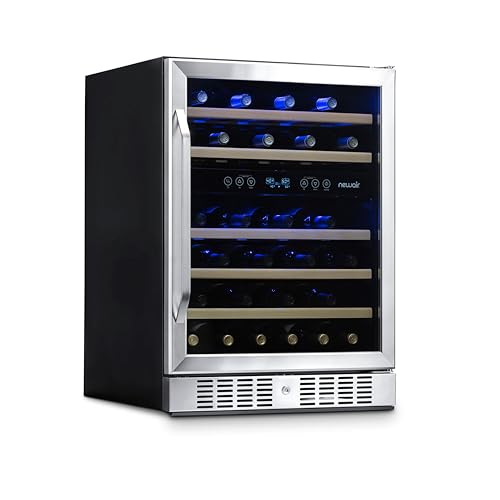
Published net weights are the single most useful number here, and they vary more than people expect across cabinets that look similar.
Three things fall out of that table. A 15-inch cabinet is a two-person lift at 70 to 100 pounds — awkward rather than heavy, because the weight is high and the glass door is the part you instinctively grab. The 24-inch towers are not on this list because they are heavier again and belong on an appliance dolly with straps. And the published depth is what decides whether the cabinet goes through your doorway: measure the door frame, not the doorway, and remember the handle adds up to two inches.
Before it moves: five steps
- Empty it completely. Bottles out first, then the shelves. A loaded cabinet is both far heavier and structurally worse off: bottles shift in transit, hammer the shelf runners and crack them.
- Switch it off and let it warm for a few hours. This lets any frost melt and the condensate drain while the cabinet is still standing where it can drain. A cabinet moved cold and wet arrives with water in the bottom of it.
- Empty the drip tray. Usually above or behind the compressor at the back. Carrying a tray of water horizontally spills it into the cabinet.
- Secure the shelves and tape the door. Wrap wooden shelves and carry them separately; most cabinets here publish removable shelves. Tape the door shut — use painter’s tape on a stainless frame, not duct tape — because a door that swings open in a stairwell takes the hinge with it.
- Coil and secure the cord. Tape it to the back. A cord under a dolly wheel, or caught on a stair nosing, is how a plug gets torn out of the cabinet.
Blankets or moving pads around the body and especially the glass. The glass is the most expensive thing to replace and the least likely to be covered by anything.
Why it must stay upright
This is the rule that matters most, and the one most often broken on the grounds that “it is only twenty minutes.”
A compressor cabinet contains a sealed refrigeration circuit and a charge of compressor lubricating oil that belongs in the compressor sump. Lay the cabinet down — or tip it past about 45 degrees for any length of time — and that oil migrates out into the refrigerant lines and the condenser. Two things can then go wrong. Run the compressor with oil still in the lines and it operates under-lubricated, which is wear you cannot see and cannot undo. Worse, liquid oil forced into the narrow capillary tube can restrict it, and a restricted capillary is a cabinet that never gets properly cold again.
That failure does not announce itself on moving day. It shows up as a cabinet that will not hold setpoint three weeks later, which is why so few people connect the two. It is also why wine fridge not cooling starts by asking whether the cabinet has been moved.
Thermoelectric cabinets — the Whynter WC-201TD, the Koolatron units, the Schmécké, the Ivation dual-zone — have no refrigerant circuit and no compressor oil, so they are genuinely tolerant of being laid flat. If you move frequently, that is a real and rarely-mentioned advantage; see best wine fridges for apartments and compressor vs thermoelectric.
In the van
Four things, and the first one is where most damage happens.
- Strap it upright to the wall of the van. A 100-pound cabinet standing free will walk and then topple on the first corner. Strap across the body, not over the door.
- Do not load anything against the glass. Obvious, universally ignored.
- Mind the condenser at the back. On a freestanding cabinet the coil and fins are exposed. A strap tightened directly over them bends fins; a box pushed against them does the same. Pad the back.
- Stairs: tilt back, never sideways. Tilting the cabinet backward onto a dolly keeps it within the tolerance the oil can handle. Laying it on its side, even briefly, starts the clock on the 24-hour rest.
If the cabinet genuinely cannot go upright — a low van, a tight stair turn — accept it, note how it travelled, and treat the rest period at the far end as mandatory rather than optional.
At the other end: the 24-hour rule
Stand the cabinet in its final position, upright, and do not switch it on for at least 24 hours. Twelve hours is the common manual minimum; twenty-four costs you nothing and removes the risk entirely. The whole point is to let the oil drain back to the compressor before it is asked to run.
Use that day productively:
- Level it, front-to-back and side-to-side. Levelling keeps the door sealing, keeps condensate running to the drain rather than onto a shelf, and stops the cabinet buzzing against the floor.
- Check the clearance for its rating. A freestanding cabinet vents back or sideways and must not be boxed in; a built-in-rated cabinet vents forward and can sit flush. A new room is a new chance to get this wrong — see ventilation and clearance.
- Reverse the door if the new layout needs it. Easy on an empty cabinet. Whynter, Summit, Zephyr and Kalamera all publish reversible or field-reversible doors on cabinets here.
- Plug it into a grounded wall outlet, never an extension cord or multi-way adapter. See does a wine fridge need a dedicated circuit.
Then run it empty overnight at your intended setpoint and confirm it gets there before any wine goes back in. That sequence is the same as for a new cabinet, and it is in how to set up a new wine fridge. Expect 24 to 48 hours to stabilize once loaded.
And the wine itself
The cabinet is the fragile part, but the bottles are the valuable one, and moving day is genuinely bad for wine.
Three rules. Keep it cool and out of sunlight — a case in a hot car for an afternoon can do more damage than a year of mediocre storage, and heat is the failure mode in what happens to wine if it is not stored properly. Pack it upright in proper cases, which protects the bottles better than laying them loose, and accept the short period of upright storage — days do not dry a cork, as store wine flat or upright explains. And let it rest: bottles that have been shaken want a week or two settling before you open anything you care about, longer for an old bottle with sediment.
If the move is long or the collection matters, that resting period is also the cabinet’s stabilization period, so the two fit together neatly. Layout when you reload is in how to arrange bottles in a wine fridge, and if the cabinet was already near the end of its life, how long do wine fridges last is the honest conversation about whether to move it at all.