A wine fridge is an appliance holding 4-166 bottles that you plug in and forget. A wine cellar is a built, insulated, climate-controlled room holding hundreds or thousands, requiring construction and a cooling unit. The middle option most people miss: a passive rack in a naturally cool room, which needs neither.
This page sits in Wine Storage Guides, where the rest of the category is compared the same way.
How this page is funded. Cork & Cool earns a commission if you buy through the Amazon links below, at no extra cost to you. It never changes the order of this list — see our editorial policy and affiliate disclosure. We do not publish prices, because a stale number helps nobody.
Our picks
The three answers, in the same order as the page: a cabinet built around long-term aging, a 166-bottle column that is the practical ceiling for an appliance, and a 150-bottle rack for the passive option.
How this page is funded. Cork & Cool earns a commission if you buy through the Amazon links below, at no extra cost to you. It never changes the order of this list — see our editorial policy and affiliate disclosure. We do not publish prices, because a stale number helps nobody.
#1 — A real cellar in a cabinet
EuroCave Pure L
Up to 110 reds, or 60 whites in the same cabinet — a French-built aging cellar rather than a serving fridge.
Illustrative photograph — not an image of the EuroCave Pure L.
Published specifications
Capacity
110 bottles
Zones
1
Cooling
compressor
Temperature range
Not published
Noise rating
Not published by the manufacturer
Installation
freestanding
· Capacity: up to 110 red wines, or up to 60 whites
· Multi-purpose wine storage cabinet from the Pure collection
· 5-year warranty; made in France
· Glass door with stainless steel trim variant available
Designed around long-term aging rather than service
Five-year warranty, which is unusual in this category
The capacity figure is honestly split by bottle type, which most brands do not do
What does not
Costs multiples of anything else on this page
Sold through a single US distributor, so servicing is not a local-appliance-shop matter
Who should skip it. Skip it if you are storing wine you intend to drink within a year or two. The engineering you are paying for only pays back over a decade of aging.
Cost per bottle stored is a fraction of any powered cabinet
Labels stay readable, so you can actually find a bottle
No power, no compressor, nothing to fail
What does not
No temperature control, no humidity control, no UV protection — the room does all of that or nothing does
150 full bottles is roughly 400 lb; the floor has to take it
Who should skip it. Skip it if the room swings more than a few degrees across the year, or gets above the mid-60s°F in summer. A rack in the wrong room ages wine faster than no rack at all.
Worth clearing up, because it makes this comparison hard to search for: some manufacturers call their cabinets “wine cellars”. EuroCave, Dacor and others use the term for appliances. So “wine cellar” means two quite different things depending on who is talking (the naming problem generally).
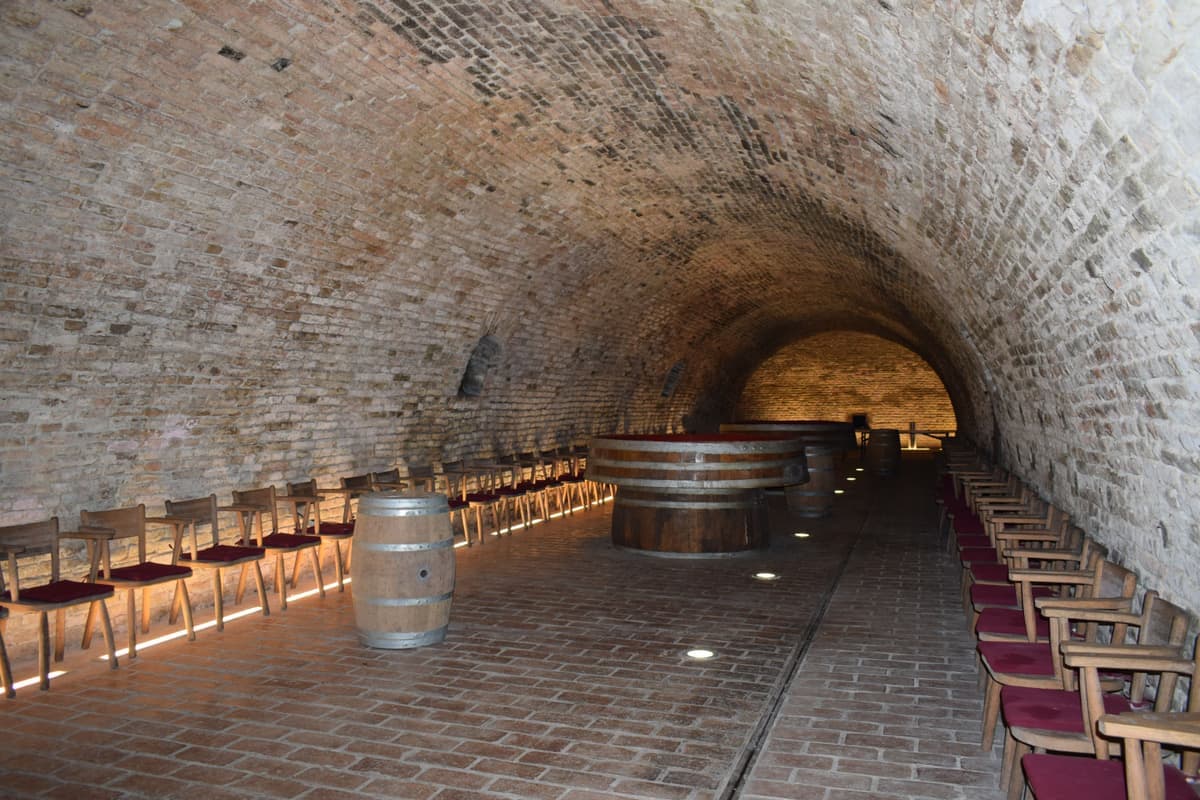
On this page, cellar means a built room — an insulated, sealed space with its own cooling unit. Cabinets are cabinets, whatever the badge says.
Three genuinely different answers
Cabinet, built cellar, or passive room
Wine fridge
Built cellar
Passive rack in a cool room
What it is
An appliance you plug in
A constructed, insulated room with a cooling unit
Shelving in a room that is already suitable
Typical capacity
4–166 bottles
Hundreds to thousands
Whatever the room holds — 150+ easily
Temperature control
Active, precise, per zone
Active, whole-room
None — the room is the control
What it needs
A socket and correct clearances
Construction, vapor barrier, insulation, a cooling unit, usually a contractor
A cool, dark, stable room
Cost per bottle stored
Highest
High up front, low at scale
Lowest by a wide margin
Can you take it with you
Yes
No
Yes
Failure modes
Compressor, fan, gasket
Cooling unit, insulation or vapor barrier failure
Nothing to fail — but nothing to protect either
The column that surprises people is the third one, and it is the point of this page. A built cellar is a serious construction project: without a proper vapor barrier and insulation a cellar does not merely underperform, it develops moisture problems in the building fabric. It is the right answer for a large collection and the wrong answer for 80 bottles.
Where the crossover is
Roughly, by how many bottles you genuinely intend to keep:
Under 50 bottles: a cabinet, or a rack if the room is good. A cellar is indefensible at this scale.
50–170 bottles: cabinet territory, and the practical ceiling for an appliance — a 24-inch column like the Whynter BWR-1662SD holds 166 bottles in two feet of width. Alternatively a rack in a cool room plus a small cabinet for serving, which is usually cheaper and often better (rack vs fridge).
170–400 bottles: the genuine gray zone. Two cabinets, or a converted closet with a small cooling unit. Worth pricing both.
400+ bottles: a cellar starts to make economic sense, and cabinets become an awkward way to solve it.
Be honest about which number is yours. Collections grow, but they grow more slowly than optimism suggests, and the 400-bottle cellar built for a 120-bottle collection is a common and expensive mistake. Size from what you actually keep (sizing).
The passive cellar most people miss
Before either appliance or construction, check whether you already own the room.
A basement, an interior closet, or the space under a staircase is often naturally cool, dark and — crucially — stable. Stability is what protects wine: a steady 62°F is better than an average of 55°F that swings ten degrees either side, because the swings are what work the cork (wine storage temperature).
A rack in such a room stores 150 bottles for a fraction of a cabinet’s cost, uses no electricity, has nothing to fail, and adds no vibration. That is a genuine passive cellar, and it is how wine was stored for centuries.
How to check: leave a min/max thermometer where the wine would live for a week in summer and a week in winter. If the range stays roughly within 50–68°F, buy a rack and spend the cabinet money on wine (floor racks). If it does not, no rack will fix it — and a cabinet like the EuroCave Pure L, designed around long-term aging rather than service, is the appliance answer.
Questions people actually ask
▸ Is a wine cellar better than a wine fridge?
For a large collection, yes — better cost per bottle at scale and effectively unlimited capacity. For under about 170 bottles a cabinet is the sensible answer, and a rack in a naturally cool room may be better still.
▸ How many bottles before a wine cellar is worth it?
Roughly 400 and upward. Below that, cabinets or a passive rack in a cool room are cheaper and far less committing. Between 170 and 400 it is genuinely worth pricing both.
▸ Can a closet be turned into a wine cellar?
Yes, and it is the usual starting point — but a cooled room needs proper insulation and a vapor barrier, or moisture migrates into the surrounding structure. That is contractor work.
▸ Do you need a cooling unit for a wine cellar?
For an actively controlled cellar, yes. But a naturally cool, dark, stable room — a basement or an interior closet — can store wine passively with just a rack, which is how it was done for centuries.