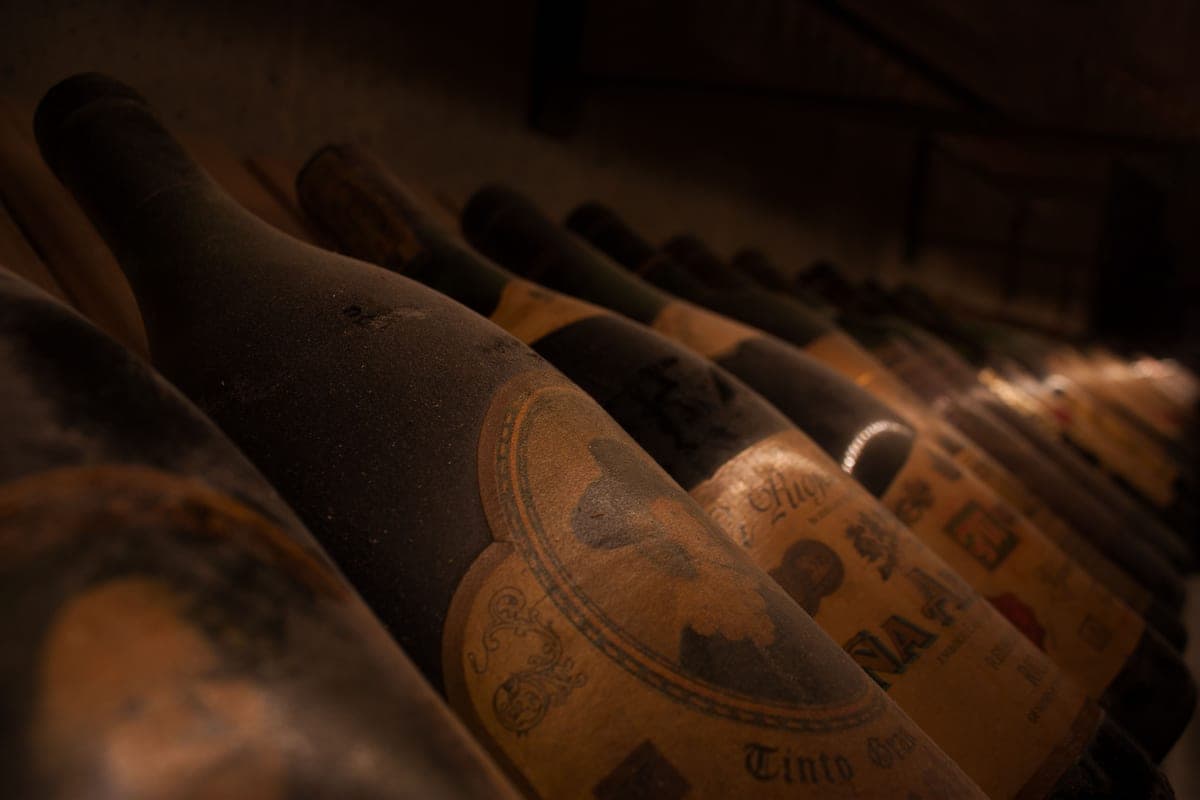
The EuroCave Pure L is the cabinet here actually built for aging, and the Liebherr WS1200 is the only other one documenting a low-vibration compressor. For volume rather than provenance, the single-zone Whynter BWR-1662SD holds 166 bottles at one steady setting.
This page sits in Wine Fridges, where the rest of the category is compared the same way.
How this page is funded. Cork & Cool earns a commission if you buy through the Amazon links below, at no extra cost to you. It never changes the order of this list — see our editorial policy and affiliate disclosure. We do not publish prices, because a stale number helps nobody.
Quick picks
Every model below, on the specifications that decide the purchase. Tap a row to jump to the full write-up.
Comparison of wine storage models by zones, capacity, cooling type, width, published noise rating and vibration.
“Not published” means the manufacturer does not publish that figure. We do not estimate it. Thumbnails are illustrative category photographs, not photographs of the specific models.
How we compared
We compared published manufacturer specifications, official product documentation and verified owner reports across 6 models. We do not physically test these units, we have no laboratory, and we do not accept payment for placement. Where a manufacturer does not publish a figure — noise ratings, most often — this page says so rather than estimating it.
What we weighted
Ability to hold ONE steady temperature in the 50-59°F storage band, which single-zone cabinets do better by construction
Documented vibration control, weighted heavily — over a decade it stops being a comfort question
UV protection on the glass, since light is a documented wine-fault mechanism
Air management, because a cork breathes slowly for years
Shelf design: slide-out wooden shelves mean you disturb the rest of the cabinet less
Warranty length, as the manufacturer's own statement about longevity
Every model in detail
#1 — A real cellar in a cabinet
EuroCave Pure L
Up to 110 reds, or 60 whites in the same cabinet — a French-built aging cellar rather than a serving fridge.
Illustrative photograph — not an image of the EuroCave Pure L.
Published specifications
Capacity
110 bottles
Zones
1
Cooling
compressor
Temperature range
Not published
Noise rating
Not published by the manufacturer
Installation
freestanding
· Capacity: up to 110 red wines, or up to 60 whites
· Multi-purpose wine storage cabinet from the Pure collection
· 5-year warranty; made in France
· Glass door with stainless steel trim variant available
Designed around long-term aging rather than service
Five-year warranty, which is unusual in this category
The capacity figure is honestly split by bottle type, which most brands do not do
What does not
Costs multiples of anything else on this page
Sold through a single US distributor, so servicing is not a local-appliance-shop matter
Who should skip it. Skip it if you are storing wine you intend to drink within a year or two. The engineering you are paying for only pays back over a decade of aging.
Twelve bottles, wooden grid shelves, and a compressor Liebherr specifically develops for low vibration — the small cabinet that treats wine as aging stock.
Illustrative photograph — not an image of the Liebherr WS1200.
Published specifications
Capacity
12 bottles
Zones
1
Cooling
compressor
Temperature range
Not published
Noise rating
Not published by the manufacturer
Installation
freestanding
· Exterior width: 16 3/4 in
· Capacity: 12 bottles on 3 wooden grid shelves
· Electronic touch control with digital temperature display
A published vibration measure, which almost nobody in this category offers
Panel-ready, so it disappears into cabinetry
Two zones in a single base cabinet
What does not
No published temperature range in the product listing
Panel-ready means you are also buying a custom door panel
Who should skip it. Skip it if the unit is going into a garage or a utility room. Panel-ready construction and vibration engineering are worth paying for in a finished kitchen and nowhere else.
The single most useful fact about long-term wine storage is that stability beats coldness. The consensus target is a constant temperature between 50 and 59°F; 55°F is the figure most often quoted, and some writers argue 52°F is closer to ideal. What the guidance agrees on is the word constant.
Two supporting facts make the point sharper. Chemical reaction rates in wine roughly double for every 18°F increase in temperature, so warmth is speed. And wine can be stored as high as 69°F without long-term negative effect — which is far more forgiving than most marketing implies, and tells you that a steady 65°F cupboard beats a cabinet oscillating between 48 and 62.
This is why a single-zone cabinet is the storage configuration. No internal partition means no thermal boundary and no compromise shelf spacing, and one setpoint is easier to hold flat than two. The Whynter BWR-1662SD is on this page for exactly that reason: 166 bottles, one setting, sixteen uniform shelves.
The four things that actually damage stored wine
Ranked by how much they should influence which cabinet you buy.
1. Temperature swing. Covered above, and it outranks everything else. A cabinet in a stable interior room will hold a flatter line than the same cabinet in a garage that swings thirty degrees across the year, whatever the specification says.
2. Vibration. Over a dinner it is irrelevant. Over ten years it is a storage variable, because constant agitation disturbs the slow settling that aging depends on. Only two cabinets here document a mechanism: Liebherr states its compressors are specially developed for a particularly low-vibration environment, and Dacor specifies a GlideRack shelf system built to eliminate vibration. Everyone else is silent, and we record silence as silence.
3. Light. Ultraviolet exposure creates wine faults and alters flavor and aroma. A glass-fronted cabinet in a sunlit kitchen is working against itself unless the glass is UV-treated, which Liebherr states for the WS1200 and which is standard on cellar-grade cabinets. If your cabinet has plain glass and daylight reaches it, that is a real problem and moving the cabinet is cheaper than replacing it.
4. Dry air. Last, and genuinely last. A cork dries over years, not months, and the single most effective response costs nothing: lay bottles on their side so the cork stays wet. Details, and the sparkling-wine exception, in flat or upright, and what a cabinet can do about it in the humidity roundup.
Why capacity comes last here
On every other page on this site, capacity is near the top of the list. On this one it is at the bottom, and the reason is worth stating plainly.
A cabinet you are aging wine in should be about three-quarters full and stay that way for years. You are not cycling stock through it weekly; you are putting bottles in and leaving them. So the capacity question becomes “how many bottles am I laying down”, which is a much smaller number than “how much wine do I own”.
That is how a twelve-bottle Liebherr earns a place above a 164-bottle cabinet on this particular list. Twelve bottles you genuinely care about, in a cabinet with a documented low-vibration compressor and UV glass, is a better outcome than a hundred and sixty in a cabinet that vibrates. If you need both — volume and provenance — the honest answer is two cabinets, or one EuroCave.
A last option worth naming: if you have a genuinely cool, dark, stable room, an unpowered rack does everything on this list except control temperature, and the room is doing that for free. That works only if the room really is stable — see rack versus fridge and how a cabinet compares to a real cellar.
Questions people actually ask
▸ What temperature is best for long-term wine storage?
A constant temperature between 50 and 59°F, with 55°F the most commonly cited figure. Constancy matters more than the exact setting.
▸ Can I age wine in a regular wine fridge?
Yes, for years, if it holds a steady setting, the glass blocks UV or the cabinet sits out of daylight, and bottles lie on their side. A single-zone cabinet does this better than a dual-zone one.
▸ How long can wine be stored in a wine fridge?
As long as the wine itself will keep. The cabinet is not the limiting factor for everyday bottles; most are made to drink young regardless of how well you store them.
▸ Does vibration matter for storing wine?
Over years, yes — vibration accelerates aging, and in most cases that acceleration is unwanted. It is why a documented low-vibration compressor is the clearest reason to spend more on a storage cabinet.
▸ Is a wine fridge as good as a cellar?
For temperature, often better, because a cabinet holds a flatter line than most basements. For humidity and thermal mass, a real cellar wins. Full comparison here.