The conventional target is 55°F, but a steady 62°F is better for wine than an average of 55°F that swings between 45 and 70. Swings physically work the cork; a warm steady temperature simply ages wine faster and predictably. Judge a storage spot on its yearly range, not today's reading.
This page sits in Wine Storage Guides, where the rest of the category is compared the same way.
How this page is funded. Cork & Cool earns a commission if you buy through the Amazon links below, at no extra cost to you. It never changes the order of this list — see our editorial policy and affiliate disclosure. We do not publish prices, because a stale number helps nobody.
Our picks
Once you know what your room does across a year, the answer is one of these three shapes: a cabinet that ignores the room, a cabinet built around long-term aging, or a rack because the room is already good enough.
How this page is funded. Cork & Cool earns a commission if you buy through the Amazon links below, at no extra cost to you. It never changes the order of this list — see our editorial policy and affiliate disclosure. We do not publish prices, because a stale number helps nobody.
#1 — One temperature, 166 bottles
Whynter BWR-1662SD
The single-zone sibling: 166 bottles on 16 shelves at one setting, which is what long-term storage actually wants.
Illustrative photograph — not an image of the Whynter BWR-1662SD.
Published specifications
Capacity
166 bottles
Zones
1
Cooling
compressor
Temperature range
40–65°F
Noise rating
Not published by the manufacturer
Installation
built-in
· Capacity: 166 standard 750 ml bottles
· Shelving: 16 removable wooden flat slide-out shelves plus a wire display shelf
Designed around long-term aging rather than service
Five-year warranty, which is unusual in this category
The capacity figure is honestly split by bottle type, which most brands do not do
What does not
Costs multiples of anything else on this page
Sold through a single US distributor, so servicing is not a local-appliance-shop matter
Who should skip it. Skip it if you are storing wine you intend to drink within a year or two. The engineering you are paying for only pays back over a decade of aging.
Cost per bottle stored is a fraction of any powered cabinet
Labels stay readable, so you can actually find a bottle
No power, no compressor, nothing to fail
What does not
No temperature control, no humidity control, no UV protection — the room does all of that or nothing does
150 full bottles is roughly 400 lb; the floor has to take it
Who should skip it. Skip it if the room swings more than a few degrees across the year, or gets above the mid-60s°F in summer. A rack in the wrong room ages wine faster than no rack at all.
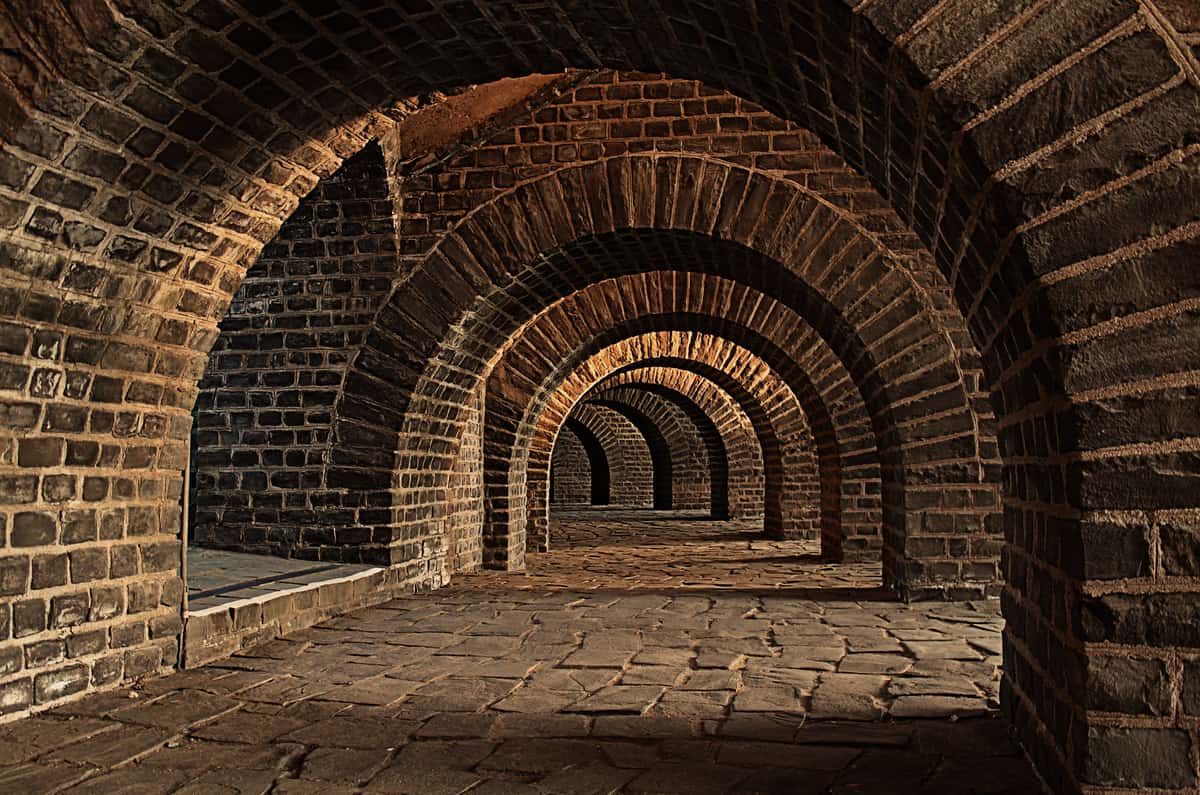
55°F is the figure you will see everywhere, and it is a reasonable target. Its authority comes from traditional underground cellars in European wine regions, which naturally sat around that temperature year-round — and produced wine that aged beautifully. It is an observed convention rather than a threshold with a cliff on either side.
What the temperature actually controls is the rate at which wine develops. Cooler is slower; warmer is faster. Around 55°F, development happens at the pace winemakers designed for.
Which means storing at 62°F is not a failure. Wine there ages faster — a bottle intended to peak in fifteen years might get there in ten — but it ages properly. Above roughly 70°F sustained, development becomes cooked and flat rather than merely quick, and that is the point at which warmth is a real problem in its own right.
What swings actually do
This is the part that matters more than the number, and it is mechanical rather than chemical.
Wine and the small pocket of air under the cork expand as they warm and contract as they cool. Every cycle works the cork slightly in its neck. Repeat that weekly for years and the seal degrades: seepage up the side of the cork, wine past the seal, and air getting in where it should not. A bottle can be ruined by a room that never once got hot, purely by moving up and down.
So the comparison that matters is not warm against cool, it is steady against variable:
How storage conditions compare
Condition
Verdict
Why
Steady 55°F
Ideal
The convention, for good reason — wine develops at its designed pace
Steady 62–65°F
Good
Ages faster but properly; a perfectly serious storage spot
Cycling 45–70°F seasonally
Poor
Cork is worked repeatedly; seal degrades even though it is never hot
Steady 72°F+
Poor
Development becomes cooked and flat rather than merely fast
Daily cycling of any range
Worst
Frequency compounds the damage — a kitchen, or a garage in spring
The practical upshot: an interior closet that sits at a dull steady 64°F is a better cellar than a garage that averages a perfect 55°F. That is genuinely counterintuitive and it is the most useful thing on this page.
Which rooms can be trusted
Basement — usually the best spot in a house. Underground, thermally buffered, dark, stable. Check for damp if you plan a wooden rack (wood vs metal).
Interior closet or under a staircase — no exterior walls, no windows, no heat sources. Frequently excellent and completely free.
North-facing interior room — good, if it is not the room with the radiator you turn up in January.
Kitchen — the worst room in the house for storage. Warmest, brightest, and it swings several degrees every time someone cooks. Fine for bottles in rotation.
Garage or conservatory — tracks outdoor temperature, which is the definition of unstable. If the wine must live there, it needs a compressor cabinet: wine fridge in a garage.
Attic — the worst of all. Hottest part of the house and the most variable.
Light and vibration are the other two variables, and both are simpler: keep bottles dark, and keep them away from anything that hums constantly. A rack has a quiet advantage here — no compressor at all (rack vs fridge).
Test the room before you trust it
The best money in this entire decision is a cheap thermometer — ideally a min/max one. Leave it where the wine would live for a week in summer and a week in winter, and record the extremes rather than the average.
Then judge it: if the range across the year stays roughly within 50–68°F, a rack in that room is a serious storage solution and you can spend the cabinet money on wine. If it does not, no rack will fix it and a cabinet is the answer — a front-venting one if it is going into joinery (built-in vs freestanding).
Opened bottles are a separate question with a different answer, and the kitchen fridge is correct for those: how to store opened wine.
Questions people actually ask
▸ What is the ideal temperature to store wine?
55°F by convention, and it is a good target. But stability matters more: a steady 62°F is better than an average of 55°F that swings ten degrees either side.
▸ Is 70 degrees too warm to store wine?
Sustained, yes — above roughly 70°F development becomes cooked and flat rather than simply faster. For a few weeks in summer it is survivable; as a year-round average it is not.
▸ Do temperature swings really ruin wine?
They are the main mechanical risk. Wine and the air under the cork expand and contract with every cycle, working the cork in its neck until the seal degrades. A bottle can be spoiled by a room that never actually got hot.
▸ Can I store wine in a closet?
An interior closet with no exterior walls, windows or heat sources is often one of the best spots in a house — dark and thermally stable. Measure it across a summer and a winter week to confirm.