Five mechanisms, one job
Every wine aerator sold is one of a handful of mechanisms, and the differences are not cosmetic. They decide how much air the wine meets, whether it meets it in the bottle or in mid-air, whether anything solid gets strained out on the way, and whether you have any control over the dose. Pick the mechanism first and the shortlist writes itself.
Our picks are one of each, ranked in the order most households should consider them. The short version: a handheld venturi is the best general answer, an in-bottle version of the same thing is most of the benefit for a fraction of the money, and the funnel and the electric unit are specialists worth buying when you know which specialist problem you have.
What air actually does to wine
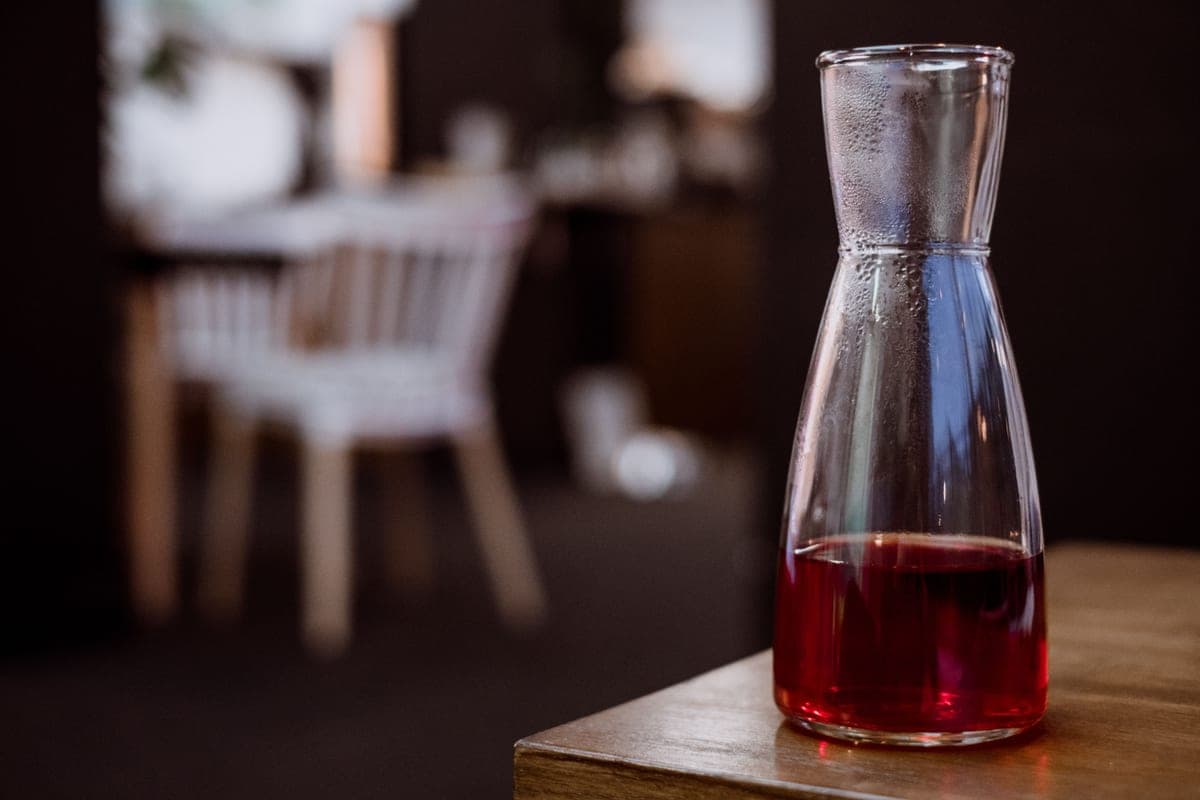
Aeration and oxidation are the same chemistry running at different speeds. Oxygen reacts with the compounds in wine: in the first minutes those reactions soften the perception of tannin and let volatile aromas escape and open out, which is what people mean by a wine “opening up.” Left for hours or days, the same reactions flatten the fruit and eventually turn the wine to vinegar — which is exactly why the rest of this hub is about keeping air out. An aerator is a tool for giving a wine a deliberate, short, controlled dose of the thing that will later ruin it.
That is the honest frame for every claim in this category. None of the five makers here publishes a measured dissolved-oxygen figure, a laboratory comparison or a tasting-panel result. What they publish is a mechanism and, in one case, an equivalence claim: Vinaera states that the PRO’s top setting is equivalent to three hours in a traditional decanter. Treat that as the maker’s own claim, which is how we have recorded it. The rest of the category sells you a physical principle, and the principle is sound — but the dose is not measured, and anyone who tells you it is has not read the box.
Two things follow. First, an aerator cannot improve a wine that has nothing to open up: air does not add fruit that was never there. Second, aeration is not reversible. A delicate older red that needed ten minutes and got the equivalent of three hours is worse, not better, and no device will put the aromatics back.
Why the venturi became the default
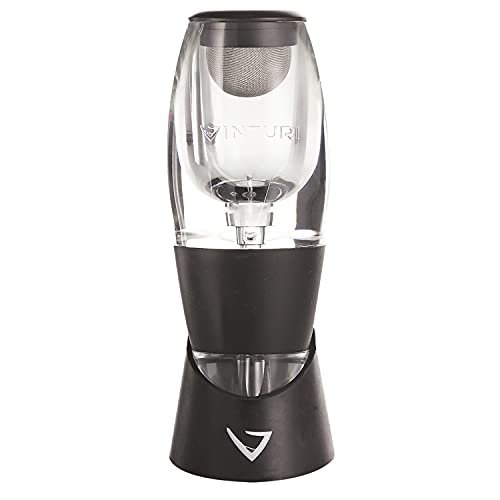
The handheld venturi aerator is the design that created this product category, and the physics is the reason it stuck. Wine poured into the top of the device is squeezed through a narrowing throat; as the wine speeds up its pressure falls below the pressure of the room, and air is pulled in through side ports to meet it. You can hear it happen, which is the one feature in this entire category that gives you honest feedback: the sound is the air arriving.
Two practical consequences. The aeration happens in mid-air over the glass, so far more surface area meets air than can ever happen inside a bottle neck. And because the body is a chamber rather than a spout, it has room for a filter screen — the Vinturi V1010 includes one, and on a bottle with any sediment that screen is the difference between a clean glass and a gritty one.
The costs are equally real. It is a two-handed operation: aerator in one hand, bottle in the other, glass somewhere below both. It needs a stand or it drips on the counter, which is why the V1010 ships with a base. And Vinturi sells the model separately for red and for white, so a household that drinks mostly white should buy the on-bottle model, which the maker publishes for both.
In-bottle spouts: convenience with a cost
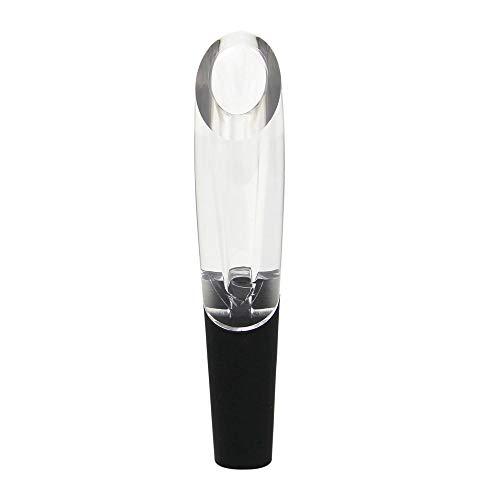
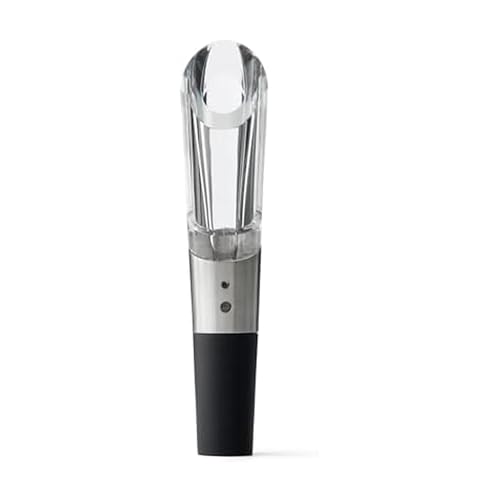
Move the same venturi into the neck of the bottle and the ergonomics invert. One hand pours, nothing needs a stand, and the aerator never leaves the bottle until the bottle is empty. The Vinturi On-Bottle is the cheapest honest aerator we have found: the same patented mechanism, published for red and white, aerating in under thirty seconds of pouring according to the maker.
What you give up is filtration and control. A device sitting in a bottle neck has no room for a screen, so whatever is in the bottle goes into the glass. And the dose is whatever the geometry delivers — pour faster and you get marginally more air, which is not a control, it is an accident. The Rabbit aerating pour spout is the same trade pushed one step further toward the dinner table: a silicone plug seals the neck, the pour is genuinely dripless, and Rabbit publishes no aeration claim for it at all. As a spout it is excellent. As an aerator, it is the one pick here whose benefit the maker will not put a number on, and we have ranked it last for exactly that reason.
The funnel is the only whole-bottle option
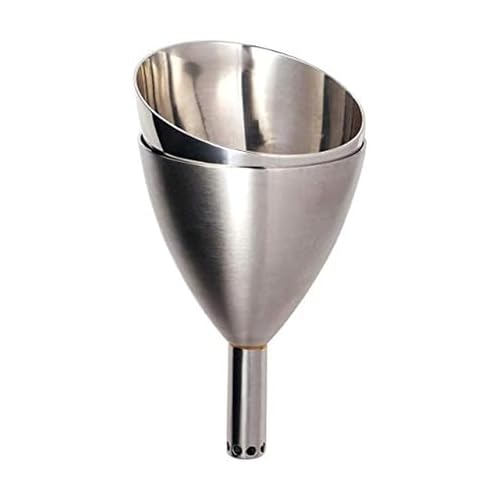
Every other aerator here works a glass at a time. If you are opening a young, structured red for a table of six, a glass-at-a-time tool is the wrong shape for the evening: the first glass gets aerated and the bottle does not. The Rabbit shower funnel is the answer to that specific problem. It sits in the mouth of a decanter and breaks the stream into a spray, so a whole bottle meets air on its way down, and a nested strainer catches sediment while it happens.
It is 18/8 stainless steel and dishwasher safe, which after a year of use matters more than it sounds — acrylic aerators cloud and scratch, and the hand-wash-only ones quietly stop being used. The catch is obvious and worth stating plainly: a funnel is useless without a decanter. If you do not own one, the real cost of this pick is the funnel plus a decanter, and our wine decanter roundup is the place to start on that half of the purchase.
What a dial buys you
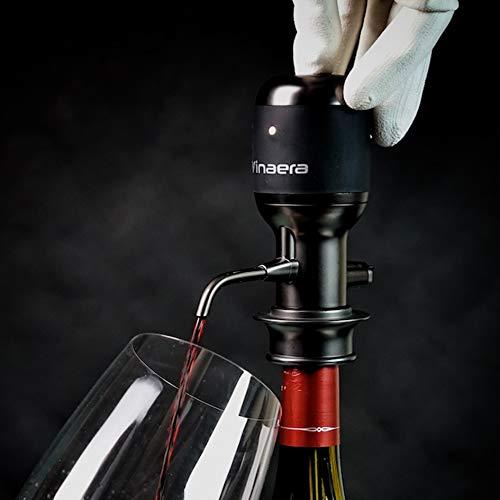
The one thing no passive aerator can do is give two different wines two different doses. The Vinaera PRO is the only pick here with an adjustable level, and that is the whole argument for it: a four-year-old Napa Cabernet with firm tannin and a bright young Beaujolais do not want the same treatment, and with a fixed-geometry pourer you are giving them the same treatment anyway.
The published specification is unusually specific for this category. Vinaera claims the top setting is equivalent to three hours in a traditional decanter, states a ten-second clean, includes a telescopic tube so the unit seats properly in both tall and short bottles, includes a sediment filter, and publishes a battery life of more than a hundred bottles from six AAA cells. Those cells are not in the box, which is a genuine irritation at this price, and an electric aerator is one more gadget to find counter space for. But it is the only pick that filters and adjusts, and on young tannic wine that combination is worth the money.
Sediment is the spec nobody compares
Aerator reviews compare aeration. Buyers mostly notice sediment, because sediment is visible in the glass and aeration is not. Here is how the five picks line up on it, which is not how they line up on price:
The pattern is simple: the three picks with a chamber can filter, the two that live in the bottle neck cannot. If most of what you drink is under five years old, this does not matter. If you buy bottles to keep — the kind of collection our long-term storage roundup is built around — it matters a great deal, because mature red wine throws sediment and the whole point of careful storage is to drink the wine and not the deposit.
Which wines are worth aerating
Aeration earns its keep on young wines with structure: tannic reds in their first few years, where air softens the perception of grip and lets closed aromatics come forward. Cabernet Sauvignon, Syrah, Nebbiolo, Tempranillo, Malbec and the big blends built on them are the obvious candidates, and so is almost anything described on the back label as needing time.
It earns much less on light, aromatic, high-acid whites, where the aromas you would blow off are the point of the wine, and on sparkling wine it is simply destructive — aerating Champagne is a way of making expensive still wine. The hardest case is old red wine. A mature bottle can open beautifully with a few minutes of air and collapse within the hour, so the sensible procedure with anything over about fifteen years is to pour a glass, taste it, and decide. If it needs air, a decanter lets you watch it happen in stages; a three-hour dose delivered in four seconds does not.
Serving temperature does at least as much work as aeration, and it is free. A red served at room temperature in a warm kitchen tastes alcoholic and flabby no matter how much air you put through it, which is the argument our wine storage temperature guide makes at length. Get the temperature right first; then decide whether the wine wants air.
Aerator or decanter?
They are not competitors so much as different time scales. A decanter gives a whole bottle a slow, watchable dose of air over an hour or two, and it lets you stop when the wine is where you want it. An aerator gives one glass a fast, fixed dose in the time it takes to pour. If you have an hour, the decanter is better. If you want a glass now, the decanter cannot help you.
In practice most households that take wine seriously end up with both, and use the funnel to bridge them: decant through a shower funnel and you get the whole-bottle treatment, the aeration and the sediment strained in one pour. If you want the full argument for the glassware itself rather than the aerating hardware, our decanter roundup covers shape, capacity and the drying problem that nobody mentions until they own one.
Which of the five to buy
Buy the Vinturi V1010 Essential if you want one aerator and no conditions: the original mechanism, a filter screen in the path, a stand to keep it off the counter. Buy the Vinturi On-Bottle if the price of the handheld unit is hard to justify — it is the same patented principle, published for white wine as well as red, for a fraction of the money, and it is our budget pick. Buy the Rabbit shower funnel if you already own a decanter and open whole bottles for a table, because it is the only pick here that aerates and strains a full bottle in one pour. Buy the Vinaera PRO if you drink young, tannic, structured red and want to set the dose by the wine rather than accept whatever the geometry gives you. And buy the Rabbit aerating pour spout if the drip on the tablecloth annoys you more than the aeration interests you — it is a very good spout that aerates a little, and we have been careful not to claim more for it than Rabbit does.
One thing none of them does is keep the bottle you did not finish. That is a different mechanism and a different page: wine preservation systems ranks the tools that take air out, which is the exact opposite of everything above.