Five mechanisms, one job
Almost every wine opener sold is one of five mechanisms, and the differences between them are not stylistic. They decide how much force reaches the cork, from which direction, and over how many stages — which in turn decides whether a cork comes out in one piece or in several. A corkscrew is a tool for applying tension to a cylinder of tree bark that has been compressed into a glass neck for years. Treat it as that, and the right choice becomes obvious long before brand names come into it.
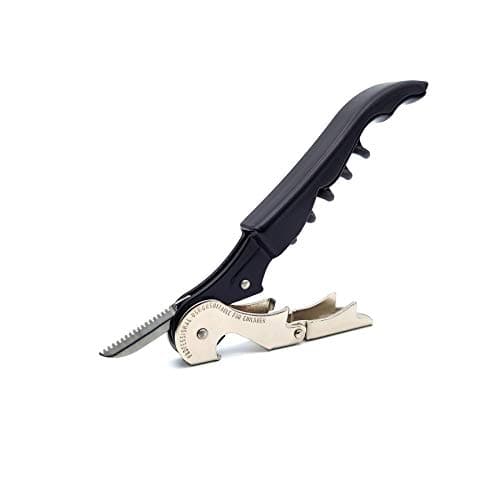
Our picks are one of each, in the order most households should consider them. If you want the short version: a double-hinged waiter’s key handles 95% of bottles better than anything else at any price, and the remaining 5% are old bottles that want a two-prong puller instead. Everything in between is about convenience, grip and how many bottles you open at once.
The cork is the specification that matters
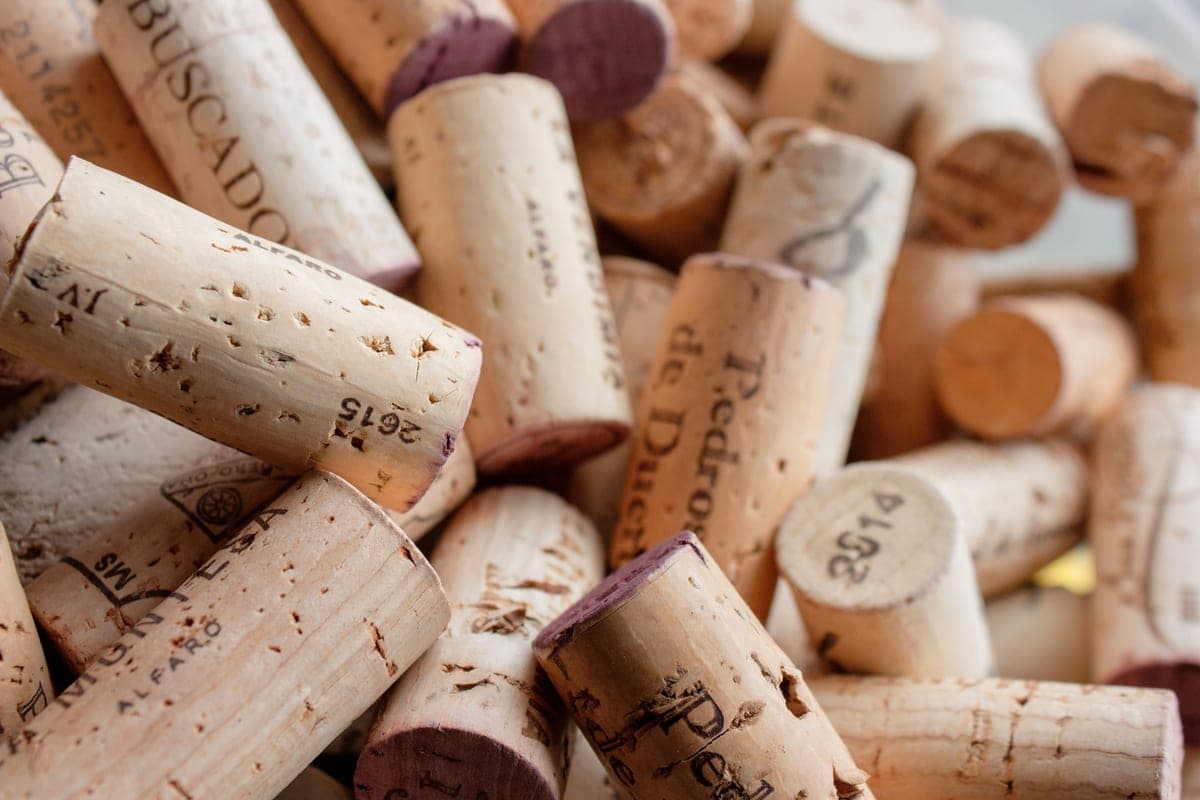
Openers get compared on handle finish. The useful number is on the other side of the transaction: the cork. The industry standard natural cork for still wine is published at 24 mm in diameter and 44 mm long — cork suppliers sell it by exactly that figure, and a 2020 study in Forest Systems records 24 x 44 mm as the dimension the industry settled on for sealing most still wines. Forty-four millimeters is about 1.75 inches of compressed bark, and premium bottlings often use a longer cork still.
That is the distance any screw has to travel to get a secure grip near the bottom of the cork, and it is why worm length is not a detail. A screw that engages only the top third of a 44 mm cork is pulling on the end of a long plug — the top tears away and the rest stays in the bottle. It is also why the cork in a well-aged bottle behaves nothing like the cork in a bottle from last year: cork compresses, dries at the top and loses structure over a decade or two, and a mechanism that works perfectly on a young bottle can shred one from 2005. How long that takes depends almost entirely on storage, which is the argument our wine storage temperature guide and what happens to wine if it is not stored properly both make at length. A cork kept at a stable cellar temperature in a cabinet with some humidity is a cork that still has something for a worm to grip.
The worm is most of the tool
Three published worm specifications separate these five picks, and each one maps to a failure you can picture.
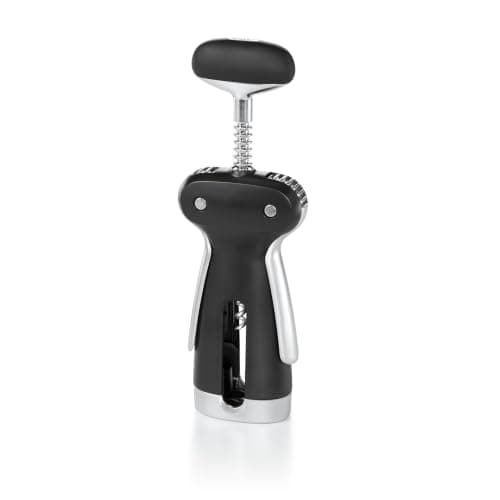
Coating. Pulltap’s publishes a Teflon-coated spiral on the Classic 500. OXO publishes a non-stick screw on the Steel winged corkscrew. Coating matters because an uncoated worm drags against the cork wall as it turns, and drag is friction applied sideways to a cylinder you want to keep intact. It is the cheapest meaningful upgrade in this category and both of our manual picks publish it.
Self-centering. OXO publishes this on the winged model, and it is the thing that saves a winged corkscrew from itself. A screw that enters off-center exits through the side of the cork, and from there the cork breaks up with the wings still mid-stroke.
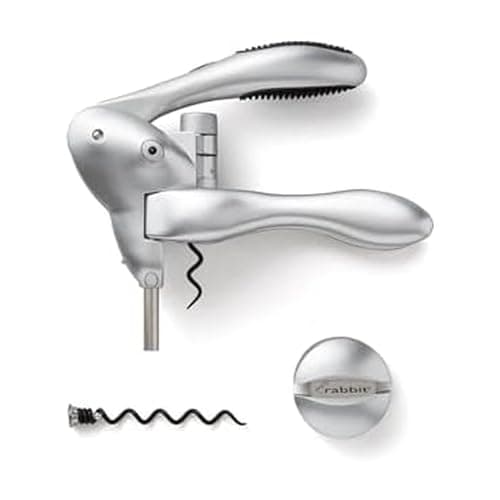
Replaceability. The Rabbit lever ships with a spare non-stick spiral in the box, and Pulltap’s sells spirals separately. A worm is the only part of a manual opener that wears, so a tool with an available replacement worm is a tool with a long life. The electric opener’s worm is not user-replaceable; the Ah-So does not have one at all.
Nobody in this category publishes worm length in millimeters, including the makers that publish everything else — so we will not print a figure for any of them. What is observable without a measurement is the geometry: the winged format has the shortest effective worm travel of the five, which is why it is the one that most often leaves the bottom of a long cork in the neck.
How much force each one asks for
This is where buyers most often choose wrongly, because the question is not “which opener is best” but “how much pull does my hand have today”.
- Waiter’s key: all of the lifting force comes from your hand and forearm, but the double hinge splits the lift into two shorter, lower-force stages. That is the entire reason the double-hinged design is the professional standard rather than the single-hinge version it replaced.
- Vertical lever: the frame holds the bottle and the lever multiplies your input, so the pull is a smooth stroke rather than a heave. Rabbit publishes a cork out in about three seconds with automatic release. This is the format to buy for arthritic hands, and it is the one we would buy for a parent without being asked.
- Winged: both arms come down together, which keeps the force symmetrical and the bottle still, but the final lift is still your forearm against a short worm.
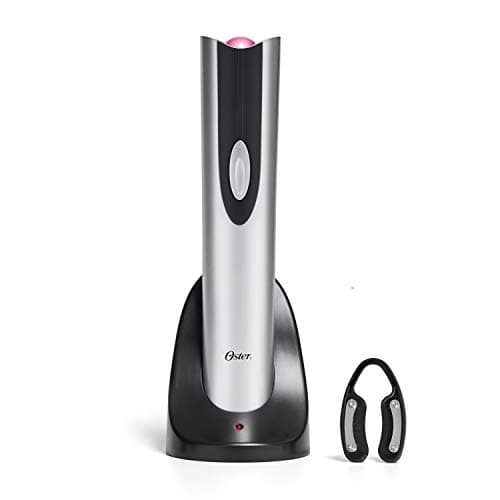
- Electric: no force at all. Press and hold. For anyone who genuinely cannot pull a cork, this is not a convenience, it is the product.
- Two-prong: very little force, a great deal of feel. The work is a slow rocking push followed by a twist, and the tool rewards patience rather than strength.
Foil cutters, and where they go to die
Every pick here deals with the capsule, and the difference is only whether you will still own the cutter in a year.
Pulltap’s builds a hinged serrated knife into the body of the Classic 500, so the cutter cannot be separated from the opener. OXO’s cutter is removable but snaps back into the base of the corkscrew, which is the next best thing. Rabbit and Oster both include a separate foil cutter in the box — a disc that lives in a drawer, and in most households is the first part to disappear. None of this is a reason to pick a different mechanism. It is a reason to notice that a knife attached to the tool is worth more than a better cutter you will not be able to find.
What a battery actually buys
Oster publishes the two numbers that decide whether an electric opener suits you: up to 30 bottles on a single charge, and 6 to 8 hours to charge. Read those together. Thirty bottles is far more than any dinner party needs, so the capacity figure is not the constraint — the eight-hour recharge is. An electric opener is a tool you have to remember the day before, in the same way you remember to put the whites in to chill in time. Left flat on the base of a cupboard, it is a paperweight at exactly the moment you want it.
The published electrical figures are modest — 14.4 W, UL approved for 110 to 120 V — so running cost is not a consideration here the way it is with a cabinet, where the nameplate figure genuinely matters and our running costs guide works through the arithmetic. What you are buying with an electric opener is the removal of hand force, and what you are paying is counter space plus a one-year warranty term.
One honest caution that applies to the whole electric category: a motor cannot feel resistance. A hand on a lever notices when a cork stops behaving and stops. A motor keeps driving, and on a cork that has lost structure it will auger a hole straight through the middle. If your collection is young, that will never happen to you. If you are opening bottles you have been aging for a decade, keep something manual in the drawer.
Old bottles need a different tool entirely
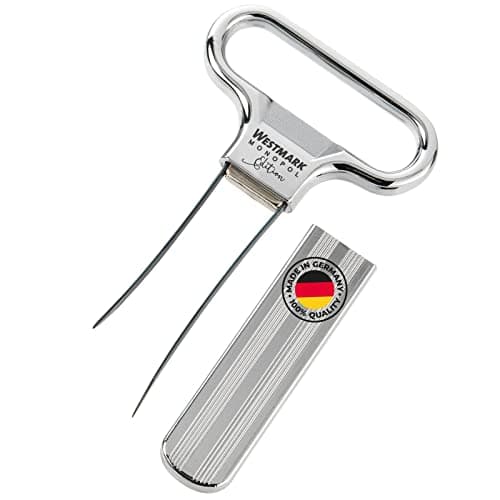
The two-prong puller — the Ah-So, sometimes called a butler’s friend — is the only mechanism here that does not depend on the cork holding together. Two hardened steel blades of unequal length slide down between the cork and the glass, grip it from the sides, and twist it out whole. Nothing is driven through the middle, so there is nothing to tear.
Westmark publishes hardened steel prongs and German manufacture, and that is most of what there is to say about the specification: there is no worm, no gear train and no battery. Two things are worth knowing before you buy one. First, it is genuinely difficult. The common failure is pushing the cork into the bottle rather than easing the blades past it, and the fix is practice on bottles you do not care about. Second, this is the product class where listings come and go: Amazon’s two-prong supply rotates between brands more than any other opener type, so check what is live rather than assuming a specific finish is available.
If a cork does break up on you, the recovery sequence is the same whichever tool caused it: push the remains through rather than fight them, pour through a fine strainer, and drink the bottle that evening — a cork failure usually means air has already been getting in. Our guide to how long wine lasts once opened covers what you can expect from the remainder, and if you want to keep part of the bottle for later, that is a job for a preservation system rather than for the opener.
Needle openers are not openers
Two products get searched for as “wine openers with a needle” and neither removes a cork, so it is worth separating them here.
Air-pressure openers push a needle through the cork and pump air into the headspace until pressure lifts the cork out. They work, and they are a poor idea on an old bottle for the same reason an electric opener is: the force is applied blindly, and a weakened cork can disintegrate or, rarely, a flawed bottle can fail under pressure.
Argon systems such as the Coravin also use a needle through the cork, but the cork never comes out at all — wine is pushed out through the needle and argon takes its place, so the bottle re-seals itself. That is a preservation device, not an opener, and the case for and against it is in Coravin against Vacu Vin. If what you want is a glass tonight and the rest of the bottle intact next month, that page is the one to read, not this one.
Which of the five to buy
Buy the Pulltap’s Classic 500 unless something below describes you better. A patented double lever, a Teflon-coated spiral, a hinged knife on the body, 70 grams and 115 mm folded. It costs less than most of the alternatives, it fits in a pocket or an apron, it is the tool working sommeliers carry, and the two-stage pull is the single best piece of engineering in the category. Expect three or four awkward bottles while your hands learn the sequence.
Buy the Rabbit lever if pulling is the problem. Weak grip, an arthritic wrist, a houseful of people who each open a bottle differently, or simply a dozen bottles to open for an event: the lever frame does the work and releases the cork for you. It costs more, it lives in a drawer rather than a pocket, and the 10-year warranty quoted by retailers is a figure we could not confirm on Rabbit’s own site.
Buy the Oster electric if you open bottles in volume, or cannot pull at all. Thirty bottles per charge is published, the foil cutter and charging base are in the box, and the only force required is a fingertip. Charge it the day before and keep a manual opener for anything old.
Buy the OXO winged corkscrew as the shared, obvious one. Everybody already knows how to use a winged corkscrew, and OXO’s published non-stick self-centering screw fixes the two things that make cheap winged openers destructive. It is still the wrong tool for a long cork, and at about 9.25 inches it is a big object for a drawer.
Add the Westmark Ah-So if your cellar has age in it. Not as your main opener — as the one you reach for when the bottle is old enough that a screw is a gamble. It is the cheapest item on this page and the only one that can rescue a cork no other mechanism here will survive.
Whatever you open the bottle with, the part most people get wrong is what happens next. A cork that comes out whole can go back in the neck, but it does not re-seal — our wine stoppers roundup covers what actually holds, and how to store opened wine covers where to put the bottle afterwards. And if the reason you are reading a page about openers is that you are assembling a kit for somebody else, wine gifts for new collectors puts a waiter’s key in context with the rest of what a first cellar needs.