
What an apartment actually rules out
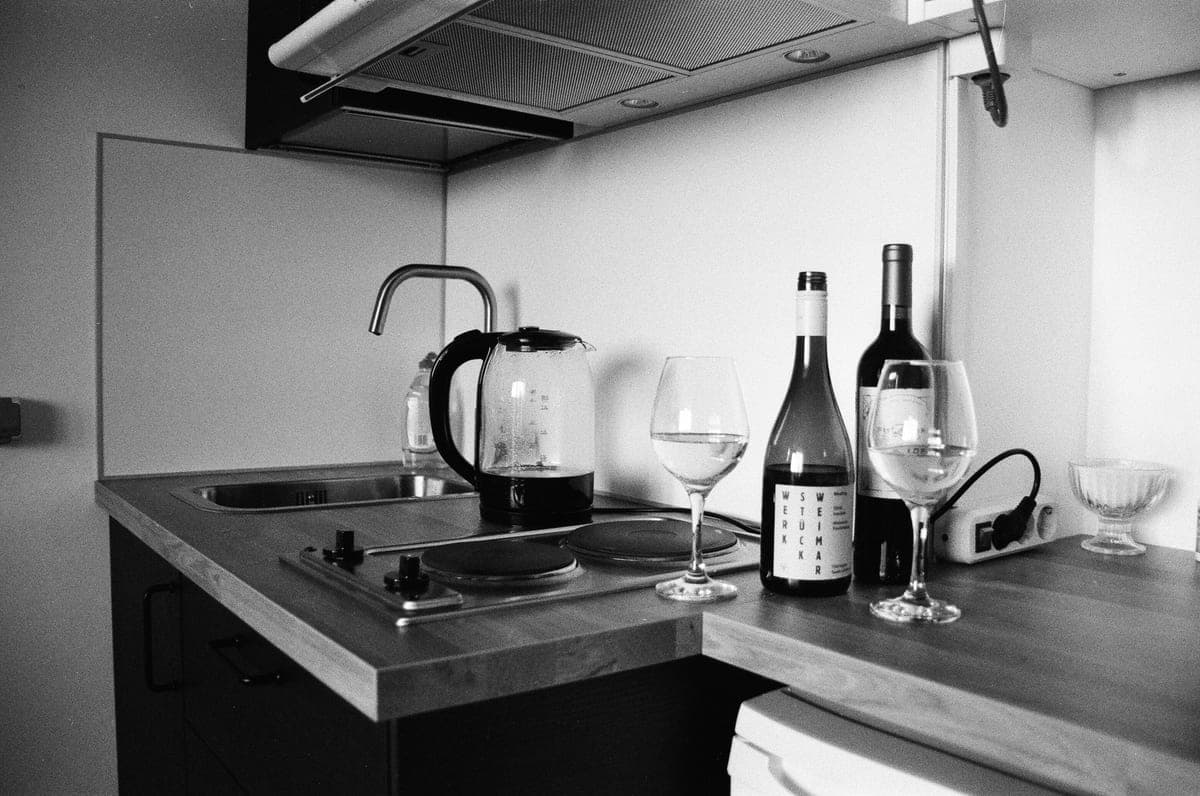
Three quarters of the cabinets on this site are wrong for an apartment, and none of the reasons are about wine. A built-in cabinet needs a cut-out in cabinetry you do not own. A large compressor cabinet is a 100-pound object you have to carry up a stairwell and then carry back down when the lease ends. And a cabinet that vents through its back panel cannot sit in the only gap you have, which is usually against a wall.
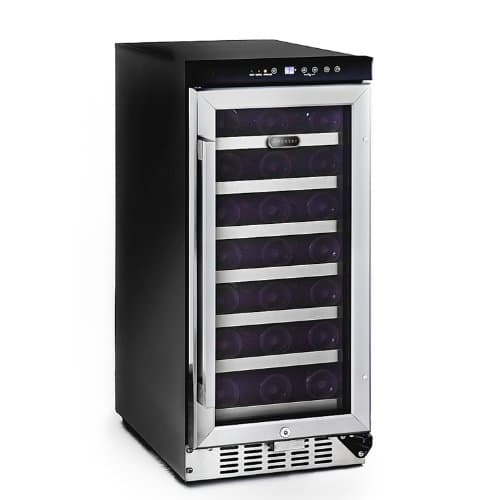
So the apartment filter is blunt: freestanding-rated, plug-in, under 90 pounds, and quiet by mechanism rather than by marketing. That knocks out the 24-inch undercounter class entirely — the Dacor, the JennAir, the KingsBottle and the Whirlpool are all built-in appliances, and the install work is covered separately in how to install a wine fridge under a counter. It also knocks out the two Whynter 24-inch towers, which are built-in rated at 164 and 166 bottles.
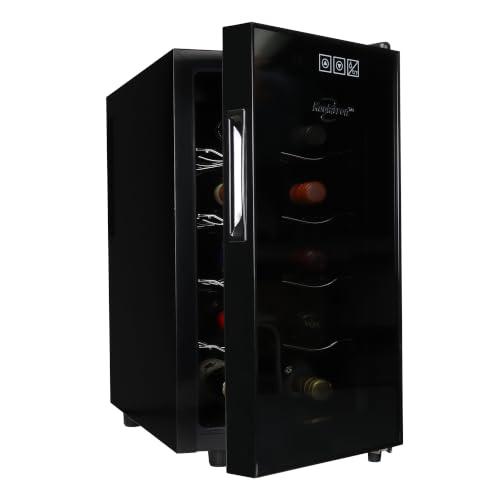
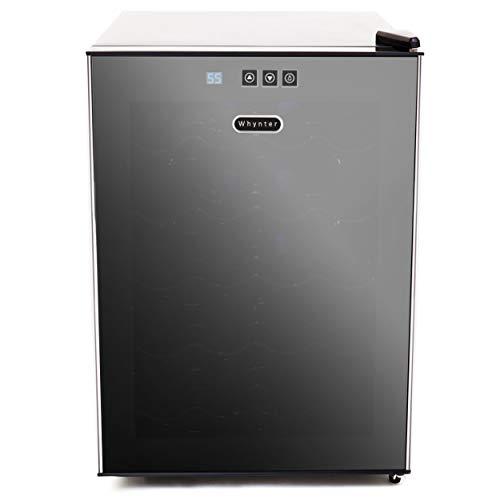
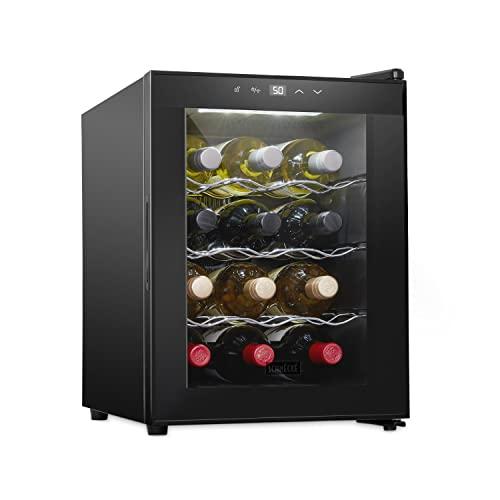
What is left splits cleanly in two. Thermoelectric cabinets — the Koolatron units, the Whynter WC-201TD, the Schmécké and the Ivation dual-zone — have no compressor at all, which is the single biggest thing you can do about noise in a building with thin walls. Small compressor cabinets — the Whynter BWR-33SD, the Ivation 18-bottle compressor — are colder and more capable but reciprocate.
The noise problem through a shared wall
Only two cabinets in this set publish a noise figure, and both are compressor units: the Whynter BWR-33SD at “< 42 dBA” and the Whynter BSR-029DW at “< 38 dB”. Both numbers are ceilings rather than averages, which is a meaningful distinction: the figure describes the loudest the cabinet is allowed to be, not what it sounds like most of the time.
The thermoelectric cabinets publish nothing, and that is not evasion. A Peltier module has no moving part except the fan, so there is no compressor cycle to measure — the cabinet is a quiet fan, continuously. In an apartment that is worth more than a good dB figure, because the noise that travels through a wall is the low-frequency thump of a compressor starting, not fan hiss. The mechanism is explained in compressor vs thermoelectric and the cabinet-by-cabinet noise picture in wine fridge noise explained.
One caveat that catches people: a thermoelectric cabinet is silent in the sense that matters to a neighbor, but it is not silent in a bedroom. The fan runs constantly. If the cabinet is going three feet from where you sleep, the quietest option in this set is still the quietest option — but go and stand next to one before you commit.
Why the room beats a thermoelectric cabinet
This is the apartment trade-off nobody mentions on the box. A thermoelectric cabinet cools relative to the room. Published ranges show it plainly: the Koolatron WC12-35D and the Whynter WC-201TD both bottom out at 46°F, and the Schmécké 12-bottle at 46°F as well. Compare the compressor cabinets — the Ivation 18-bottle compressor publishes 41–64°F, and the Whynter BSR-029DW 40–65°F in both zones.
A 46°F floor is fine for long-term storage, which wants about 55°F anyway. It is not fine for sparkling wine, which you want in the low forties, and it stops being fine at all in a top-floor apartment in August. A thermoelectric unit can typically pull the cabinet a fixed number of degrees below ambient, so a 78°F kitchen is a problem the cabinet cannot solve. If your apartment runs warm in summer and you have no air conditioning, buy the compressor cabinet and accept the sound.
Published footprints, side by side
Apartment shopping is a tape-measure exercise, and the number that matters is depth, not width — a cabinet that sticks out past the counter line is a cabinet you walk into.
Two things fall out of that table. First, the small thermoelectric cabinets mostly do not publish exterior dimensions, so measure the delivered box rather than trusting a listing. Second, the Whynter BWR-33SD is the step change: 33 bottles in a 15-inch width is excellent value for floor space, but 22.5 inches of depth becomes 24.5 with the handle fitted, which is deeper than a standard 24-inch counter overhang allows for. That is the cabinet you measure twice.
If a dozen bottles is genuinely enough, the countertop class is a better answer for a small kitchen than a floor unit — the options are in best countertop wine fridges, and the general size arithmetic is in what size wine fridge do I need.
Three things to check in a lease
1. The outlet, not the circuit. Every cabinet here runs on a standard 115 V, 60 Hz household outlet. The Whynter BWR-33SD publishes 80 W / 0.9 A, the Whynter WC-201TD 65 W / 1.1 A, the Ivation dual-zone 65 W. None of that needs an electrician. What it does need is a grounded outlet with nothing else sharing it, and no extension cord — manufacturers prohibit extension cords and multi-way adapters outright. Whether a cabinet ever needs its own circuit is covered in does a wine fridge need a dedicated circuit.
2. Where the heat goes. Every one of these cabinets dumps the heat it removes into the room. In a studio that is a real effect, and it is the argument for the smallest cabinet you can live with rather than the biggest one that fits. Clearances are in wine fridge ventilation and clearance.
3. The move out. A compressor cabinet has to travel upright and then rest before being switched on. An apartment move is the single most likely time to kill a wine fridge, and the sequence is in how to move a wine fridge. A thermoelectric cabinet has no refrigerant circuit to disturb, which is a genuine advantage if you move every twelve months.
One last option worth naming: if the collection is small and the apartment is cool, a rack is a legitimate answer rather than a cop-out. The comparison is in wine rack vs wine fridge, and the compact options in best wine racks for small spaces.