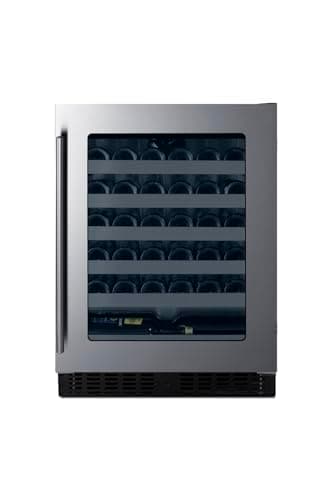
Confirm the cabinet is built-in rated before anything else - a freestanding unit vents from the back and will fail in a sealed opening. Then measure width, depth and height with the handle fitted, confirm the clearances in the manual, sort the power, level it, set the door swing and run it for 24 hours before fitting trim.
How this page is funded. Cork & Cool earns a commission if you buy through the Amazon links below, at no extra cost to you. It never changes the order of this list — see our editorial policy and affiliate disclosure. Prices come from Amazon and are refreshed daily; the price on Amazon when you buy is always the one that counts.
Our picks
Four cabinets whose manufacturers publish what an installer actually needs: a width with and without the handle, a built-in rating, a field-reversible door with zero-clearance hinges, and a body shallow enough for an 18-inch run.
How this page is funded. Cork & Cool earns a commission if you buy through the Amazon links below, at no extra cost to you. It never changes the order of this list — see our editorial policy and affiliate disclosure. Prices come from Amazon and are refreshed daily; the price on Amazon when you buy is always the one that counts.
#1 — The 15-inch default
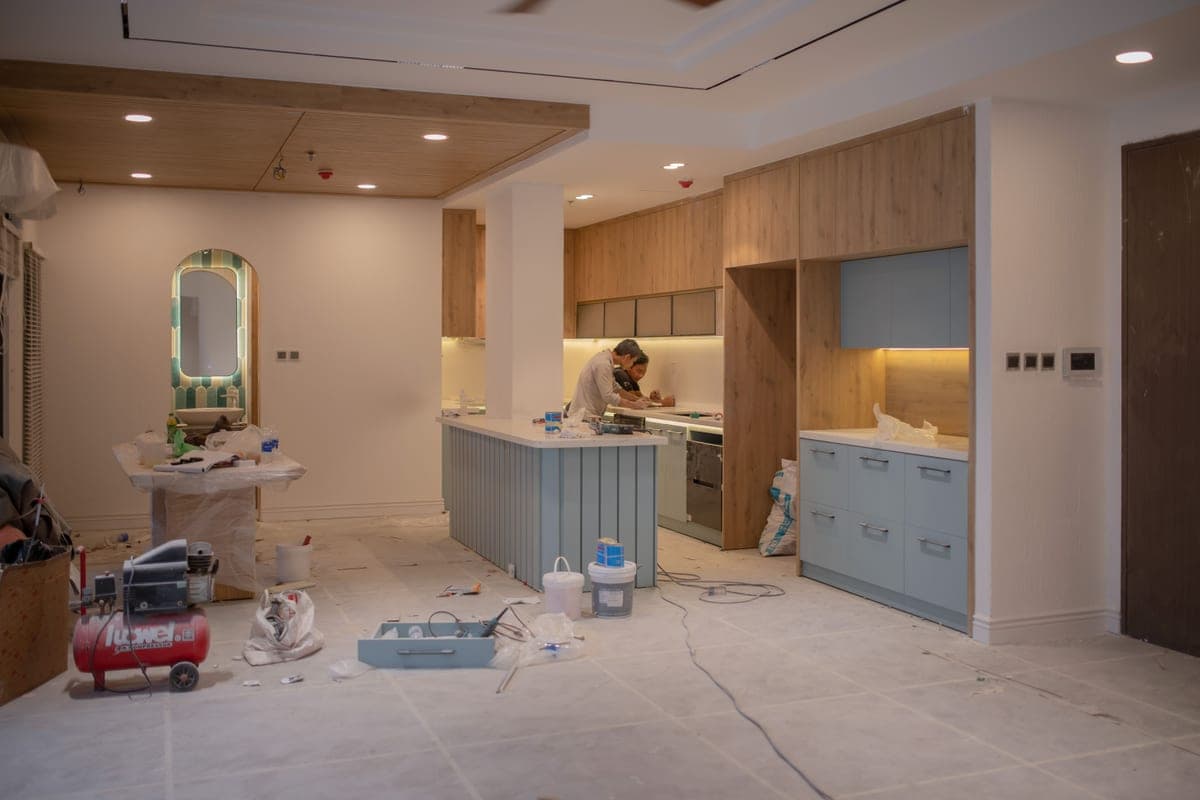
Whynter BWR-33SD
Thirty-three bottles in a 15-inch cabinet, with a published noise ceiling and seven wooden shelves — the capacity ceiling at this width, and the widest temperature band on this page.
Product photograph via Amazon.
Published specifications
Capacity
33 bottles
Zones
1
Cooling
compressor
Temperature range
40–72°F
Noise rating
42 dB
Installation
both
· Exterior: 15.0 in W x 22.5 in D (24.5 in with the handle installed) x 34.0 in H
· Capacity: 33 standard 750 ml bottles
· Noise published as "< 42 dBA" — a ceiling, not an average
Thirty-three bottles is the highest published capacity at this width
Whynter publishes a decibel ceiling, which almost nobody in this category does
Seven wooden shelves rather than the wire shelving usual at this price
40-72°F is the widest published band here, so it will also hold a bottle at room temperature
Rated for built-in or freestanding use, so an opening is optional rather than required
What does not
Single zone only — one temperature for the whole cabinet
The published figure is "< 42 dBA", a maximum rather than an average, so it cannot be compared like-for-like against a manufacturer quoting a flat number
At 15.0 inches published it is the widest cabinet in this group, which matters if your opening is tight
Depth grows to 24.5 inches once the handle is on, which is the figure that matters in a shallow run
33 bottles assumes standard Bordeaux shapes; a Burgundy-heavy collection will fit fewer
Who should skip it. Skip it if you need to serve whites cold and hold reds at cellar temperature in the same cabinet — one zone cannot do both. Skip it too if your opening measures under 15 inches, because this is the one cabinet here that needs the full module.
Rated for built-in installation, so the front vent is designed for an enclosed opening
23.4-inch width drops into a standard 24-inch cabinet run
Two independently set zones across the full 40-66°F span
What does not
No published dB rating, so noise cannot be compared numerically against rivals
46 bottles is the manufacturer's count using standard Bordeaux bottles — heavy Burgundy or Champagne bottles reduce it
Who should skip it. Skip it if your opening is under 24 inches, or if you need more than about four dozen bottles — stepping up to a 160-bottle cabinet costs less per bottle.
#ad — paid link. How this is funded. Price as of November 11, 2026; check Amazon for the current price.
#3 — Storage, not just chilling
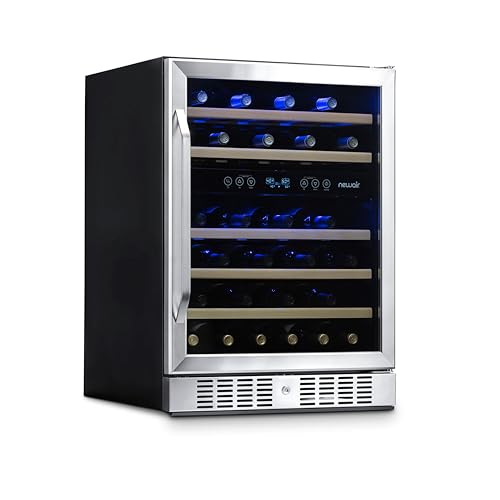
Zephyr Presrv PRW15C01CG
Twenty-seven bottles, a published 39 dBA, and the only cabinet in this width whose maker documents a vibration dampening system — you are paying for the storage conditions, not the bottle count.
Product photograph via Amazon.
Published specifications
Capacity
27 bottles
Zones
1
Cooling
compressor
Temperature range
38–65°F
Noise rating
39 dB
Installation
both
· Exterior: 15 in W x 33-7/8 in H x 23-3/8 in D
· Capacity: 27 bottles (750 ml), 3.4 cu ft
· Sound level: 39 dBA published
· Racking: six full-extension black wood racks with stainless trim
· Glass: dual-pane, Low-E, argon-filled
· Field-reversible door with concealed zero-clearance hinges, door lock, door-open alarm
· Energy Star certified; Sabbath mode; carbon-filtered air filtration
· Weight: 101 lb · Power: 115 V, 60 Hz at max 1.5 A
· Warranty: 2 years parts and labor, 5 years compressor
The only 15-inch cabinet here whose manufacturer documents vibration control at all
Publishes a flat decibel figure rather than a ceiling, so it can be compared properly
Reaches 38°F, the lowest published minimum in this group, which matters for sparkling wine
Full-extension racks mean you can reach a bottle at the back without unloading the shelf
Five-year compressor warranty against the usual one or two
What does not
Twenty-seven bottles against thirty-three for the same width — the racks take the space
23-3/8 inches deep, the deepest cabinet in this group
Costs materially more than the Whynter and Summit cabinets it sits beside
Who should skip it. Skip it if the wine is going to be drunk within a year or two. Vibration control and a 38°F floor are long-storage features, and you can have eight more bottles for less money without them.
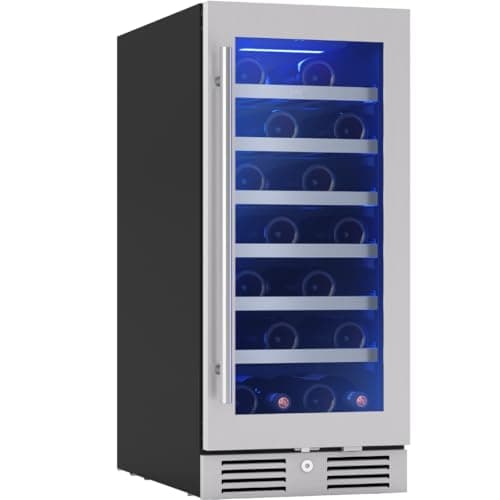
Under 18 inches deep, which solves the most common undercounter fit problem
The only unit here designed around ADA counter height
Height adjusts to standard counters too, so it is not a single-use product
What does not
33 bottles is the price of the shallow depth
Summit does not publish a temperature range in this listing
Who should skip it. Skip it if your cabinet run is a standard 24 inches deep and you want the capacity — a full-depth unit in the same opening holds 13 more bottles.
#ad — paid link. How this is funded. Price as of November 11, 2026; check Amazon for the current price.
Step 1: the rating check
Before a tape measure comes out, establish one thing: is this cabinet rated for built-in installation?
A built-in cabinet vents forward, usually through a grille at the bottom of the door, so it can reject heat with solid cabinetry on three sides. A freestanding cabinet vents from the back or the sides. Put a freestanding cabinet in a sealed opening and the heat it removes from the wine has nowhere to go: the compressor runs continuously, the cabinet never reaches setpoint, and it fails early. Manufacturers exclude it from warranty for exactly this reason.
In our registry the ratings split three ways. Rated for both: Whynter BWR-33SD, Whynter BSR-029DW, Zephyr Presrv PRW15C01CG, Newair AWR-460DB and AWR-290DB, Kalamera KRC-46DZB, Summit SWC1535B and SDHW1532. Built-in only: Whynter BWR-1642DZ and BWR-1662SD, Summit ASDW2412, Dacor, JennAir, KingsBottle, Whirlpool, Kalamera KMER1018. Freestanding only: the thermoelectric cabinets, the Liebherr WS1200 and both EuroCaves.
If the cabinet you want is freestanding-only, this project is a different project — built-in versus freestanding covers what you can and cannot get away with, and it is the highest-stakes page on this site.
Steps 2-3: measure, then measure the handle
Step 2 — three dimensions of the opening. Width at the narrowest point, depth from the back wall to the plane of the cabinet fronts, and height from the finished floor to the underside of the countertop. Measure the width at the top, middle and bottom; openings in older kitchens are rarely square.
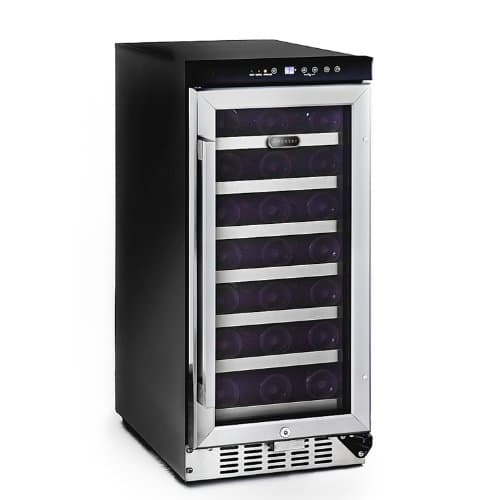
Step 3 — the cabinet, including its handle. This is where undercounter projects go wrong. The Newair AWR-460DB is 23.40 inches wide at the body and 24.00 inches with the handle fitted; the Whynter BWR-33SD is 15.0 inches wide and 22.5 inches deep, which becomes 24.5 inches deep with the handle installed. A 24-inch opening takes the Newair body and not the handle.
Published exterior dimensions of the four cabinets here
Cabinet
Width
Depth
Height
Rating
Whynter BWR-33SD
15.0 in
22.5 in (24.5 in with handle)
34.0 in
Built-in or freestanding
Newair AWR-460DB
23.40 in (24.00 in with handle)
22.40 in
33.00 in
Built-in or freestanding
Zephyr Presrv PRW15C01CG
15 in
23-3/8 in
33-7/8 in
Built-in or freestanding
Summit ASDW2412
24 in
Under 18 in
32 in (34 in on legs)
Built-in
Two things that table makes obvious. Standard undercounter height is a little under 34 inches, so a 34-inch counter height is the normal target — and the Summit ASDW2412 is the cabinet to know about if the run is shallow, at under 18 inches deep against the usual 22 to 23. Its 32-inch height suits ADA counters, and adjustable legs plus a sliding kickplate cover take it to 34 inches. The full set of numbers across the registry is in the dimensions guide.
Step 4: clearances come from the manual
Every manufacturer specifies its own clearances and they are not interchangeable, so take them from the manual for your model rather than from any article, including this one. What is consistent is the principle: a built-in cabinet needs an unobstructed path for the air it pushes out of the front grille, which means the toe kick stays open.
Three failure modes worth naming because they are easy to build in by accident:
A solid plinth across the bottom of the opening. It looks tidy and it seals the exhaust.
A back panel pressed against the cabinet. Even a forward-venting cabinet needs its rear coils clear of contact.
A cabinet door fitted over the appliance door. If you want a cabinet front, buy a panel-ready model designed for it, such as the Dacor DRW24G7500APDA.
Decide this before the cabinet goes in, because the socket has to be reachable and in most installations it ends up behind or beside the opening where you cannot get to it later.
Cabinets in this category are 115 V, 60 Hz appliances drawing modest current — the Whynter BWR-33SD at 80 W / 0.9 A, the BSR-029DW at 103.5 W / 0.9 A, the Zephyr at a maximum of 1.5 A, the BWR-1662SD at 140 W / 2.0 A. Several manufacturers nonetheless ask for a separate circuit serving only the cabinet, and some larger units require a 20-amp circuit. The detail, and where manuals disagree, is in does a wine fridge need its own circuit.
Two practical rules regardless of model: no extension cord, and locate the socket so the plug is accessible without pulling the cabinet out of the opening.
Steps 6-8: level, swing, slide
Step 6 — level it. A wine cabinet that is not level has a door that does not seal evenly, and a door that does not seal is a cabinet that runs constantly. Most cabinets here have adjustable front feet; use a spirit level across both axes with the door closed, not the floor as a reference.
Step 7 — decide the door swing now. Several cabinets are field-reversible and it is far easier before the unit is in the hole. The Zephyr has a field-reversible door with concealed zero-clearance hinges, the Whynter BSR-029DW and the two Summit cabinets are reversible, and the Kalamera KRC-46DZB has a reversible door as standard. JennAir takes a different approach and sells left-swing and right-swing as separate models, which means ordering the right one. Check the swing against how you will stand when you load it and whether an adjacent cabinet door will collide.
Step 8 — slide it in on something. These cabinets are heavy before they are loaded — 80 lb for the BWR-33SD, 101 lb for the Zephyr, 104 lb for the Newair AWR-460DB — and dragging one across a finished floor marks the floor and risks twisting the body. Use hardboard or a slider under it, and take the shelves out first so nothing moves inside.
Step 9: run it before you trim it
Plug it in, set it to 55°F, load nothing, and leave it for 24 hourswith the trim and kickplate still off. You are checking three things, all of them much cheaper to fix now:
Does it reach setpoint and hold it? If it is still a long way off after a day, the exhaust path is obstructed or the unit is faulty — wine fridge not cooling.
Does the door seal all the way round? A sheet of paper closed in the door should grip at every point on the perimeter. If it pulls out freely anywhere, level it again.
How does it sound in this cabinet? A cabinet in an enclosure can transmit noise into the cabinetry. Hearing it before the kickplate goes on tells you whether you need an isolation pad — wine fridge noise explained.
Two pages that bracket the install. Before you switch the cabinet on, the rest-level-run-empty sequence is in how to set up a new wine fridge. And if the cabinet is coming out again one day — a move is the most likely day a wine fridge dies — how to move a wine fridge explains why it has to travel upright.
Getting the cabinet to look like part of the kitchen rather than an appliance pushed into a gap is a separate job, and mostly carpentry: how to make a wine fridge look built in covers panels, fillers and the plinth line.
Questions people actually ask
▸ Can I put a freestanding wine fridge under a counter?
Not into a sealed opening. A freestanding cabinet vents from the back or sides, so enclosing it means it runs continuously and fails early, with the warranty excluded. See built-in versus freestanding.
▸ What size opening does an undercounter wine fridge need?
Most are built for a 15-inch or 24-inch wide opening at a shade under 34 inches high, but the number that decides it is the cabinet’s width with the handle fitted. Take the clearances from your model’s manual.
▸ Does an undercounter wine fridge need ventilation at the back?
A built-in cabinet vents forward through a front grille, so the critical thing is an open toe kick rather than a gap behind. It still must not be pressed hard against a back panel.
▸ Can I reverse the door on a wine fridge?
On many models yes — the Zephyr Presrv, Whynter BSR-029DW, both Summit cabinets and the Kalamera KRC-46DZB are reversible. JennAir instead sells left and right-swing variants as separate models.
▸ How long before I can load a newly installed wine fridge?
Give it 24 hours empty to reach and hold setpoint. That also tells you whether the exhaust path and door seal are right while the trim is still off.