The published floors, model by model
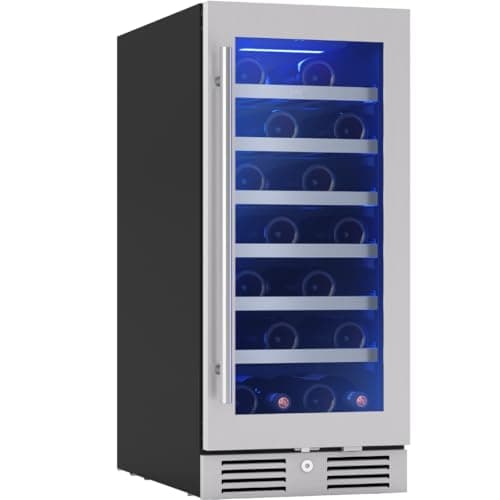
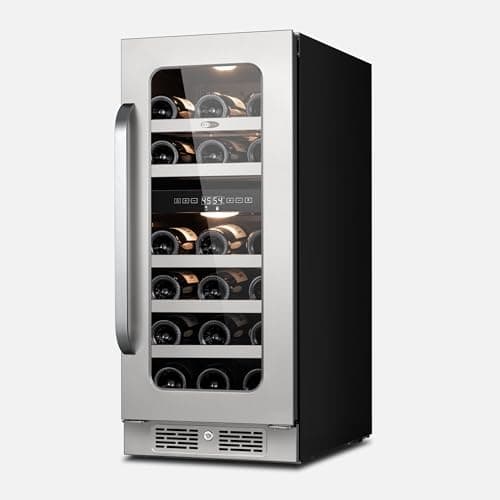
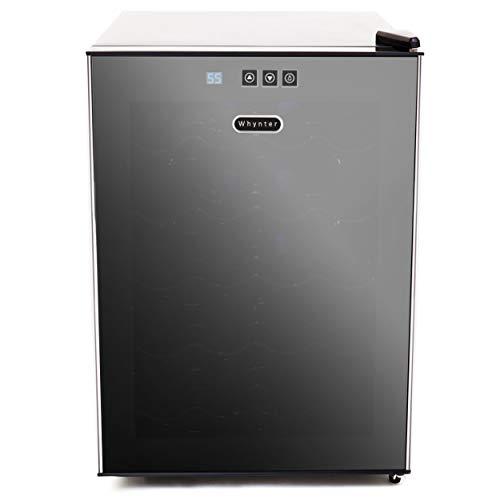
There is no single answer, because the floor is a property of the individual cabinet and of how it cools. These are the published figures from our registry, lowest first.
Two patterns, and they are the whole story. Every compressor cabinet reaches the low 40s or below. Every thermoelectric cabinet stops at 46°F. That split is not a coincidence of which brands we happen to list — it falls out of the physics of each cooling method, which the next two sections explain.
Note also that several cabinets publish no range at all. Where a manufacturer has not printed a figure, we do not substitute one; a listing with no range is a listing you cannot plan around, and that is a reason to choose a different model rather than to guess.
Why a wine fridge is not a refrigerator
A domestic refrigerator is set at around 37°F because that is where food safety wants it. A wine fridge does not go there, and the reason is design intent rather than weak hardware.
Wine storage targets the mid-50s. Service targets the mid-40s for sparkling, the high 40s to low 50s for whites, and the high 50s to mid 60s for reds. Nothing a wine fridge is for happens at 37°F. So manufacturers build the thermostat range around the band that matters, insulate for stability rather than for depth, and spend the engineering budget on holding a set temperature steadily instead of on reaching a low one.
That is also why a wine fridge makes a mediocre drinks fridge and a kitchen refrigerator makes genuinely bad wine storage: a fridge at 37°F is too cold for wine, dries the cork in dry refrigerated air, and vibrates far more than a cabinet built for the job. Wine fridge versus a regular fridge is the full comparison, and how a wine fridge works covers the mechanism.
The thermoelectric ceiling on cold
A thermoelectric cabinet has no compressor. It uses a solid-state heat pump that moves heat across a junction, and the critical consequence is that it cools relative to the roomrather than independently of it. It can pull the interior a fixed number of degrees below ambient — and no further, no matter what the display says you have asked for.
In practice that means the published 46°F floor is a best case that assumes a normal room temperature. Put the same cabinet somewhere warm and the achievable minimum rises with the room. Put it somewhere cold and it may never cool at all, because the thermostat stops asking.
This is the single most common complaint about small wine coolers, and it is not a fault. It is the technology working exactly as specified in a room it was never specified for. If you need a low temperature guaranteed, you need a compressor — compressor versus thermoelectric sets out the whole trade, and the thermoelectric roundup covers where the technology is genuinely the better choice.
Is it cold enough for sparkling wine?
Usually, if it is a compressor cabinet. Sparkling wine is generally served in the mid-40s, and a cabinet publishing a 38 to 41°F floor can hold it there comfortably with room to spare.
A thermoelectric cabinet at 46°F is at the warm edge of that band on its best day. It will serve Champagne, but not as cold as most people want it, and it has no margin if the room is warm. If sparkling wine is a regular part of how you entertain, the floor is the specification to shop on — the Champagne roundup ranks the registry on exactly that, and it also covers the bottle-width problem, which catches people out more often than the temperature does.
If your cabinet stops at 46°F and you want a bottle colder for one evening, the answer is an ice bucket for the last stretch rather than a different appliance; how long wine takes to chill has the measured times for each method.
Is it cold enough for beer?
It depends entirely on the beer and on which cabinet you own, and this is a more common question than the wine trade likes to admit.
Most ales are at their best somewhere in the mid-40s to low 50s, which a wine fridge handles easily — arguably better than a kitchen refrigerator, which serves them colder than they want to be. A mass-market lager drunk very cold is a different matter: people generally want those in the mid to high 30s, and no wine fridge in our registry publishes a floor that low. The closest is the Zephyr Presrv at 38°F.
So the honest answer is: a wine fridge is cold enough for beer you care about and not cold enough for beer you want frosty. There is also a practical problem, which is that wine shelves are shaped for bottles lying down and cans and tall bottles do not use that space well. Using a wine fridge for beer and soda covers the shelving and capacity side, and wine fridge versus beverage fridge is the comparison if you are still choosing.
What to do if yours will not go cold enough
Before concluding the cabinet is faulty, work through the things that are not faults:
- Check the published floor. A cabinet asked for 42°F when its specified minimum is 46°F is not broken. The display will often accept a setting the hardware cannot deliver.
- Check the room. On a thermoelectric unit this is usually the whole answer. On a compressor unit a very warm room still lengthens run times considerably.
- Check the clearances and the vent. A cabinet that cannot reject heat cannot reach temperature. A blocked toe grille or a unit pushed flat against a wall is the most common cause of a cabinet that used to be fine.
- Check the door seal and the load. A seal that has taken a set, or a cabinet packed so tightly that air cannot circulate, both show up as a cabinet that runs constantly and sits warm.
- Give it time. A full cabinet has a lot of thermal mass. After a big restock, or after setting a new temperature, allow a day before judging it.
If none of that explains it, the fault-finding sequence is in why a wine fridge is not cooling. And if the problem is the opposite — the cabinet going colder than you asked and chilling bottles toward freezing — that is a different failure with a different cause, covered in wine fridge freezing wine.