It is water, nearly every time
A wine fridge is a sealed, dark, cool box with very little air movement, kept at a humidity that suits wine. Add standing water and you have described a good environment for mold and bacteria and a bad one for your nose. The smell is not a mystery; it is a symptom, and chasing it with a cleaner instead of finding the water is why cabinets go on smelling after people have scrubbed them twice.
So the order of operations is strict: find the water, clear the water, then deodorize. Skip the first two and the smell comes back within a fortnight.
Worth saying what this is not. It is not refrigerant — a sealed circuit does not produce a musty smell, and a sweet or chemical smell is a different and more serious conversation. It is not the wine. And in a brand-new cabinet a faint plastic smell for the first few days is normal off-gassing, covered in how to set up a new wine fridge.
Where the water is, in order
Unplug the cabinet and work through these four. They are in order of how often they are the answer.
1. The condensate drain. Every compressor cabinet condenses moisture out of its own air onto the evaporator, which drains through a small hole to a tray at the back where the compressor’s heat evaporates it. Block the hole — label fragments, cork crumbs, dust, a spill — and water sits on the cabinet floor indefinitely. Find the recess at the back of the cabinet floor or under the evaporator panel, clear it with warm water and something soft, and never put a wire or anything metal into it.
2. The drip tray. Usually above or behind the compressor at the back. If it has standing water that never seems to evaporate, either the cabinet is not level or the tray has silt in it. Empty it, wipe it out, re-seat it.
3. The door seal. A gasket that no longer seals admits warm humid room air continuously, which means far more condensate than the drain was designed to shed — so a bad seal causes a wet cabinet even with a perfectly clear drain. Paper test at six to eight points around the frame: close the door on a sheet of paper and pull, feeling for resistance everywhere. Detail in wine fridge condensation.
4. A damp wooden shelf. Wood plus trapped moisture plus months is the classic. A stained or slightly swollen shelf has been sitting in water, and it will hold the smell even after the water is gone. Take the shelves out, wash them with a barely damp cloth, and let them air-dry completely before they go back — see wine fridge shelf types.
The other four causes
When the cabinet is genuinely dry and still smells, it is one of these.
- A spill you did not fully clean. Wine under a shelf runner or in the lip at the cabinet floor ferments quietly. Pull the shelves and look along the edges rather than in the middle.
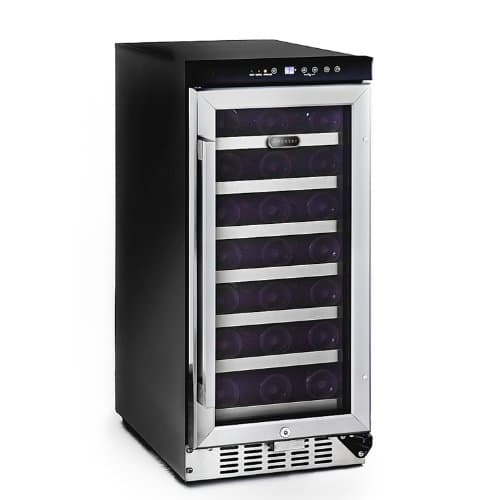
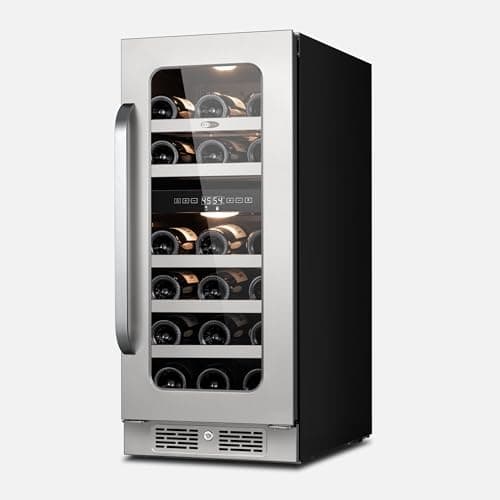
- An exhausted air filter. The Whynter BWR-33SD and BSR-029DW publish a fitted activated carbon filter; the Zephyr PRW15C01CG publishes carbon-filtered air filtration; the Liebherr WS1200 publishes a user-replaceable activated charcoal fresh-air filter. A filter that has done years of work is no longer adsorbing anything. Replace it by model number.
- Cardboard or wood you added yourself. Cases, wooden gift boxes and dividers in a humid cabinet are exactly the substrate mold wants. Take them out; store bottles bare on the shelves.
- The cabinet was switched off while shut. This is the single fastest way to make a cabinet smell: no cooling, no air movement, residual moisture, door closed for a fortnight. If a cabinet is going to sit unused, leave the door ajar.
How to clear the smell
Once the water is dealt with, this works and it takes a week rather than an hour.
If the smell survives a proper dry-out and a week of baking soda, you have missed water somewhere — most often behind the evaporator panel or under a shelf runner. Go back to the drain.
Why not bleach, and not anything scented
This is the part worth being emphatic about, because the instinct is exactly wrong.
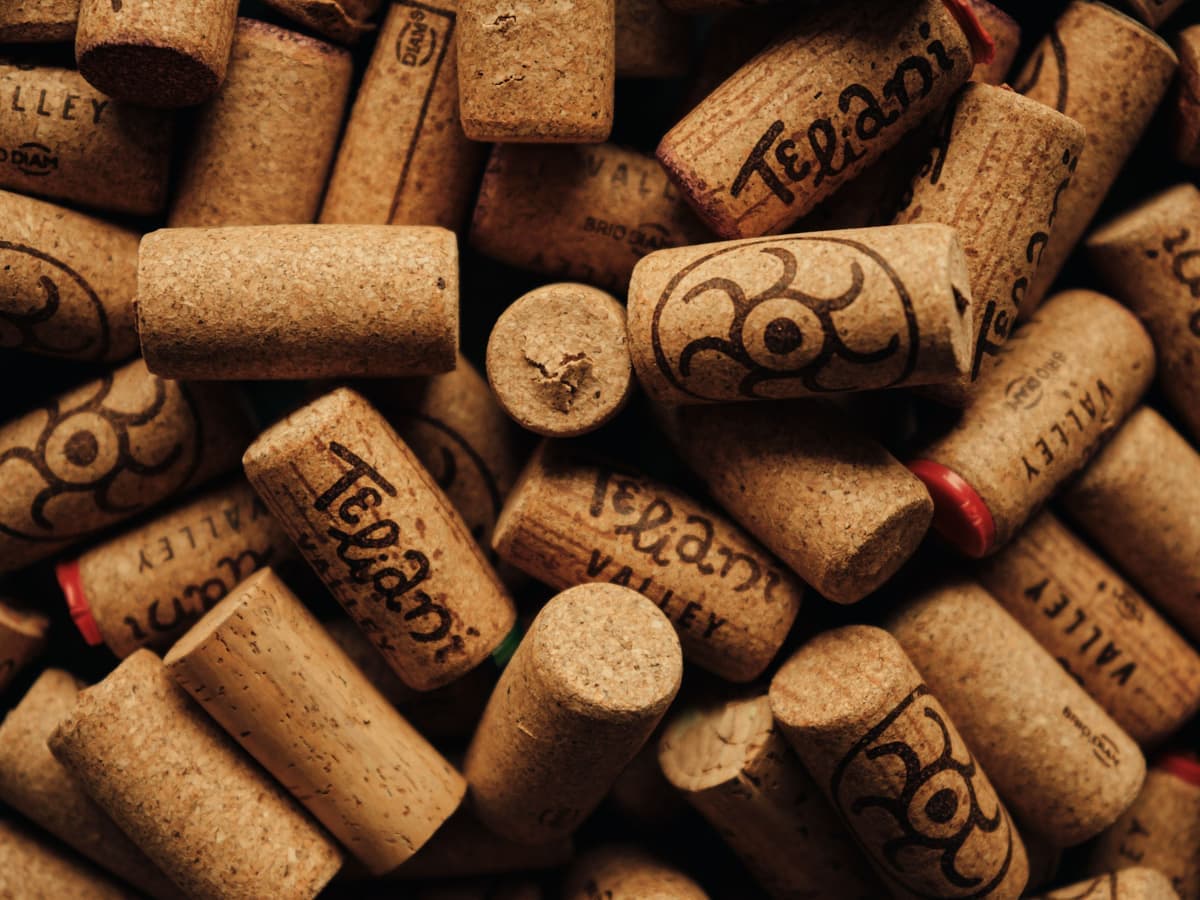
A wine fridge is a sealed box that will hold whatever you put into it for months, and a natural cork is porous by design. Bleach, ammonia, solvent cleaners and scented sprays all leave volatile residue in that box, and that residue has somewhere to go: into the cork, and from there into the wine. You will not taste it tomorrow. You will find it in a bottle you open in three years, and you will blame the producer.
There is a second reason, specific to appliances. Bleach attacks aluminum and corrodes stainless, and the evaporator, the drain channel and the interior liner are not places to introduce a corrosive. A puncture or a pinhole in the refrigerant circuit ends the cabinet.
Use warm water, a very little mild dish soap, and baking soda. That is the whole approved list. The same logic drives the rest of wine fridge maintenance.
Can a musty cabinet get into the wine?
Over long storage, yes — and that is the actual reason to fix this rather than just live with it.
A cork is a semi-permeable seal, not a hermetic one. Over years, strong ambient odors can migrate through it, and the result is a bottle that smells faintly of the cabinet rather than of the wine. This is precisely why manufacturers fit carbon filters at all: the point of filtered air in a wine cabinet is not your comfort, it is keeping the cabinet’s atmosphere neutral around porous closures.
Two practical consequences. If the collection is cork-finished and you are holding bottles for years, treat a musty cabinet as urgent rather than cosmetic — the aging argument is in can you age wine in a wine fridge. And do not store anything aromatic in a wine fridge: no cheese, no cut onion, no leftovers. If the cabinet is doing double duty for food or drinks, read can a wine fridge be used for beer and soda first.
The related failures — labels going, mold on cases, a cabinet drifting warm without telling you — are inventoried in what happens to wine if it is not stored properly, and the humidity band that keeps a cabinet on the right side of this is in humidity-controlled wine storage.