
The range wine actually wants
The useful band is roughly 50 to 70 percent relative humidity, and the band is wide because the two failure modes are at opposite ends and neither is sudden.
Below about 50%, a natural cork slowly dries from the outside. A dried cork shrinks, loses its seal against the glass and lets air in, and oxidation follows. This takes years rather than months, which is exactly why it is a storage question rather than a serving question.
Above about 80%, you start losing labels — paper swells, glue releases, and a collection with illegible labels is a collection you cannot navigate. Push higher and sustained damp plus poor airflow invites mold on labels, on cases and on wooden shelving. That damage is cosmetic rather than vinous, which matters less if you are drinking the wine and a great deal if you intend to sell or gift it.
Between those two, wine does not care much. Which is why humidity is the third priority after temperature stability and darkness, not the first — and why a cabinet marketed primarily on humidity control is usually a cabinet avoiding the conversation about its temperature range.
Why it is about the cork, not the wine
Nothing about ambient humidity reaches the wine. The bottle is glass and the seal is a cork, so humidity only ever acts on the outside of that cork and on the label.
Two consequences follow, and both are practical. First, a bottle under a screwcap or a synthetic closure is essentially indifferent to humidity — if your collection is screwcapped supermarket wine for drinking this year, this entire page is academic. Second, storing bottles on their sides is a partial substitute for humidity control, because wine in contact with the inside face of the cork keeps it damp from within. That is the real argument in store wine flat or upright.
Which also means the people who need to care are a small group: anyone keeping cork-finished bottles for more than about five years in a room that runs dry. A forced-air heated house in winter can sit in the twenties and thirties, and that is the genuine risk case — not a kitchen in summer.
What a wine fridge actually does about humidity
Mostly, it manages humidity as a side effect of being a sealed refrigerated box, and that side effect usually lands in the right range without any deliberate control at all.
The mechanism: a compressor cabinet condenses moisture onto its cold evaporator plate, which lowers the air’s absolute moisture content; but because the air is also much colder, relative humidity stays high. Most cabinets then run that condensate to a drip tray or let it re-evaporate from the plate, which keeps interior humidity broadly stable. Nobody is adding water. The full version is in do wine fridges control humidity.
The features that genuinely help are not humidifiers. They are the ones that stop the cabinet drying out or going stale:
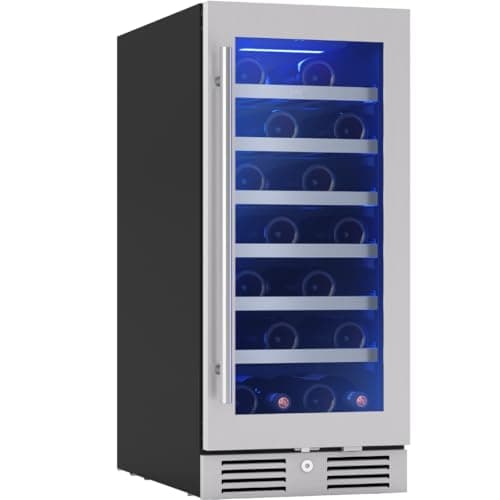
- A carbon or charcoal air filter. The Whynter BWR-33SD and BSR-029DW both publish a fitted activated carbon filter; the Zephyr PRW15C01CG publishes carbon-filtered air filtration; the Liebherr WS1200 publishes a user-replaceable activated charcoal fresh-air filter, which is the strongest version of the claim because it implies the filter is meant to be maintained.
- A good door seal and well-engineered glass. Every door opening swaps cabinet air for room air. Dual-pane Low-E argon-filled glass and concealed zero-clearance hinges — both published on the Zephyr — reduce the condensation and the heat exchange that come with it. See wine fridge condensation.
- Not being empty. A full cabinet has more thermal mass and far less air to swap, so it is more stable in every respect including humidity.
Reading a humidity claim
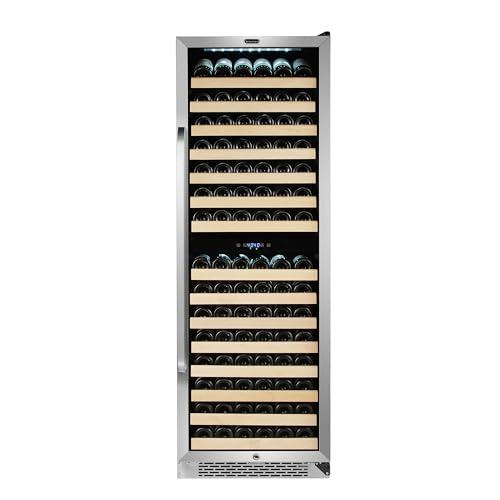
Apply one test to any cabinet sold on humidity: does it publish a number? Not one of the cabinets in this site’s registry publishes a target relative-humidity percentage, a tolerance, or a measurement method. They publish filters, glass construction and seals — which are real and useful — and the word “humidity” elsewhere.
The corollary is that a cabinet with no humidity marketing is not worse at humidity. It is just not making an unverifiable claim. If humidity is genuinely your binding constraint, the cabinets worth shortlisting are the ones with a published filter and good door engineering, which is the shortlist in best wine fridges for humidity control and, for multi-year holding, best wine fridges for long-term storage.
Passive storage: cellars, basements and closets
Humidity-controlled storage does not have to be an appliance, and for most houses the cheapest version already exists downstairs.
A below-grade basement is typically both cool and humid, which is the combination wine wants and the combination an upstairs closet cannot offer. The practical problems are not humidity but too much humidity and the concrete slab — a slab wicks ground moisture upward continuously, so anything resting on it stays wet. A rack with an air gap under every bottle solves it; the options are in best wine racks for a basement and the room practice in how to store wine in a basement.
If a basement runs above about 80%, the fix is airflow and a dehumidifier set to 70% rather than to its lowest setting — a dehumidifier run flat out will take a cellar below 50% and dry your corks, which is the opposite of what you wanted.
A conditioned interior closet is the harder case. It is dark and still, which is good, but a forced-air heated house in winter runs dry, and a closet has no mechanism to resist that. Bottles on their sides plus a hygrometer is the honest answer. The comparison of passive and active storage is in wine fridge vs wine cellar.
Measure it, do not trust it
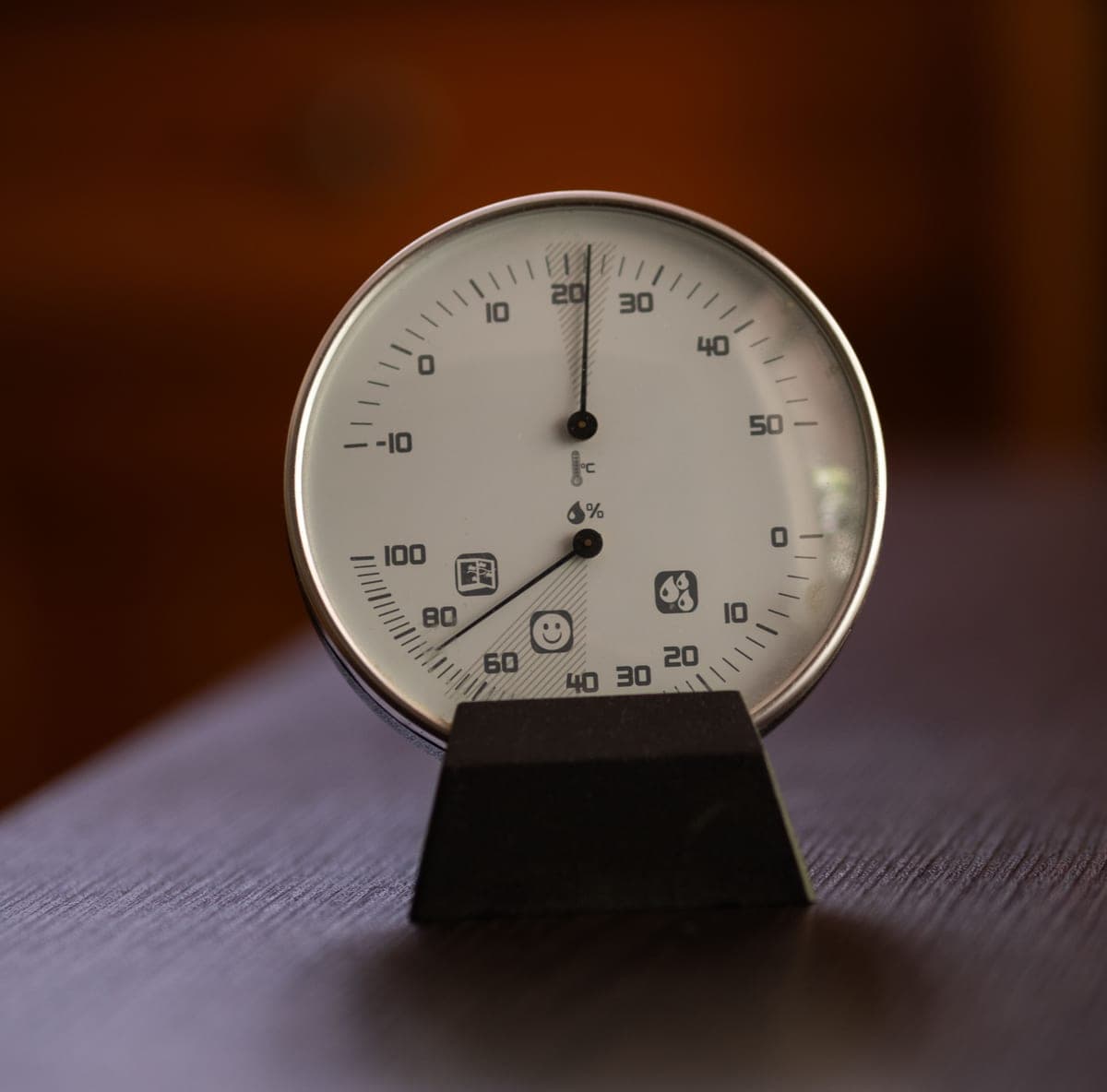
Everything above collapses into one piece of advice. A digital hygrometer costs about as much as one decent bottle, and it converts this entire topic from marketing into a reading.
Put it where the bottles actually are — inside the cabinet on a middle shelf, or on the basement rack rather than in the middle of the room — and leave it for a month so you see a range rather than a moment. Then act on the reading: under 50% and you have a genuine cork-drying risk worth addressing; between 50% and 70% you are done thinking about it; over 80% and you have a label-and-mold problem that needs airflow.
What happens if you ignore all of this, in order of how likely each failure is, is in what happens to wine if it is not stored properly. And if the cabinet already smells of damp, go straight to why a wine fridge smells musty.