
The specification that decides it
A wine and beverage refrigerator is one cabinet asked to do two jobs with opposite requirements. Cans want to be cold — the mid to high 30s, the same as a kitchen refrigerator, because that is what a lager or a soda is supposed to taste like. Wine wants to be around 55°F for storage and somewhere between 45 and 65°F for service, depending on what is in the bottle. Those are not close together, and a single compartment cannot serve both.
So every unit on this page is a dual-zone cabinet. That part is easy to find. The hard part, and the thing almost no listing makes obvious, is what each zone can actually reach on its own. There are three patterns in this category:
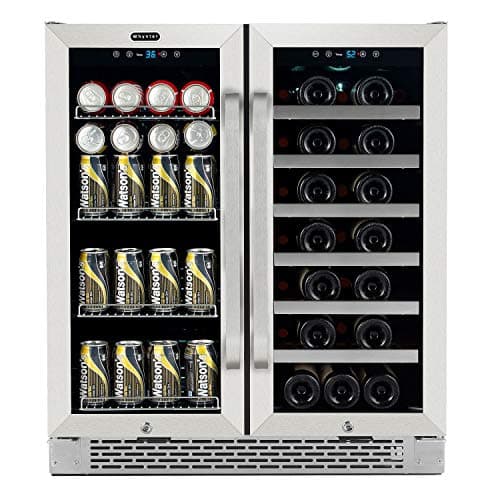
- Both zones cover the whole range. The Whynter BWB-3388FDS publishes 36–72°F for each zone, independently adjustable. That means the beverage side can go to 36°F for cans and the wine side can sit at 55°F, or you can flip the whole thing around and use both halves for wine. This is the configuration you want, and it is rare.
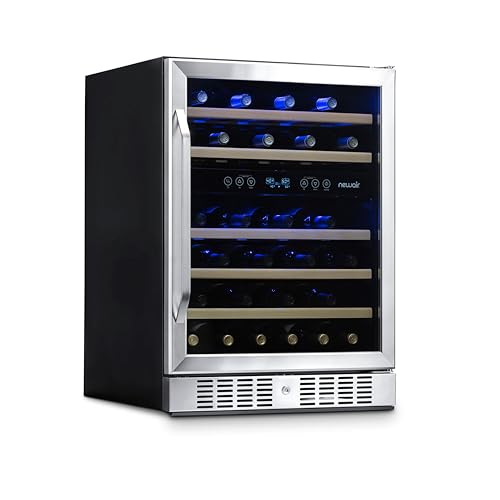
- Each zone covers most of the range, with a floor that favors one side. The Newair AWB-365DB-B publishes 40–66°F for the wine zone and 37–66°F for the beverage zone. The beverage side reaches 37°F, which is genuinely cold; the wine side cannot go below 40°F, which does not matter because nothing in a bottle wants to be colder than that.
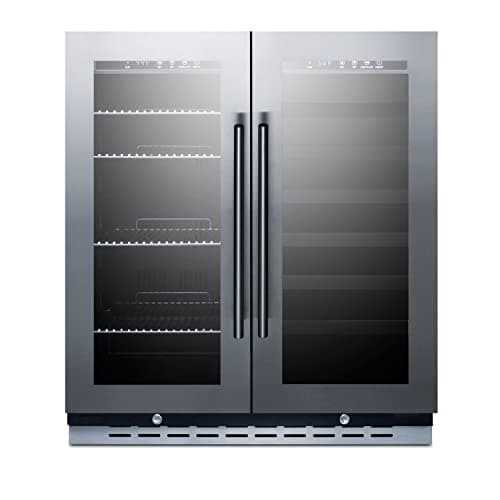
- Both zones are set up for wine, and the cans just live there. The Summit SWBV3067B publishes 41–64°F. Two zones, two thermostats, two keyed locks — and a floor of 41°F. That is a wine temperature. Beer stored in it will be cellar-cool rather than cold, and if you want it colder the cabinet simply cannot oblige.
None of those three is wrong. They are different products wearing the same description. The mistake is buying the third pattern expecting the first. Before you order anything in this category, find the published temperature range for each zone and check the bottom number on the beverage side. If the listing will not tell you, that is itself the answer. Our wine fridge versus beverage fridge comparison works through why the two appliances diverge in the first place.
Shelving is the other half of the compromise
Temperature decides whether the cabinet can do the job. Shelving decides whether you will enjoy using it.
Bottles want to lie down, and they want to lie in something shaped for them. A contoured or ribbed wooden shelf holds a 750 ml bottle still, keeps the cork wet and stops the whole row rolling forward when you pull out one bottle from the middle. Cans want the opposite: a flat shelf with as little wasted vertical space as possible, because can storage is purely a packing problem.
The three combination cabinets here solve it the same way, with different materials:
Wood on the wine side is the thing to insist on. It damps rather than transmits, it does not conduct cold into the glass the way bare wire does, and it is what every dedicated wine cabinet uses. All three combination units here get that right, which is worth saying because plenty of cheaper combination cabinets put wire shelving on both sides and call the left-hand one a wine zone.
The one genuine ergonomic difference: all ten Whynter and Summit shelves pull out. On a loaded cabinet that is the difference between reading a label and unloading six bottles to find out what is behind them. If you want the full argument on racking, wine fridge shelf types covers what each construction costs you in capacity and retrievability.
Width: 24 inches or 30, and nothing between
This category splits hard on one measurement, and it is the measurement most people check last.
A standard US kitchen base cabinet opening is 24 inches. That is why the Newair AWB-365DB-B is 23.4 inches wide: it is built to drop into the gap you already have if you pull out a base unit. Everything about it — 20 bottles, 78 cans, 4.36 cubic feet — is what fits in that space once the insulation and the two-zone divider have taken their share.
The Whynter and the Summit are both 30-inch cabinets (29.75 and 29.5 inches respectively). That extra six inches of width is where the bigger capacity comes from, and it is also why neither of them is an option in most kitchens without real cabinetry work. There is no 27-inch compromise in this category. You either have a 30-inch opening or you do not.
Three measurements to take before ordering, in this order: the width of the opening, the depth of the carcass, and the depth of the cabinet with the handle fitted. That last one catches people — the Whynter is 22.25 inches deep and 24.25 inches with its handles on, a two-inch difference that can push a door proud of your cabinet fronts. Our dimensions guide has the full measuring sequence, and ventilation clearance covers the air gap each installation type needs.
Noise, and why combination cabinets run louder
A combination cabinet is working harder than a wine cabinet of the same size. It is holding a bigger temperature spread across a single insulated box, with a divider between two zones that are deliberately being driven apart. That costs duty cycle, and duty cycle is noise.
The published figures on this page bear it out:
Two things in that table are worth reading carefully. First, a ceiling and a flat figure are not the same claim: “under 38 dB” is a maximum the manufacturer is willing to stand behind, while 34.6 dB is a measurement. Second, the Newair’s 45 dB is the loudest published number here by seven decibels, which in a quiet open-plan kitchen is a real difference rather than a specification footnote. It is also the cheapest to run of the three at 90 W. That is the trade, stated honestly by the manufacturer, and it is your call which way it goes. If the cabinet is going into a room where people sit and talk, read the quiet cabinet roundup before you commit.
Reading a can count honestly
Every capacity figure in this category is a best case, and the can figures are the worst offenders.
A stated can count assumes standard 12 oz cans, packed, with nothing else in the zone. Put a couple of tall seltzer cans or a 22 oz bottle in there and the number drops immediately, because the shelf spacing was calculated for one height. Whynter’s own page is unusually transparent about this: it lists 113 cans in the beverage zone and then gives a per-shelf breakdown that does not add up to 113. We have quoted the figure as published and flagged it in the product notes rather than pick whichever number flattered the cabinet.
Bottle counts have the same problem in a different direction. Thirty-three bottles means thirty-three standard Bordeaux bottles. Burgundy and Champagne bottles are wider at the shoulder, and a collection with a lot of either will fit noticeably fewer — the detail is in our large-format bottle roundup and in how many bottles a wine fridge really holds.
Summit takes the most conservative line of anyone here: it publishes a bottle count and a shelf mix, and no can count at all. That is not a gap in the specification, it is a refusal to print a number it cannot stand behind, and it is the behavior we reward in the rankings.
Choosing between the five
If you have a 30-inch opening and the split is genuinely even, the Whynter BWB-3388FDS is the answer. Both zones cover 36–72°F independently, which means the cabinet adapts to you instead of the reverse: all wine one month, half cans the next. Thirty-three bottles, 113 cans, wood on the wine side, gray-smoked UV glass, a lock and a published noise ceiling. The door is not reversible, so decide which way the French swing needs to open before you order.
If you have a standard 24-inch opening — which is most people — the Newair AWB-365DB-B is the only unit here that fits it. Twenty bottles and 78 cans, sapele wood shelves, a 37°F beverage floor, and the lowest power draw on the page. You pay for the fit in two ways: 45 dB published, and no door lock at all.
If the specification sheet is what you buy on, take the Summit SWBV3067B. It publishes a flat 34.6 dB, keyed locks on both zones, an NSF-7 commercial listing and a five-year compressor warranty, and it is built to be opened and closed all day. Just be clear-eyed about the 41°F floor: this is a two-zone wine cabinet that will also hold cans at cellar temperature, not a cabinet that will make beer cold.
If wine is most of what you store, stop buying a combination cabinet. The Newair AWR-460DB is here as the honest alternative: 46 bottles in a 23.4-inch opening, two zones across the full 40–66°F span, beechwood shelving, built-in rated. It holds more than twice the Newair combination unit’s bottle count in the same width, because it is not giving up a third of its volume to cans. A six-pack lives in the kitchen refrigerator for free.
And the one to rule out: the Frigidaire EFMIS567 is a 12-liter thermoelectric beverage cooler that holds four bottles or eighteen cans. It is on this page because it is the kind of unit that gets bought by mistake when a listing says “wine and beverage”. It is a desk appliance. Frigidaire does not publish a wine-storage temperature range for it, and nothing about it is a wine cabinet.
One last piece of arithmetic. A combination cabinet costs capacity on both sides to avoid owning two appliances. If you already have a working kitchen refrigerator — and you do — the cans have a free home, and the honest comparison is a dedicated wine cabinet against a combination unit at the same width. Putting beer and soda in a wine fridge sets out what actually goes wrong when you try to make one cabinet do both without the second zone.