Two specifications, rarely in the same box
“Outdoor wine fridge” is a popular search and an awkward product category, because it asks for two engineering specifications that manufacturers treat as separate product lines.
Outdoor-rated is about survival: corrosion-resistant stainless, sealed electrics, a sealed back with no exposed condenser coils, a door gasket and hinge built to take temperature swings and damp, and a compressor sized for a hot ambient. Manufacturers who build for this label their units clearly, because getting it wrong is a warranty problem and a safety problem.
Wine-rated is about holding a narrow band in the middle of the fridge range: roughly 45–65°F, with 55°F as the storage target, plus shelving that cradles bottles horizontally and glazing that cuts ultraviolet light.
When we searched the current US market for cabinets carrying both, what came back were outdoor beverage centers and outdoor refrigerators — built properly for outside, and specified for cold drinks. The handful of units marketed as outdoor wine and beverage cabinets are drawer or single-zone designs whose published figures we could not verify from a manufacturer specification, and we will not rank a cabinet on a retail headline. So this page is a guide rather than a ranking, and it says what we can actually support.
What outdoor construction actually means
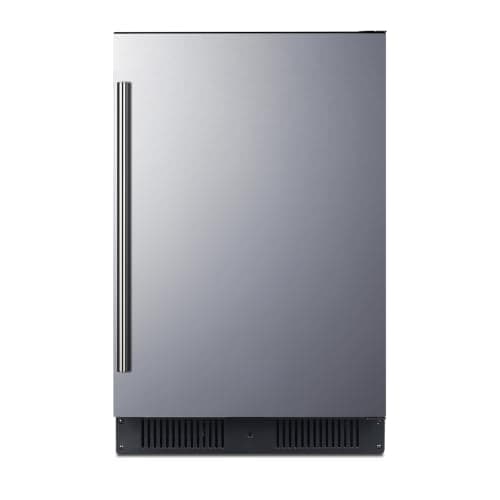
The Summit SPR624OS is a useful worked example because Summit publishes the detail. Its outdoor credentials are specific things, not an adjective:
- 304-grade stainless steel. The grade is the point. 304 is the corrosion-resistant austenitic stainless used for outdoor and marine fittings; a “stainless finish” with no grade stated is often 430, which will bloom rust spots within a season near salt air or a pool.
- A sealed back with no exposed coils. An indoor cabinet with a rear condenser has a radiator on its back. Outside, that radiator collects leaves, insects, damp and in time corrosion. Sealing the back and front-breathing the airflow is the structural difference between the two product lines.
- A lock in the kickplate. Mundane, and the feature people actually use. A cabinet that lives outdoors is a cabinet anyone can open.
- A commercial listing. The SPR624OS carries ETL, ETL-C and an ETL-S listing to NSF-7, which is a hygiene and durability standard for commercial refrigeration rather than an outdoor rating as such — but it tells you the cabinet was built to be used hard.
Note what Summit does not claim: there is no formal outdoor rating on the specification sheet, only “weatherproof construction” and a recommendation for outdoor kitchens. That is typical of this category, and it is why “is it outdoor-rated?” is usually better asked as “what is the stainless grade, and is the back sealed?”
Why outdoor units will not hold 55 degrees
Here is the specification that ends the search. The Summit SPR624OS publishes a range of 36°F to 43°F. Red wine wants to be stored around 55°F and served around 60–65°F. The cabinet is not merely a bit cold for wine; the temperature you need is above the top of its range and simply cannot be selected.
That is not a flaw. It is a deliberate choice: an outdoor refrigerator exists to keep food safe and drinks cold in a hot environment, so its whole thermal design points downward. A wine cabinet’s design points at the middle of the range and has to be able to stop cooling. The two are tuned in opposite directions, which is the real reason you do not find them in the same box at consumer prices.
The shelving follows the same logic. The SPR624OS has three cantilevered glass shelves — right for cans, bottles standing up and trays of food, wrong for a row of bottles lying on their sides. Storing wine upright long term dries the cork, which is the argument laid out in store wine flat or upright.
So if you put wine in an outdoor refrigerator, you are chilling it, not cellaring it. For a few bottles of white and rose that will be drunk the same weekend, that is completely fine — a touch cold, and a short rest on the table fixes it. For anything you intend to keep, it is the wrong appliance, and wine storage temperature explains what the steady 55°F is actually buying you.
Ambient heat, sun and the glass door
Even setting the temperature range aside, outside is a hostile place for a wine cabinet, for three reasons that compound each other.
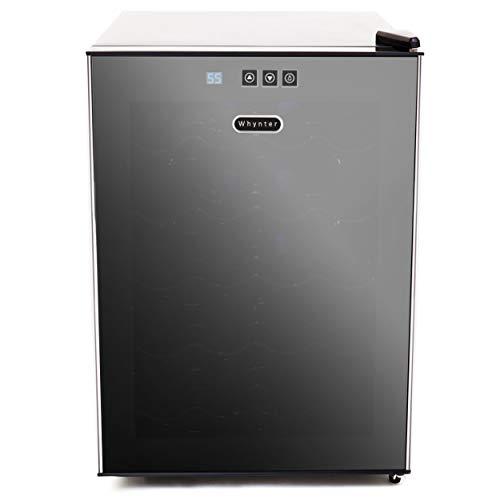
Ambient temperature sets the floor. Every cooling system is moving heat out into the surrounding air, and the hotter that air is, the harder the job. This is fatal for thermoelectric cabinets in particular: the Whynter WC-201TD on this page is a quiet, vibration-free 20-bottle unit that is excellent in a still indoor room and loses the argument above roughly 77°F ambient, because a thermoelectric module cools relative to the room rather than to a setpoint. A covered porch in August is exactly the condition it cannot handle. Compressor versus thermoelectric sets out the full trade.
Sunlight through a glass door is two loads at once. It is a heat load the compressor has to fight and a light load the wine cannot recover from. Ultraviolet light drives the reactions behind lightstrike — the wet-wool and struck-match aromas that ruin pale-glass whites, roses and sparkling wines fastest. UV-treated glazing reduces the second load and does nothing about the first.
Swings matter more than averages. Wine tolerates a steady 60°F far better than a daily cycle between 50 and 75°F, because repeated expansion and contraction works against the cork. An outdoor location is, by definition, a place with a daily cycle. What happens to wine if it is not stored properly goes through the failure modes in order.
Three ways to do this properly
1. Split the job. This is the right answer for most outdoor kitchens. Put a genuinely outdoor-rated undercounter refrigerator in the island for beer, soda, mixers and food — the Summit SPR624OS is a well-documented example of the class — and keep the wine in a proper cabinet indoors. Carry out the bottles you are opening. You get correct storage and correct cold drinks, and neither appliance is being asked to do something it was not built for.
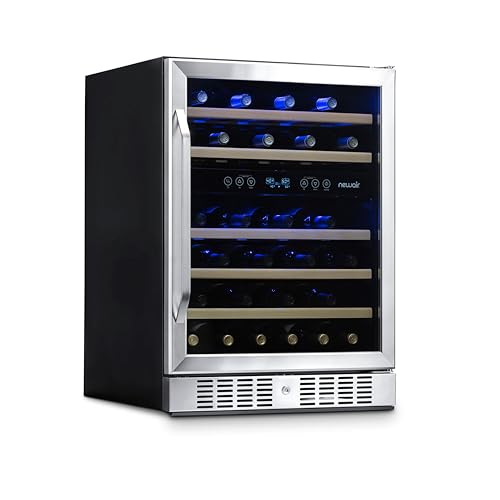
2. Put the wine cabinet under real cover, indoors of the weather line. A fully enclosed, roofed, wall-backed outdoor room — a three-season porch, a garden room, an enclosed bar — is an indoor environment as far as an appliance is concerned, provided it stays dry and does not swing wildly. There, a compressor wine cabinet such as the Newair AWR-460DB is a reasonable choice: 46 bottles, two zones across the full 40–66°F range, beechwood shelving, UV-protected insulated glass, and built-in or freestanding rated so it can go into cabinetry. Check the manufacturer’s ambient operating range before you commit, keep it out of direct sun, and never let it get wet. Our garage-ready wine fridge roundup is the closest existing guide to this problem, because an unheated garage and a three-season porch fail in the same ways.
3. If it must be outside and uncovered, buy for survival and accept cold. Use an outdoor-rated cabinet, expect the contents to sit in the high 30s to low 40s, and treat it as a drinks fridge that also holds whatever you are opening tonight. Do not put anything in it you would be upset to lose, and do not expect the cork to survive a year of upright cold storage.
What we would not do is buy an indoor wine cabinet and install it outdoors because the patio is covered. An indoor cabinet has an exposed condenser, an unsealed back and a stainless finish of unstated grade. It will work for a season or two and then fail in a way the warranty will not cover, because installing an indoor appliance outdoors is outside its stated conditions. Where to put a wine fridge works through the room-by-room version of this decision, and wine fridges in a garage covers the unheated-space case in detail.
If this page has talked you out of a purchase, it has done its job. There is no cabinet we can point to and honestly say it is outdoor-rated and will hold your wine at 55°F. The moment one appears with published figures to support both claims, it will be reviewed here.