In a kitchen a compressor is background noise. In a living room it is the thing you hear between sentences — so this page is ranked on silence, not on capacity.
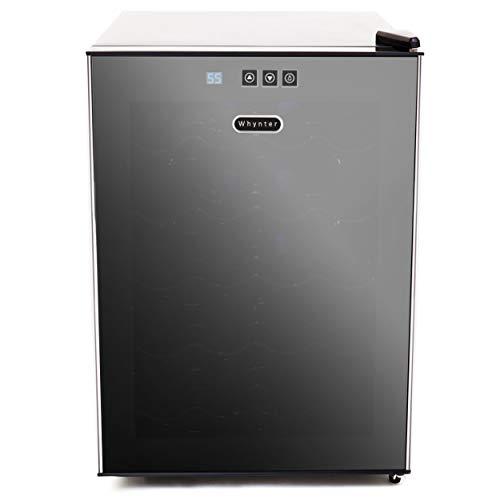
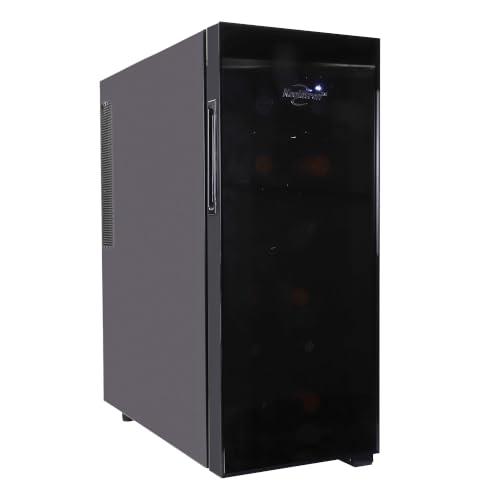
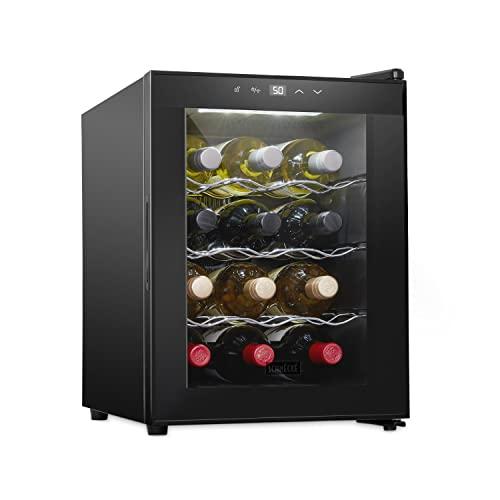
The Whynter WC-201TD is the best wine fridge for a living room: 20 bottles cooled thermoelectrically, so there is no compressor to cycle, no start-up thump and no vibration path into the bottles, with a published 46-66°F range. For a mirrored UV-protective door at a lower price, the Koolatron WC12MG. The budget pick is the Schmécké 12-bottle, the cheapest cabinet on this site.
This page sits in Wine Fridges, where the rest of the category is compared the same way.
How this page is funded. Cork & Cool earns a commission if you buy through the Amazon links below, at no extra cost to you. It never changes the order of this list — see our editorial policy and affiliate disclosure. Prices come from Amazon and are refreshed daily; the price on Amazon when you buy is always the one that counts.
Quick picks
Every model below, on the specifications that decide the purchase. Tap a row to jump to the full write-up.
Comparison of wine storage models by zones, capacity, cooling type, width, published noise rating and vibration.
#
Product
Best for
Zones
Bottles
Cooling
Width
Noise
Vibration
Price
1
Whynter WC-201TDSilence in a quiet room
Twenty bottles cooled thermoelectrically, so there is no compressor to cycle and nothing to transmit vibration into the bottles.
1
20
thermoelectric
Not published
Not published
Thermoelectric: no compressor, which the manufacturer describes as vibration-free cooling.
“Not published” means the manufacturer does not publish that figure. We do not estimate it. Prices and product photographs come from Amazon and are refreshed daily; where a model is not sold on Amazon the thumbnail is an illustrative category photograph and the link is a search.
How we compared
We compared published manufacturer specifications, official product documentation and verified owner reports across 5 models. We do not physically test these units, we have no laboratory, and we do not accept payment for placement. Where a manufacturer does not publish a figure — noise ratings, most often — this page says so rather than estimating it.
What we weighted
Whether there is a compressor at all, because a thermoelectric module has no cycling, no start-up thump and no vibration
A published decibel figure where a compressor cabinet has one, and a plain statement where it does not
A documented vibration measure, which matters in a living room for furniture reasons as well as for the wine
Freestanding suitability, since a living room has no cabinetry to vent into
Glazing, because a living room is the one place in a house with both daylight and lamps
Finish and visual presence, judged honestly: a 34-inch stainless box reads as an appliance in a sitting room
Published temperature range, so the cabinet is still a wine fridge rather than a display case
Capacity, ranked last: a living-room cabinet is a serving cabinet
Every model in detail
Five cabinets suited to a room with no cabinetry and people sitting in it. Three are thermoelectric and therefore have nothing to cycle; the two compressor cabinets are here for specific reasons stated below.
#1 — Silence in a quiet room
Whynter WC-201TD
Twenty bottles cooled thermoelectrically, so there is no compressor to cycle and nothing to transmit vibration into the bottles.
No compressor means no start-up thump and no vibration path into the wine
65 W is a fraction of a compressor cabinet's draw
46°F floor is cold enough for sparkling service
What does not
Thermoelectric cooling works against ambient temperature, so a warm room raises the achievable minimum
Freestanding only — it must not be enclosed
Who should skip it. Skip it if the unit will live anywhere that gets hot: a garage, a conservatory, or a cabinet run with no air gap. Thermoelectric units lose the argument above roughly 77°F ambient.
Fits the 15-inch cabinet opening most kitchens already have
Zone split is set up for service temperatures rather than long-term cellaring
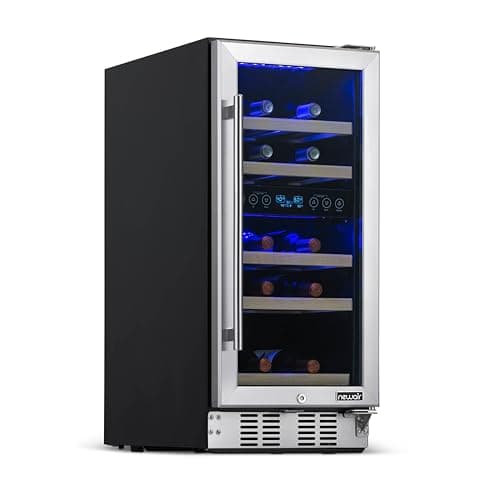
Triple-tempered glass is a real insulation step over the usual double pane
What does not
Neither zone covers the whole 40-66°F span: the upper stops at 55°F and the lower starts at 50°F, so the split is fixed rather than something you set
29 bottles fills fast if you buy by the case
Who should skip it. Skip it if you want one cabinet at a single cellar temperature — the fixed 40-55°F upper zone means half the unit is always a serving zone.
#ad — paid link. How this is funded. Price as of November 28, 2026; check Amazon for the current price.
#5 — Low vibration in a narrow cabinet
Liebherr WS1200
Twelve bottles, wooden grid shelves, and a compressor Liebherr specifically develops for low vibration — the small cabinet that treats wine as aging stock.
Illustrative photograph — not an image of the Liebherr WS1200.
Published specifications
Capacity
12 bottles
Zones
1
Cooling
compressor
Temperature range
Not published
Noise rating
Not published by the manufacturer
Installation
freestanding
· Exterior width: 16 3/4 in
· Capacity: 12 bottles on 3 wooden grid shelves
· Electronic touch control with digital temperature display
Wine fridge noise comes from three places: the compressor cycling on and off, the fan moving air, and the slight thump of a compressor starting. A kitchen hides all three under its own background. A living room does not, which is why the ranking on this page is almost the inverse of the ranking on a capacity page.
The cleanest answer is to remove the compressor. The Whynter WC-201TD, the Koolatron WC12MG and the Schmécké 12-bottle all cool thermoelectrically: a solid-state module moves heat with no moving compressor at all, so there is nothing to cycle and no start-up noise. Koolatron specifies the WC12MG’s cooling as vibration-free, and Whynter draws 65 W for the WC-201TD against the hundred-odd watts of a compressor cabinet.
None of the three publishes a decibel figure, which is normal: the number that would matter most is the fan, and nobody in this class prints it. What they do publish is the absence of a compressor, and in a quiet room that is the more useful fact. What the figures mean when they exist is in wine fridge noise explained.
Cooling, noise and vibration, every pick for a living room
Cabinet
Cooling
Published noise
Vibration
Bottles
Install
Whynter WC-201TD
Thermoelectric
Not published
No compressor
20
Freestanding
Koolatron WC12MG
Thermoelectric
Not published
Specified vibration-free
12
Freestanding
Newair AWR-290DB
Compressor
Not published
Not published
29
Both
Schmécké 12-bottle
Thermoelectric
Not published
No compressor
12
Freestanding
Liebherr WS1200
Compressor
Not published
Low-vibration compressor (documented)
12
Freestanding
Vibration, and why it matters in a living room
Vibration has two consequences and only one of them is about wine. Over years, constant low-frequency vibration is believed to disturb the sediment and the slow chemistry of an aging bottle, which is why serious cellar cabinets advertise damping. Over an evening, a compressor cabinet standing on a timber floor transmits into the floor and, if the cabinet is next to a bookcase or a turntable, into those too.
Three cabinets here have nothing to transmit. The one compressor cabinet that addresses it directly is the Liebherr WS1200, which Liebherr builds around a compressor specifically developed for low vibration, with three wooden grid shelves, UV-resistant insulated glass and a user-replaceable activated charcoal filter in a 16 3/4-inch freestanding body. It holds twelve bottles and Liebherr does not publish a temperature range in the retail listings we checked, which is why it sits last here rather than first despite being the most cellar-grade cabinet on the page. The subject has a page of its own in best wine fridges for vibration and light.
Daylight, lamps and glazing
A living room is the one room in a house that combines daylight with evening lamps, and ultraviolet light degrades wine through clear glass. Two cabinets here publish a real treatment: the Koolatron WC12MG has a double-paned mirrored UV-protective door, which is the strongest glazing on this page and the reason it is the runner-up rather than the budget pick, and the Newair AWR-290DB uses triple-tempered glass with UV protection. The Schmécké has a smoked glass door and the Whynter WC-201TD a mirrored one.
None of them publishes a transmission figure, so treat the treatments as ranked by description rather than by number. If the cabinet will sit in direct sun, that is worth more than any other specification on this page — and the wider case is in what happens to wine if it is not stored properly.
The thermoelectric catch
Here is the honest limitation of the three quietest cabinets on this page. Thermoelectric cooling works against the room: the published floor of 46°F on the Whynter and Koolatron, and 46–64°F on the Schmécké, assumes a reasonable ambient temperature. Above roughly 77°F the module loses the argument, and a sunny living room in August can exceed that.
A 46°F floor is also not cold enough for sparkling service, which is a real constraint if the cabinet is the one guests are poured from. If either of those applies, the Newair AWR-290DB is the pick: 29 bottles across two zones, a compressor that holds 40–66°F whatever the room does, and a rating that lets it stand free or be built in later. You pay for that with a compressor you will occasionally hear. The trade is argued properly in compressor against thermoelectric.
What it looks like in the room
This is a judgement rather than a specification, so we will be plain about it. A 34-inch stainless undercounter cabinet standing alone on a living room floor reads as an appliance, because it was designed to be surrounded by cabinetry. The cabinets that look right in a sitting room are the small ones — a twelve- or twenty-bottle unit on a sideboard or a low shelf, where the glass door reads as a display case.
That is the real reason this page tops out at 29 bottles. If you want 46 or more in a living space, the better answer is usually an unpowered rack in the room and a cabinet somewhere else, or a cabinet built into joinery along one wall — see built-in wine fridge ideas and best wine racks.
Which one to buy
Buy the Whynter WC-201TD for the most bottles with no compressor: twenty, at a published 46–66°F, for a fraction of the running cost of a compressor cabinet. Buy the Koolatron WC12MG if the cabinet sits anywhere daylight reaches, for the mirrored UV-protective door. Buy the Schmécké 12-bottle if the budget is the budget. Buy the Newair AWR-290DB if the room gets hot or you serve sparkling wine. And buy the Liebherr WS1200 if you are storing bottles you intend to keep for years in a room you also live in.
Questions people actually ask
▸ How loud is a wine fridge in a living room?
A thermoelectric cabinet is essentially a fan; a compressor cabinet cycles and thumps slightly on start-up. Published figures in this category run from 34 to 42 dB where they exist at all, and most makers publish nothing — see wine fridge noise explained.
▸ Can I put a wine fridge in direct sunlight?
Avoid it. Sun loads the cabinet with heat it has to pump back out, and ultraviolet light reaches the bottles through the glass. A UV-treated or mirrored door helps; a different wall helps more.