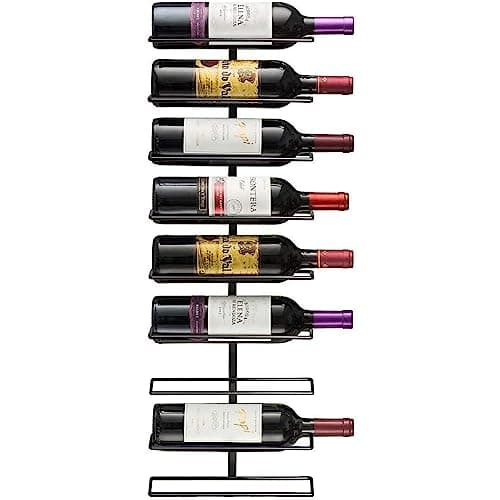
Measure the shelf before anything else
A pantry is not a small cellar. It is a set of fixed shelves, usually 12 to 16 inches deep, already holding things you need, and the binding constraint is almost never capacity — it is whether the rack fits the bay without stealing a shelf you were using.
Three numbers decide it, and they are all on your tape measure rather than on any product page. Shelf depth, because a standard 750 ml bottle is roughly 12 inches long, so a bottle stored lengthwise eats the whole shelf and a bottle stored across the shelf needs the rack to be shallow. Bay width, because a 15.75-inch rack lands neatly in a 16-inch bay and overhangs a 14-inch one. And shelf-to-shelf height, because that is what decides how many tiers you can stack.
Get those three and the choice below makes itself. The general small-space version of this problem, including countertops and awkward corners, is in best wine racks for small spaces.
Published dimensions, side by side
This is the only table that matters for a pantry, and it is published figures throughout.
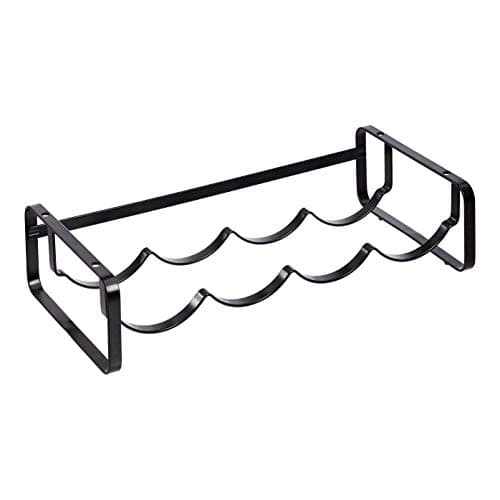
The Amazon Basics tier wins the pantry on one number: 3.74 inches deep. That is less than a third of a shallow pantry shelf, so the rack sits at the front edge and leaves the back of the shelf for everything else, or sits at the back and leaves the front clear. Nothing else here comes close. Its recessed wave-shaped holders are the detail that makes it work in a cupboard you open and shut all day — bottles do not roll.
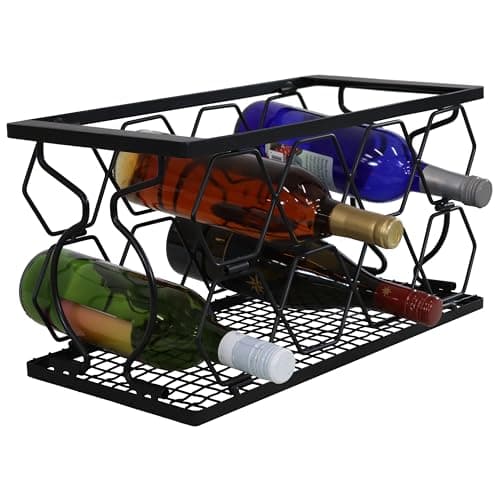
The Sunnydaze folding rack is the better buy if the pantry is a staging area rather than storage. Eight bottles, a published 25 lb load rating, 3.25-inch square slots, and it folds to 1.75 inches — so it lives flat behind the cereal for eleven months and comes out for the party. It is the only rack here that publishes a load rating at all, which is worth something on a shelf you did not build.
Use the height, not the depth
The mistake in a pantry is trying to go deeper. The move is to go up.
A standard pantry bay has four to six inches of dead air above whatever is on the shelf, and a stackable rack converts that into bottles for free. The Amazon Basics unit publishes 7.87 inches per tier and stacks to three tiers, so a 24-inch shelf-to-shelf gap takes the full twelve bottles in 3.74 inches of depth. That is a better bottles-per-square-inch result than any floor rack on this site.
Two practical limits on stacking. First, nothing here publishes a rating for a loaded three-tier stack, so put the stack against the back wall of the bay rather than at the front edge, and do not stack higher than the manufacturer publishes. Twelve bottles is about thirty-six pounds sitting on a shelf designed for cans. Second, a stack is only as square as the shelf under it — a sagging wire shelf will lean a three-tier stack, and a leaning stack is how a bottle ends up on the floor. The class in full is in best stackable wine racks.
The back of the door, and the wall
A pantry has two surfaces nobody uses, and both take wine.
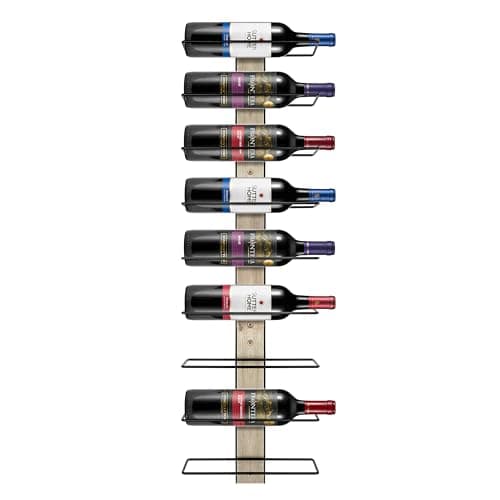
The wall at the end of the bay is the better one. The Sorbus wall-mounted wood set of three is well suited to it: three separate three-bottle racks that mount independently, with mounting holes on the back of each rack and hardware and instructions in the box. Because the pieces are independent you can step them around a light switch, a shelf bracket or a conduit run instead of fighting a single long rack. The Sorbus metal wall rack holds nine in one unit if the wall is clear.
The back of the door is the tempting one, and it is the one to be careful about. A pantry door is usually hollow-core, which will not hold a loaded rack on drywall anchors, and a door swings — so every bottle on it gets a small shake several times a day. If you do it, fix into the door’s solid stile rather than the hollow panel, keep it to three bottles, and keep it for wine you are drinking this week rather than anything you are keeping.
Wall options beyond the pantry are in best wall-mounted wine racks, and if the pantry shelf turns out to be the wrong surface, the counter version is in best countertop wine racks.
Is a pantry real wine storage?
For months, yes. For years, it depends entirely on where the pantry is.
A pantry gets the two easy things right by default. It is dark, which removes the light damage a glass-door cabinet has to engineer around, and it is still, with no compressor cycling underneath. Store bottles on their sides, label out, and they will be fine for anything you intend to open within a year or two — the reasoning is in store wine flat or upright.
What a pantry does not control is temperature, and that is the whole limitation. A pantry on an interior wall away from the oven may sit in the sixties year round, which is acceptable. A pantry sharing a wall with the range, the dishwasher or an exterior south-facing wall will swing through the high seventies in summer, and swing is the thing that actually ages wine badly — the mechanism is in what happens to wine if it is not stored properly.
So: put a cheap thermometer on the shelf for a month before you decide this is where the good bottles live. If it holds in the sixties, a pantry rack is excellent value. If it does not, use the pantry for the drinking stock and read wine rack vs wine fridge or is a wine fridge worth it for the bottles you are keeping.