Measure it for a week
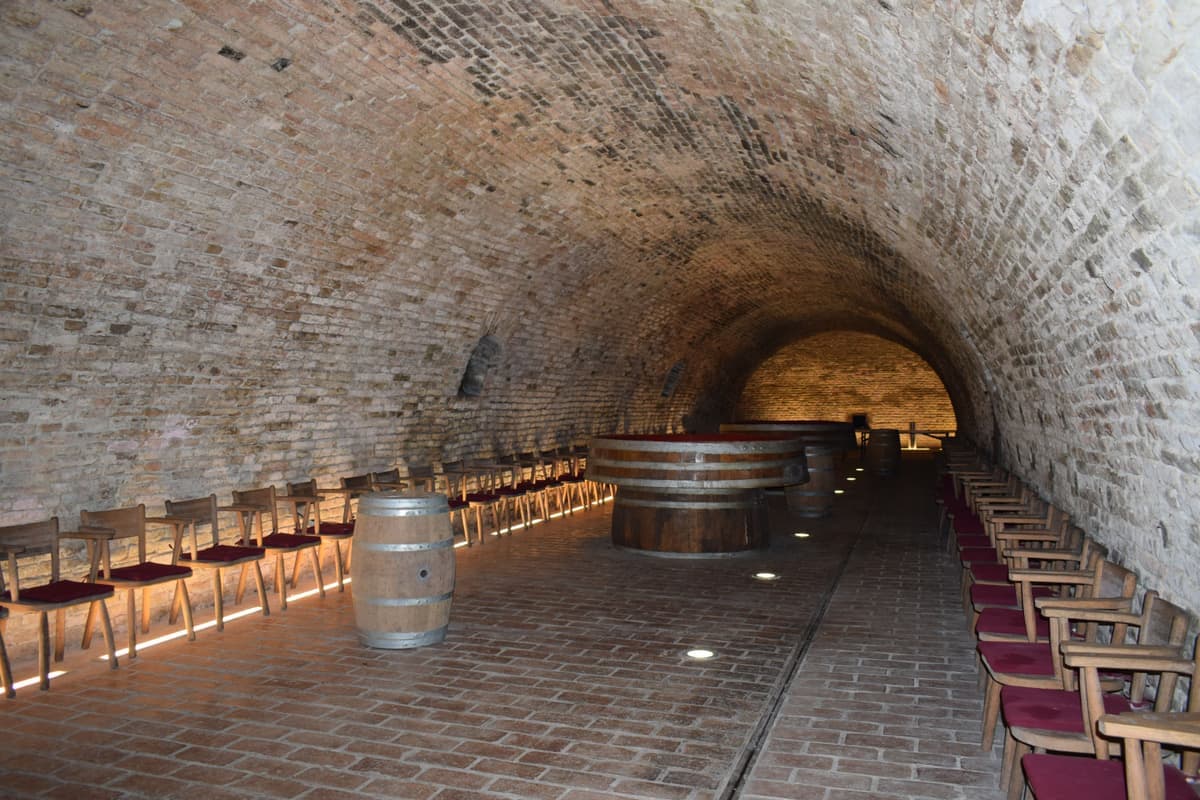
A basement is the closest thing to a cellar that most houses have: below grade, surrounded by earth, away from windows and cooking heat. But “basement” covers everything from a cool stone cellar to a finished den with a heating duct running through it, so start with evidence rather than assumption.
Put a thermometer and a hygrometer in the coolest corner and leave them for a week, ideally in the hottest part of summer. You are looking for three numbers:
- Average temperature. Under 68°F is workable. Under 60°F is good. At 55°F you have a cellar.
- Daily and weekly swing. This matters more than the average. A steady 66°F stores wine better than a range of 55–75°F, because repeated expansion and contraction works the cork. Why that is the case is covered in what happens to wine if it is not stored properly.
- Relative humidity. Published guidance for climate-controlled wine storage puts the useful band at 55–75%. Sustained readings well below about 50% dry corks; well above about 80% ruins labels and invites mold. The detail is in wine fridge humidity.
The target for long storage is 55°F, and the full reasoning for that number is in wine storage temperature. Almost no basement hits it. That is fine — stable and under 68°F is most of the benefit.
Where in the basement
Within one basement there can be a 10°F spread, so the corner you choose is a real decision.
- Against an exterior below-grade wall, on the north side if you have one. That wall is in contact with earth at a stable temperature all year, and it is the single best thing a basement offers.
- Away from the furnace, boiler and water heater. Obvious, and routinely ignored. Also away from the ducting that runs from them, which radiates along its whole length.
- Away from the dryer and any appliance that vibrates. A washer on a spin cycle shakes a whole floor slab.
- Low, not high. Floor level in a basement is usually several degrees cooler than ceiling level, which is why a floor rack beats a high shelf.
- Dark, or made dark. A basement window is easily dealt with — a curtain or board over it costs nothing. No fluorescent lighting left on.
The humidity problem cuts both ways
Basements are usually the opposite of a dry room, and that is mostly good news: damp air keeps corks sealed, which is exactly what a kitchen fridge fails at. Two cautions though.
Too damp ruins everything but the wine. Above about 80% relative humidity, labels lift, foils corrode and cardboard cases collapse. The wine inside is fine and the collection looks terrible, which matters if you ever intend to sell or gift a bottle. Take bottles out of cardboard and store them on a rack rather than in their boxes, which also removes the mold substrate.
A dehumidifier is a heater. If you run one, remember it puts heat into the room, so site it away from the rack and check the temperature again after a week with it running. The full humidity picture, including what cabinets do and do not control, is in wine fridge humidity.
Racking a basement properly
A basement is where racks make most sense, because the room is doing the temperature work and a rack is simply storage. Three practical points.
Floor racks over wall racks on a masonry wall. A below-grade wall is often damp and always hard to fix into. A freestanding floor rack needs no fixings, sits in the coolest air, and can be moved when you discover the better corner.
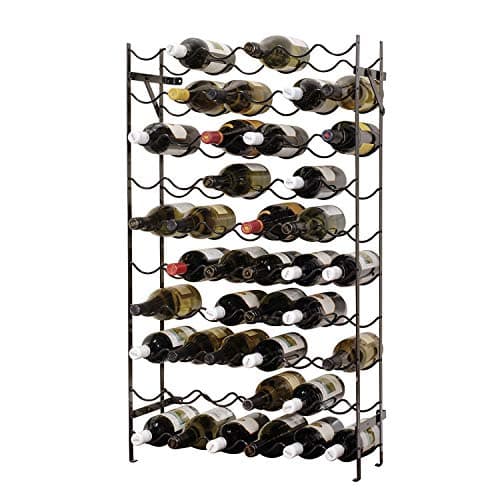
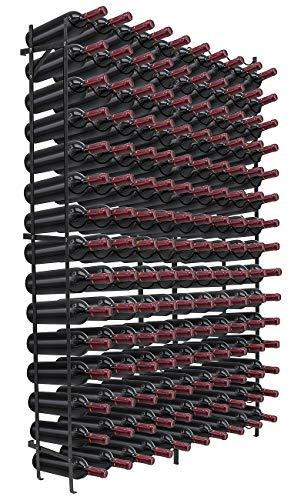
Size the rack to the collection, not the room. The Oenophilia Alexander rack holds 60 bottles, which is a realistic household collection. The Sorbus freestanding floor rack holds 150 with open shelving that keeps labels visible, which is where you go if the collection is genuinely large. Both are unpowered, so there is nothing to fail and nothing to run.
Keep bottles off the floor slab. A slab is damp, and a bottle lying on concrete wicks moisture into its label. Any rack solves this; a case on the floor does not.
The full field is in best wine racks, with floor racks the relevant subset here, and the wood-against-metal question — which matters more in a damp room than a dry one — is in wood versus metal wine racks.
When a basement is not good enough
Four findings that mean buying a cabinet rather than a rack, and putting the cabinet in the basement:
- The average is above 70°F. A finished basement with heating is just a room.
- The swing is more than about 10°F across a week. Swing does more damage than a steady warm temperature.
- It drops near freezing in winter. Unheated basements in cold climates do. Wine that freezes pushes its cork out.
- You are keeping bottles for a decade. At that horizon the difference between 55°F and 66°F stops being academic.
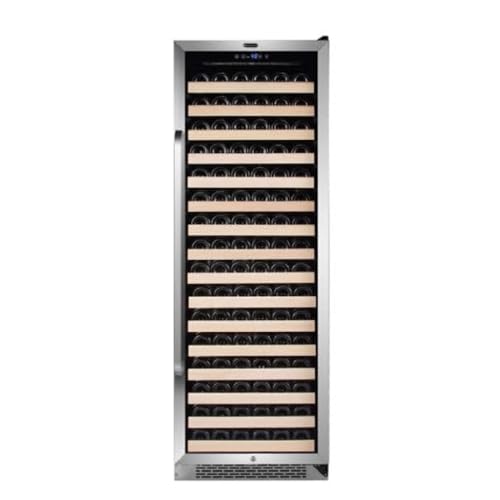
A cabinet in a cool basement is the easiest installation there is: a cool room means a low duty cycle, which means less noise, less vibration and a lower bill than the same cabinet in a kitchen. For a collection at one temperature the Whynter BWR-1662SD holds 166 bottles at 40–65°F on sixteen removable shelves; the wider field is cabinets for long-term storage, and the rack-or-cabinet decision in full is rack versus fridge.
The rack is the only part of a basement cellar you have to buy, and it is doing one specific job: keeping every bottle clear of a slab that wicks ground moisture upward continuously. The options, compared on published capacity and construction, are in best wine racks for a basement. For the humidity band to aim for, and why running a dehumidifier flat out is a mistake, see humidity-controlled wine storage.
If the room turns out to swing more than a basement should, the cabinet you want down there is a different shape from a kitchen one — the best wine fridges for a basement ranks on capacity and shelf access rather than on fit.