The short answer
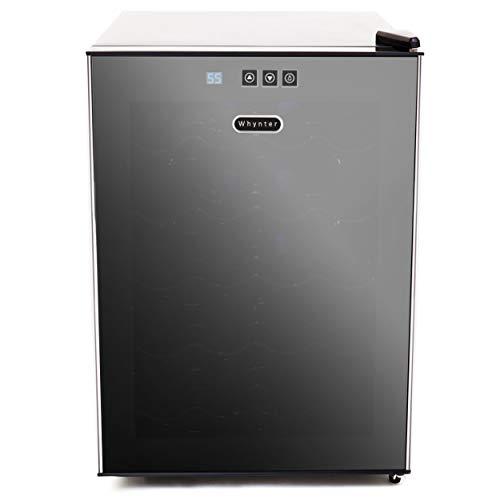
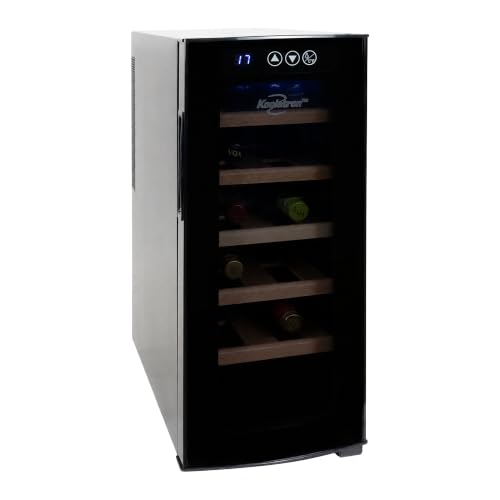
No mainstream manufacturer sells a thermoelectric wine cooler rated for built-in installation, and the reason is mechanical rather than commercial. Every thermoelectric cabinet in our registry — six of them, across Whynter, Koolatron, Ivation, Schmécké and Frigidaire — is published as freestanding. Not “both”. Not “built-in capable with clearance”. Freestanding.
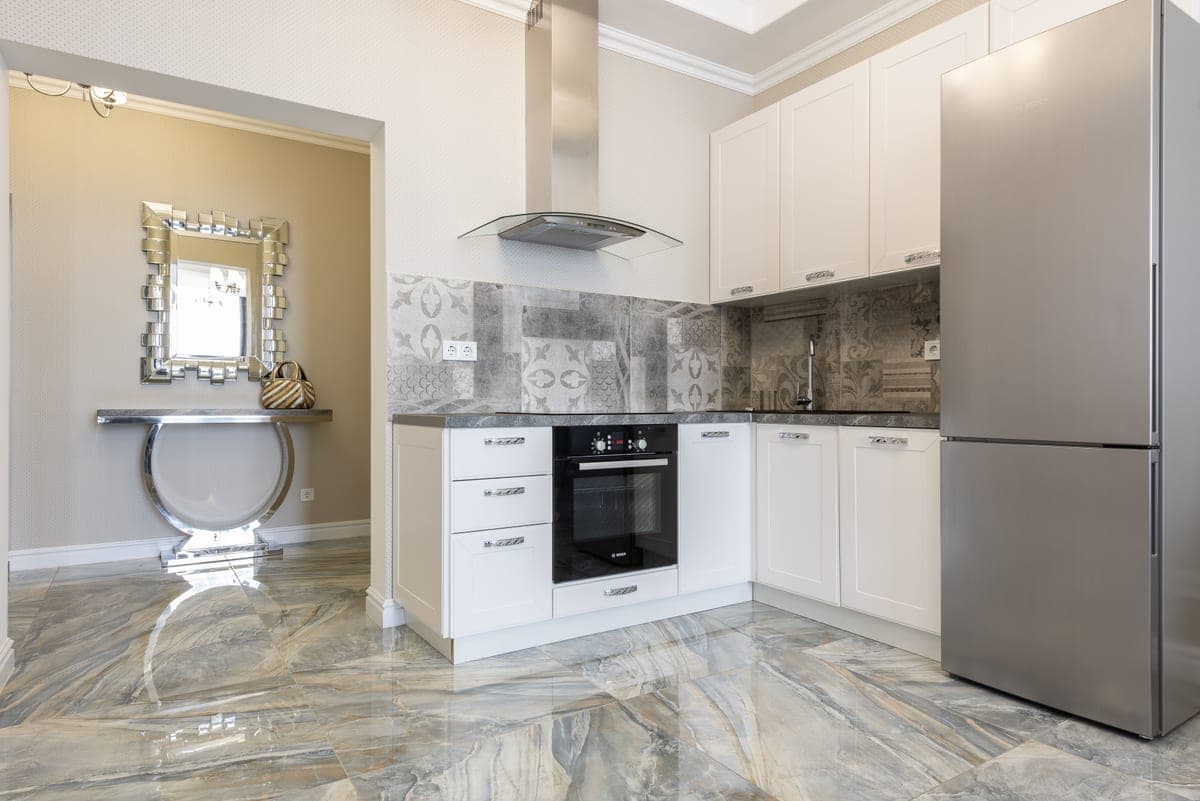
If you came to this question because you want a cabinet that disappears into a run of units and stays quiet, that is a solvable problem; it is just solved with a compressor cabinet that publishes a sound level, not with a thermoelectric one. If you came because you already own a thermoelectric cooler and the cabinetry is being built around it, there are three legitimate ways to do that and one way that will cook it. Both cases are below.
Why the two things do not combine
A thermoelectric cabinet has no compressor and no refrigerant. It uses a solid-state Peltier module: run current through it and one face gets cold while the other gets hot. The cold face points into the cabinet; the hot face is bonded to a metal heat sink with a small fan behind it, and that assembly sits at the back of the unit. The heat has nowhere to go but into the air immediately behind and beside the cabinet. That is the whole machine, and it is why these units are quiet: a fan is the only moving part. The mechanism argument in full is in compressor against thermoelectric.
A built-in cabinet is defined by the opposite arrangement. It is designed to be enclosed on five sides, so its condenser and fan are at the FRONT, usually behind a grille under the door, and it breathes through that front face. That is the single specification that makes a cabinet built-in rated, and it is what built-in against freestanding and ventilation and clearance are both really about.
So the request “built-in thermoelectric” asks for a cabinet that rejects heat backwards into a sealed cavity. Nothing is wrong with the idea — it is simply that the heat has to leave the cavity, and in a thermoelectric cabinet there is no mechanism pointed at the front to make that happen.
What the catalog actually contains
We checked rather than assumed. A catalog search on November 4, 2026 for built-in and undercounter thermoelectric cabinets returned two clean groups and nothing in between. Every listing described as “built-in or freestanding” was a compressor unit — 12-inch, 15-inch and 24-inch cabinets from a mix of brands, all of them specifying compressor cooling. Every thermoelectric listing returned was described as freestanding or countertop, including the 12 and 20-bottle units that dominate that part of the market.
That split holds in the registry too, and it is worth seeing side by side because it is the actual answer to the question.
Notice the last column. The cabinets that cannot be built in are the ones that publish no decibel figure, and the built-in-rated compressor cabinets are the ones that do. That looks backwards until you realize what it means: thermoelectric makers sell quiet as an adjective, while the cabinets competing on noise have to put a number on it. Our noise guide deals with that asymmetry directly, and best quiet wine fridges ranks on the published figures rather than on the word.
The double penalty of enclosing one
Building in a thermoelectric cabinet does not just risk overheating it. It attacks the one weakness the technology already has.
A thermoelectric module moves heat across a temperature difference, and the bigger that difference, the less effectively it works. That is why the published ranges on these cabinets stop where they do: the Whynter WC-201TD publishes 46 to 66°F, the Koolatron WC12-35D publishes 46 to 66°F, and the Schmécké publishes 46 to 64°F. None of them claims the low 40s that a compressor cabinet reaches, and all of them depend on the room staying moderate. Our thermoelectric roundup is explicit that a hot room is the failure case for the whole category.
Now enclose one. The air behind the cabinet warms up, because that is where the heat sink is pointing and there is no path out. Local ambient rises, the temperature difference the module has to work across gets bigger, the cabinet holds a higher internal temperature, the module runs at a higher duty cycle, and it rejects more heat into the same trapped air. Two failure modes come out of that: a cabinet that quietly sits several degrees warmer than its display claims, and a shortened service life for the module and fan.
The first one is the dangerous one, because nothing announces it. The cheapest way to find out whether your cabinet holds its setting is a logging sensor on the middle shelf, which is the whole argument of best wine fridge thermometers and hygrometers. If the bottles are sitting at 68°F in a cabinet reading 55, the wine is aging at roughly double speed and paying for it in the glass.
What to buy instead
Work back from the reason you wanted thermoelectric in the first place.
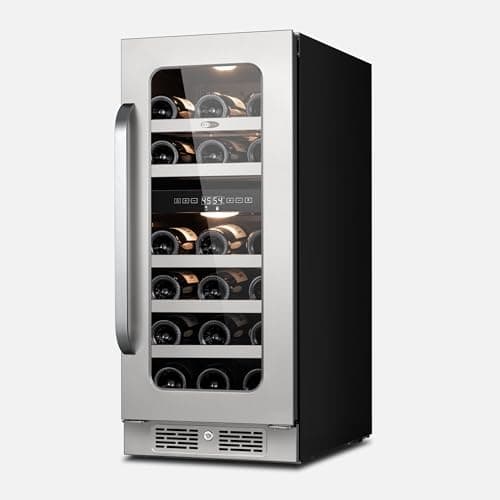
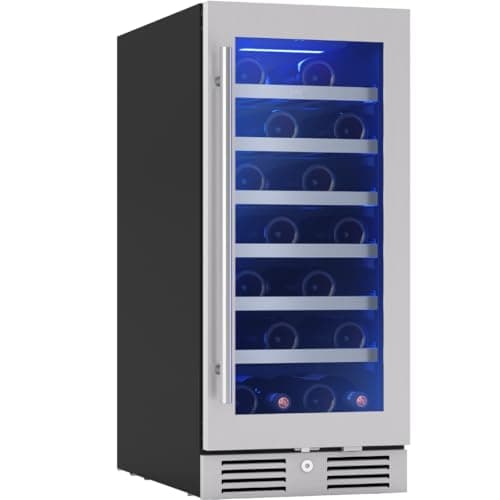
If you wanted quiet, buy a compressor cabinet that publishes a sound level. The Whynter BSR-029DW publishes under 38 dB and is rated for built-in or freestanding installation in a 15-inch opening; the Zephyr Presrv PRW15C01CG publishes 39 dBA with concealed zero-clearance hinges and an Energy Star listing. Both figures are quiet by any domestic standard, both cabinets are designed to be enclosed, and both reach temperatures no thermoelectric unit can. A compressor cycles, which is audible as a change rather than as a level — that is the honest trade, and it is a much smaller one than most people expect.
Both of those cabinets also publish a reversible door, which matters more in a built-in opening than it does in a room: once the cabinetry is cut, the swing is fixed by what is beside it. Reversible doors and door swing covers how to decide the hinge side before the order goes in, and why a concealed zero-clearance hinge is the specification that lets a door open flush in a run of units.
If you wanted no vibration, that is a real reason to prefer thermoelectric and it does not survive a built-in install either. The right move is a freestanding thermoelectric cabinet in an open position, or a compressor cabinet whose maker documents vibration control — the vibration and light roundup only ranks cabinets that publish something substantive about it.
If you wanted low running cost, note that the gap is smaller than the marketing suggests. The thermoelectric units here publish 65 W; the Whynter 15-inch compressor cabinet publishes 103.5 W, and it is not running continuously. Running costs works the arithmetic through, and the energy-efficiency roundup ranks on published consumption.
If you already own a thermoelectric cabinet
You can still make it look deliberate. What you cannot do is seal it in.
- Build an open niche, not a cabinet. Three sides and a top, open at the back, with the cabinet standing in it on its own feet. The unit keeps the free air it was designed for and the cabinetry still frames it.
- Leave the back wall out. If the run of units backs onto a utility space, a garage or a void, cutting the back panel away behind the cabinet gives the heat sink somewhere to dump. This is the single most effective modification available.
- Give it real clearance and accept the gap. Published clearances for freestanding cabinets are a minimum, not a target, and a visible few inches of air at the back is the price of the mechanism. How to make a wine fridge look built in covers the cabinetry detailing — fillers, panels and the plinth line — that makes an open niche read as joinery rather than as a gap.
The full version of this argument, including what it does to the warranty, is in can you put a freestanding wine fridge under a counter. The short version: a built-in-rated cabinet can almost always stand free, and a freestanding cabinet cannot be enclosed. The permission only runs one way.
The one case where it works
There is a real exception, and it is worth naming so this page is not more absolute than the facts are. A small thermoelectric cabinet installed in a cool, well-ventilated position with an open back — a basement bar, a pantry shelf with air behind it, a cellar-temperature utility room — is working in the conditions the technology is built for. In that setting it can be surrounded by cabinetry on three sides and behave perfectly, because the heat has an exit and the ambient temperature is already low.
That is not a built-in install, and no manufacturer will warrant it as one. But it is the configuration where somebody searching for a built-in thermoelectric cooler usually gets what they actually wanted: silence, no vibration, and a cabinet that looks fitted. Wine fridges for a basement covers that environment, and where to put a wine fridge works through the rest of the house room by room.