
What three hundred dollars actually buys
Three hundred dollars buys a cabinet that holds a dozen to eighteen bottles somewhere between cellar temperature and the low sixties. It does not buy two zones, a built-in rating, a published decibel figure, documented humidity control or wooden shelves. What is new at this ceiling, and the reason this page exists separately from best cheap wine fridges, is that one compressor cabinet now sits under it.
That matters more than any other difference on this page. A compressor cabinet reaches its set point and stays there whether the kitchen is 68°F or 84°F. A thermoelectric module pumps heat against the room, so its achievable minimum rises as the room warms: the published floor is a figure measured in a reasonable room, not a promise. The full mechanical argument is in compressor against thermoelectric.
The line that runs through this page
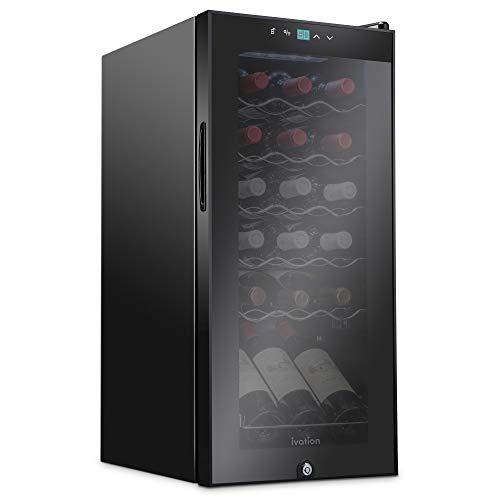
Above the line: a 41°F floor that the room does not get a vote on. The Ivation publishes 41–64°F and cools with a compressor, so 41°F is cold enough to serve Champagne and the figure holds in August. It also has a lockable door and a digital control rather than a dial. Eighteen bottles is the smallest capacity of any compressor cabinet on this site, and that is the trade.
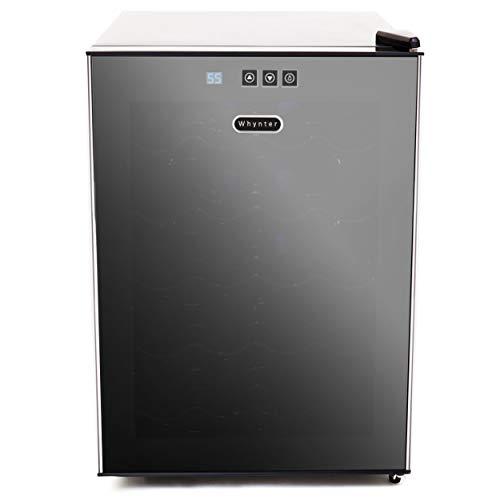
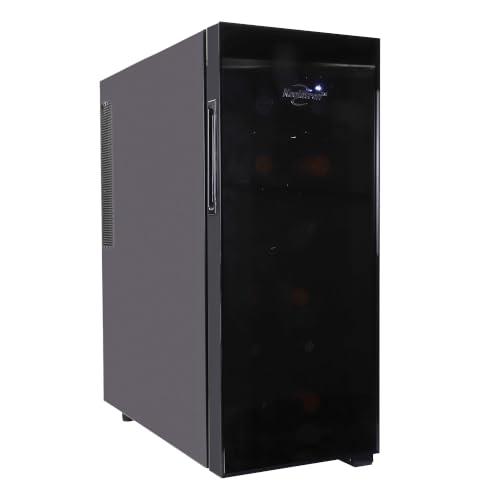
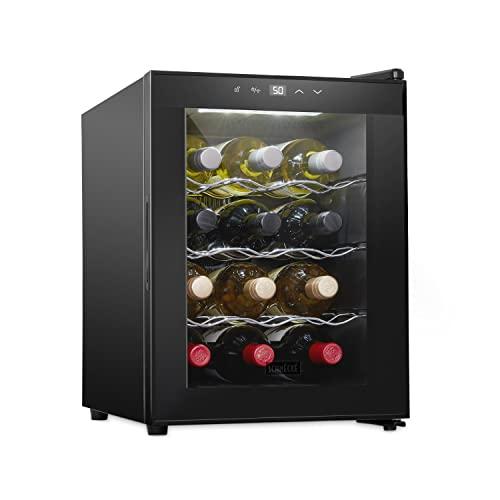
Below the line: 46°F floors, and the room decides. The Whynter WC-201TD and Koolatron WC12MG both publish 46–66°F and the Schmécké 46–64°F. That is genuine cellar and white-wine territory and it is not cold enough for sparkling service. It also assumes a room that is not hot: thermoelectric cooling loses the argument above roughly 77°F ambient, which rules all four of them out of a garage, a conservatory or an un-airconditioned apartment in summer. If that is your room, read best garage-ready wine fridges instead, and expect to spend more.
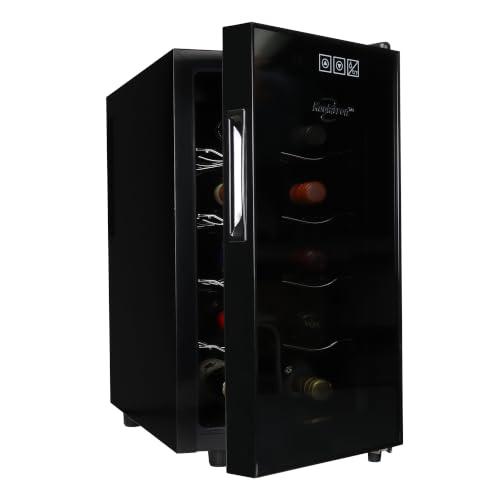
The compensation is real. There is no compressor in four of these five cabinets, so nothing cycles, nothing thumps at start-up and there is no vibration path into the wine — Koolatron specifies the WC12MG’s cooling as vibration-free, and the Whynter draws 65 W against the hundred-odd watts of a compressor cabinet. In a studio apartment or a bedroom that is often the better trade, and it is argued in full in best quiet wine fridges.
Capacity, and what the published counts assume
Ten to twenty bottles is the whole range here, and every one of those numbers is the manufacturer’s count using standard Bordeaux shapes. A Burgundy or Champagne bottle is wider at the shoulder, so a cabinet rated for twelve may take nine of them. The arithmetic, with the bottle dimensions it is based on, is in how many bottles does a wine fridge hold.
Bottles per dollar is worth computing before you buy at this ceiling, because it is lopsided. The Whynter’s twenty bottles is the most capacity under $300 and the Koolatron 10-bottle is the least; the Ivation sits between them and charges for the compressor rather than for the space. Nothing here is a cellar. Ten bottles is a week’s hosting; twenty is a working selection that you drink through and replace. If you buy by the case, you are in the wrong bracket — start at best wine fridges under $500, where 33-bottle compressor cabinets begin.
Shelving, doors and the bottles that will not fit
Every cabinet under $300 ships wire shelving. The Whynter has five removable stainless-trimmed chrome shelves and the Koolatron WC12MG’s wire racks lift out and adjust, which is the single most useful feature at this price: a shelf that comes out is the difference between a magnum going in and not. Wooden shelving starts one bracket up and is ranked in best wine fridges with wooden shelves.
Glazing varies more than you would expect. The Koolatron WC12MG uses a double-paned mirrored UV-protective door, which is worth having if the cabinet sits anywhere daylight reaches; the Schmécké uses smoked glass; the Whynter’s door is mirrored. Ultraviolet light is one of the four things that damage stored wine, and the other three are covered in what happens to wine if it is not stored properly.
The specifications that are simply absent here
Four things go missing under $300, and a page that pretends otherwise is lying to you. None of these five cabinets publishes a decibel figure. None publishes a humidity specification. None is rated for a built-in opening, so none of them may be enclosed in cabinetry — the reason is physical and it is explained in built-in against freestanding. And Koolatron does not publish a temperature range at all for the 10-bottle unit, which is why its row above reads “none published” rather than a number we guessed.
Two zones are also absent. Every cabinet here is single-zone, so you are choosing one temperature for everything inside. If you keep reds and whites together and want them both ready to pour, that is a dual-zone purchase and the cheapest honest route to it is best dual-zone wine fridges under $1,000. One temperature is not a disaster, though: 55°F suits almost everything in storage and you chill a bottle before serving. The settings are in wine fridge temperature settings.
When to spend less, and when to spend more
Spend less only if you want a dozen bottles held cool on a counter and nothing more. The Schmécké is the cheapest cabinet on this site and it does that job honestly.
Spend more if any one of four things is true: the room gets hot, you want to enclose the cabinet in cabinetry, you need two temperatures at once, or you buy by the case. Each of those is the bracket above, and at $500 you reach 33-bottle compressor cabinets with a built-in rating and wooden shelves. The step after that is best wine fridges under $1,000, which is where 46 bottles and two independently set zones appear.
Which one to buy
Buy the Ivation 18-Bottle Compressor if you want a cabinet that behaves like a wine fridge rather than an insulated box: 41°F floor, a lock, and a set point that survives a warm afternoon. Buy the Whynter WC-201TD if the cabinet will live in a quiet room and twenty bottles matters more than the floor temperature. Buy the Schmécké 12-bottle if the budget is the budget — it is the cheapest cabinet here and it is not a bad one. And if none of this convinces you, an unpowered rack in a cool interior cupboard stores wine better than a hot thermoelectric cabinet does; the comparison is in wine rack against wine fridge.