What counts as a wine cabinet
“Wine cabinet” is used for two completely different products. One is a refrigerated cellar cabinet — a tall, insulated, temperature-controlled appliance that happens to look like furniture, and those are covered in our high-end wine fridge roundup and in wine column versus undercounter. The other — the one people are usually shopping for at this price — is furniture: a sideboard, buffet or bar stand with wine racking and glass holders built in, with no cooling of any kind.
This page is about the second kind, because that is what the query means in practice and because the furniture half of this category had no page on this site. It is the thing you put in a dining room, a hallway or the corner of a living room so that the bottles you are going to drink in the next few months, the glasses, the opener and the ice bucket all live in one place instead of four. Judged as that, these pieces are genuinely useful. Judged as wine storage, they are a rack with doors, and we will be direct about the difference further down.
If what you actually want is bottles on a wall or a floor rack rather than a piece of furniture, start with best wine racks instead — it is cheaper per bottle by a wide margin, and for a tight room our small-space rack roundup is the better starting point.
Bottles per inch of wall
A cabinet is bought for a gap. The only honest way to compare these is published capacity against published footprint, so here is that table, with every figure taken from the listing cited under each pick.
The ranking above is not the price ranking, and that is the point of the table. The Kings Brand piece holds twice as many bottles as the ARTPOWER in five fewer inches of width and three fewer inches of depth, because it spends its volume on racking rather than on counter space and drawers. The GarveeHome is the density champion in relative terms: a dozen bottles and nine glasses inside 27 inches of wall, which is the measurement that matters in an apartment.
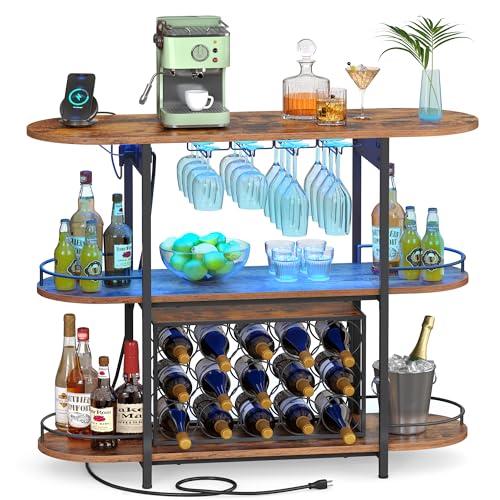
The VASAGLE is the awkward case. It publishes the best capacity-per-dollar figures on the page — 15 bottles on a removable rack, 8 to 12 glasses, three shelves, two AC outlets and two USB ports — and does not publish its overall dimensions at all. That is a real deduction for a piece of furniture, and it is why it is the budget pick rather than the top one.
A cabinet is not cellar storage
Everything on this page sits at room temperature, which means the room decides what happens to the wine. Wine keeps best at a steady cellar temperature in the mid-50s Fahrenheit, away from light and vibration; a dining room runs ten to twenty degrees warmer than that and swings with the seasons, and warm storage ages wine faster and less gracefully than cool storage does. Our wine storage temperature guide sets out the numbers, and what happens to wine that is not stored properly sets out the symptoms.
So the honest rule for a wine cabinet is this: it is excellent storage for wine you intend to drink within a few months, and it is the wrong place for anything you are keeping. A case of everyday red in a sideboard is fine. A bottle you were given for an anniversary in five years is not — that belongs in a cooled cabinet, and our long-term storage roundup exists for exactly that bottle.
The comparison most people are actually making is covered head-on in wine rack versus wine fridge: the furniture wins on cost, looks, bottle count and the fact that it needs no power; the appliance wins on everything to do with keeping the wine. Plenty of households end up with both, which is what the fridge-bay cabinet below is for.
Glassware is half the point
The practical reason to buy a cabinet rather than a rack is that it stores the things that go with the bottles. All five picks hold stemware, and they do it in two different ways that suit two different households.
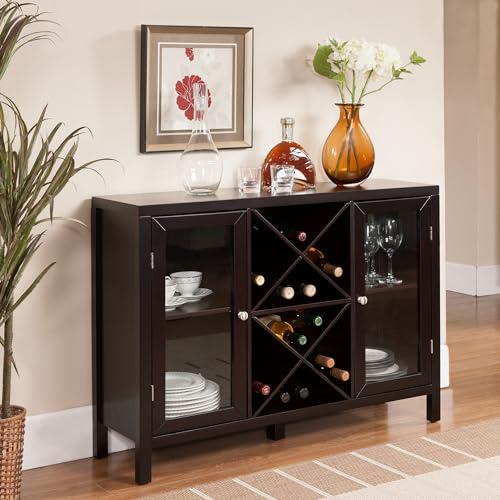
Hanging holders — the GarveeHome’s nine-glass rail, the ARTPOWER’s nine-glass rack, the VASAGLE’s eight-to-twelve-glass holder, the BROTTAR’s two holders — keep glasses bowl-down and visible. That is fast to use and it collects dust on the foot of every glass between parties. The Kings Brand approach is the opposite: two glass-front cabinets with adjustable shelves, so the stemware is enclosed and clean but you have to open a door to get it. If you entertain weekly, hang them. If you entertain four times a year, put them behind glass.
A note on hanging rails generally: they are sized for standard stems and they are not kind to a Burgundy bowl or a Zalto. If your glasses are tall or wide, measure the rail spacing before you commit, the same way you would for the dedicated stemware storage in our under-cabinet rack roundup.
Doors, mesh and light
Three door strategies appear in this class, and each one trades something.
Open shelving, as on the VASAGLE bar stand, is the cheapest and the most convenient, and it exposes the bottles to room light and dust. Light is not a trivial objection: ultraviolet and strong visible light drive the reactions that produce the wet cardboard and skunky notes of light-struck wine, which is why serious bottles are sold in dark glass and stored in the dark. For a few months of everyday drinking this is fine; for anything longer it is not.
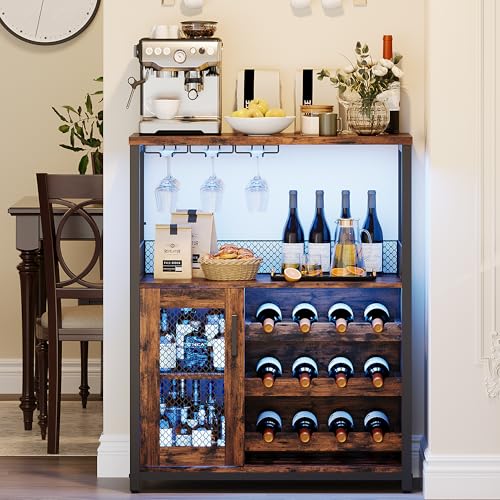
Mesh doors, as on the GarveeHome, ventilate while they screen. That is a sensible compromise in a humid room — a sealed cupboard in a damp house is how a musty smell starts, which is the subject of why a cabinet smells musty — and the mesh keeps dust off the labels without sealing moisture in.
Glass doors, as on the Kings Brand, keep glassware pristine and display it, and they do nothing whatsoever about light. Use the glass-front sections for stemware and barware, and keep the bottles in the racked, shaded part of the cabinet.
The cabinet with a fridge in it
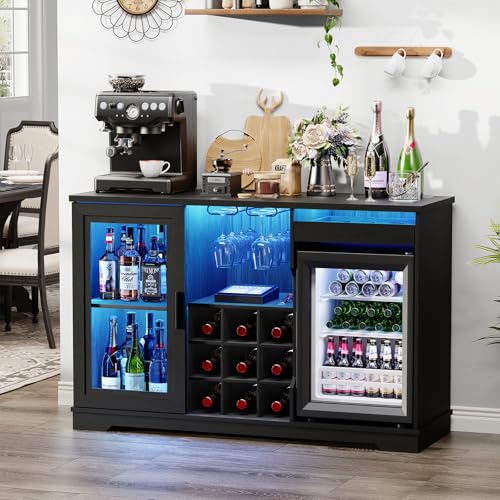
The BROTTAR 87010 is the one piece here that tries to solve the temperature problem rather than ignore it. It is a 47-inch buffet built around a bay sized for a mini fridge up to 15 inches wide, 15 deep and 21.6 high, with nine wine racks, two glass holders, drawers and a closed cabinet arranged around it; the listing states a fridge is included, and publishes the bay size so you can check a unit you already own against it.
Two warnings, because this is the pick most likely to disappoint. First, the bay height of 21.6 inches rules out most of the wine fridges people actually want to put in furniture: a 15-inch undercounter cabinet is typically 32 to 34 inches tall, so it will not go in. What fits is a small countertop unit — the class in our countertop wine fridge roundup — and that is a 6-to-18-bottle proposition, not a cellar.
Second, a compressor in an enclosed bay needs air. Freestanding wine fridges reject their heat out the back or the sides and the manual specifies a clearance for it; put one in a tight cupboard with no path for warm air and it runs hot, runs constantly and fails early. Our ventilation and clearance guide gives the figures, and the rule is simple: check the clearance your fridge’s manual demands before you trust any cabinet bay, including this one. If you want a cooled cabinet that is designed to be enclosed, you want a built-in unit instead — best built-in wine fridges is that page.
What these are actually made of
At this price, the honest answer is engineered board. The GarveeHome publishes MDF with iron legs. The ARTPOWER publishes a P2-grade wood panel with soft-rounded edges and ships anti-tip hardware. The BROTTAR publishes FSC-certified wood panel with a wood-panel tabletop. None of these is solid hardwood, none of them pretends to be, and all of them will hold the weight of the bottles they are rated for provided you assemble them properly and do not stand on them.
What almost nobody in this class publishes is a weight capacity, for the top or for the shelves, and that is the figure you would want before standing a 30-pound countertop wine fridge or an espresso machine on a sideboard. Four of our five picks publish no weight rating at all. Treat the top as a serving surface rather than an appliance platform unless the maker says otherwise, and if you do put an appliance on one, put it over a leg rather than in the middle of an unsupported span.
The ARTPOWER’s anti-tip hardware deserves a specific mention: it is the only pick here that ships with it, and a tall cabinet loaded with glass in a house with children or large dogs is exactly the furniture that should be strapped to a wall. Anti-tip kits are inexpensive and universal, so buy one for whichever cabinet you choose.
Measure before you order
Furniture is the one category on this site where the delivery, not the product, is the usual failure. Three measurements decide it, and none of them is on the listing: the gap you are filling, the route to it, and the height of the top relative to the thing beside it.
Measure the gap and subtract an inch at each side for the hands that will place it. Measure the narrowest point on the route — a stair turn, a door frame, a hallway pinch — because a 48-inch buffet in two boxes still has to come through it, and the BROTTAR listing specifically warns that its two packages may not arrive on the same day. And decide what the top is for: at 30 inches the Kings Brand and BROTTAR tops sit at dining-table height, while the GarveeHome at 36.2 and the ARTPOWER at 37.87 are counter-height work surfaces you can pour on comfortably standing up. Our wine rack sizing guide covers the bottle-dimension side of the same question, including why a Burgundy bottle does not fit a rack cut for Bordeaux.
Which of the five to buy
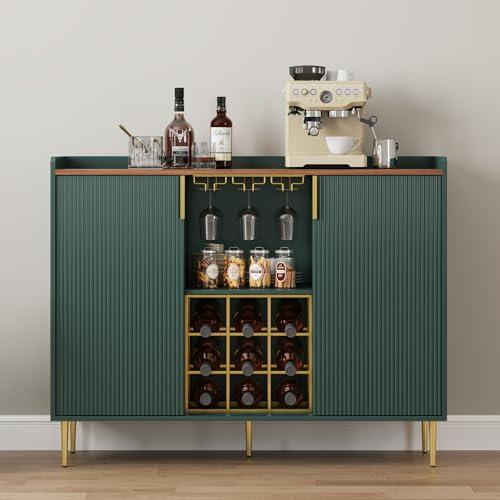
Buy the Kings Brand wine rack bar cabinet if you want the most wine in the least wall: 24 racked bottles, enclosed glassware either side, and a published 42 by 12 inch footprint narrow enough for a dining wall or a hallway. Buy the GarveeHome 3-tier if the room is small — twelve bottles, nine glasses and a ventilated mesh-door cabinet in 27 inches, at counter height. Buy the VASAGLE ISLAND if you want the most storage per dollar and can live with an open stand and an unpublished footprint; it is the budget pick, and the two AC outlets are more useful than they sound once an opener and an ice maker need power. Buy the BROTTAR 87010 if the plan is to keep chilled and unchilled bottles in one piece of furniture, and check your fridge against the published 15 by 15 by 21.6 inch bay and its ventilation clearance first. Buy the ARTPOWER 48-inch if the piece has to work as furniture in a room people sit in: it holds the fewest bottles per inch here, and it is the one that looks least like barware and ships with anti-tip hardware.
And if, having read the temperature section, you have decided the bottles matter more than the furniture does, the right next page is best wine fridges — a cooled cabinet costs more than any piece here and is the only one of the two that protects what is inside it.