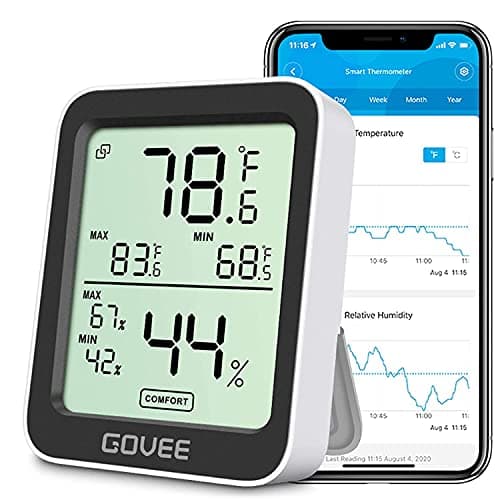
The Vacu Vin Wine Saver is the best wine accessory under $25: a hand pump and reusable stopper with no consumables, and a brand claim of up to ten days on an opened bottle. For a red that is too warm, the Corkcicle Air. The budget pick is the Govee H5075 thermometer and hygrometer, the cheapest product on this site, which tells you whether your storage is actually working.
How this page is funded. Cork & Cool earns a commission if you buy through the Amazon links below, at no extra cost to you. It never changes the order of this list — see our editorial policy and affiliate disclosure. Prices come from Amazon and are refreshed daily; the price on Amazon when you buy is always the one that counts.
Quick picks
Every model below, on the specifications that decide the purchase. Tap a row to jump to the full write-up.
Comparison of wine storage models by zones, capacity, cooling type, width, published noise rating and vibration.
#
Product
Best for
Zones
Bottles
Cooling
Width
Noise
Vibration
Price
1
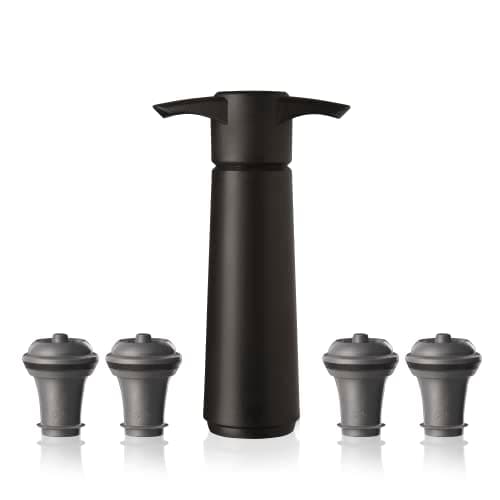
Vacu Vin Wine SaverMost opened bottles, most weeks
A hand pump and a rubber stopper that pull air out of the bottle; the brand states up to ten days.
#ad — paid link. How this is funded. Price as of November 28, 2026; check Amazon for the current price.
2
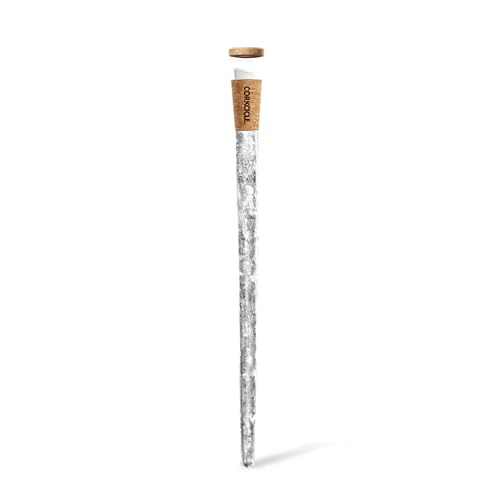
Corkcicle AirBringing a red down
A freezable gel stick that goes into the bottle and doubles as a pour-through aerator: the listing states a room-temperature red is chilled in about fifteen minutes.
#ad — paid link. How this is funded. Price as of November 28, 2026; check Amazon for the current price.
6
True Wine Decanter Drying StandDrying a decanter
Holds a decanter upside down and clear of the counter so the inside drains and dries, on a rubber-coated arm that takes the weight without marking the glass.
#ad — paid link. How this is funded. Price as of November 28, 2026; check Amazon for the current price.
“Not published” means the manufacturer does not publish that figure. We do not estimate it. Prices and product photographs come from Amazon and are refreshed daily.
How we compared
We compared published manufacturer specifications, official product documentation and verified owner reports across 6 models. We do not physically test these units, we have no laboratory, and we do not accept payment for placement. Where a manufacturer does not publish a figure — noise ratings, most often — this page says so rather than estimating it.
What we weighted
A live price under $25 on the day we read it
One clearly defined job each, so the page is not six versions of the same product
Whether the item needs consumables — a capsule, a refill or a battery — because that is the real cost over a year
A published figure where the maker gives one: days of preservation, bottles per charge, accuracy in degrees
Whether the claim is the manufacturer's or measurable, stated plainly either way
Build and reusability, because at this price the failure mode is a thing you throw away
What it does not do, which on cheap wine gear is usually the most useful line in the review
Every model in detail
Six items, each the cheapest honest answer to a different problem, every one live-priced under $25 when this page was last reviewed. Nothing here is a gift set: each one earns its place by fixing something specific.
#1 — Most opened bottles, most weeks
Vacu Vin Wine Saver
A hand pump and a rubber stopper that pull air out of the bottle; the brand states up to ten days.
Product photograph via Amazon.
Published specifications
Capacity
Not published
Zones
Not published
Cooling
Unpowered
Temperature range
Not published
Noise rating
Not published by the manufacturer
Installation
Not applicable
· Method: manual vacuum pump plus reusable stopper
#ad — paid link. How this is funded. Price as of November 28, 2026; check Amazon for the current price.
#2 — Bringing a red down
Corkcicle Air
A freezable gel stick that goes into the bottle and doubles as a pour-through aerator: the listing states a room-temperature red is chilled in about fifteen minutes.
Product photograph via Amazon.
Published specifications
Capacity
Not published
Zones
Not published
Cooling
Unpowered
Temperature range
Not published
Noise rating
Not published by the manufacturer
Installation
Not applicable
· Method: freeze the stick, insert into the bottle
· Freeze time: about 90 minutes before use
· Listing claim: a room-temperature red is chilled in about 15 minutes
· Listing claim: keeps whites cold for about an hour
· Built-in pour-through aerator: the wine aerates as it passes through the head
· BPA-free plastic body with a non-toxic freezing gel; about 12 in long (retailer figure)
The display means you can check the cabinet through the glass without opening it or picking up a phone
Publishes an accuracy figure for both temperature and humidity
Twenty days of exportable history is enough to see a compressor cycling
The cheapest route to a second opinion on any cabinet
What does not
Govee publishes no measuring range for either temperature or humidity on this product page
The two Bluetooth range figures on Govee's own page disagree: up to 196 ft in the feature copy, 164 ft in the FAQ
Bluetooth only, so it tells you nothing while you are away from the house
Who should skip it. Skip it if the cabinet has a solid or panel-ready door, or if you want to be alerted to a failure while you are out. Neither is a Bluetooth sensor's job.
The only mechanism here that does not rely on the cork holding together under load
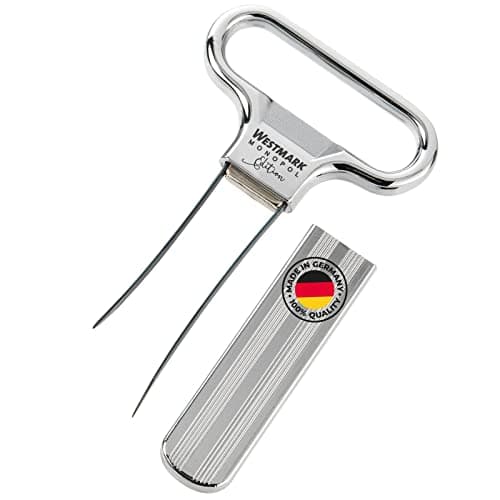
Takes out a cork intact, so it can be pushed back into the neck of the same bottle
Nothing to wear out: there is no worm, no gear and no battery
Cheapest insurance available for a cellar with bottles over about fifteen years old
What does not
Genuinely hard to learn — the first attempts usually push the cork in rather than easing it out
Westmark publishes different casing materials across its Ah-So editions, so the handle you receive may not match the one in a given review
Two-prong pullers move in and out of stock on Amazon more than any other opener type here
Slow: it is a careful tool, not a party tool
Who should skip it. Skip it if every bottle you own has a screw cap or a cork under five years old. You will never need it, and you will not enjoy practicing.
#ad — paid link. How this is funded. Price as of November 28, 2026; check Amazon for the current price.
#6 — Drying a decanter
True Wine Decanter Drying Stand
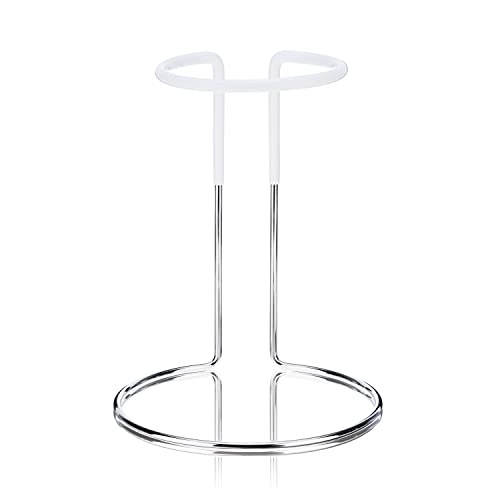
Holds a decanter upside down and clear of the counter so the inside drains and dries, on a rubber-coated arm that takes the weight without marking the glass.
Product photograph via Amazon.
Published specifications
Capacity
Not published
Zones
Not published
Cooling
Unpowered
Temperature range
Not published
Noise rating
Not published by the manufacturer
Installation
Not applicable
· Holds one decanter inverted, suspended for drainage and air flow
· Material: chrome-plated iron with a PVC rubber overlay on the holder arm
Inverted and suspended is the only position a narrow-necked vessel actually dries in
The rubber overlay sits between chrome and crystal, which is the part a tea towel and a draining board get wrong
Doubles as storage: kept upside down, the decanter stops collecting dust between bottles
Low and light enough to live beside the sink rather than in a cupboard
What does not
One decanter at a time
True publishes no neck or base diameter, so an unusually wide-bottomed decanter is a measure-first purchase
Chrome-plated iron rather than stainless, and the listing specifies hand washing only
Holds the decanter and nothing else — glasses need their own rack
Who should skip it. Skip it if you do not own a decanter, or if you are content to stand it on a folded tea towel and accept the water mark. It solves exactly one problem, and only if you have that problem.
#ad — paid link. How this is funded. Price as of November 28, 2026; check Amazon for the current price.
Keeping an opened bottle
The most common wine problem in any household is half a bottle and no plan. The Vacu Vin Wine Saver is the cheapest credible answer: a manual pump and a reusable rubber stopper that pull air out of the bottle, with no capsules and nothing to run out of. Vacu Vin states up to ten days, which is longer than most households need.
Be clear about the mechanism, because the marketing in this category blurs it. A vacuum slows oxidation; it does not prevent it, and pulling a vacuum also pulls out aromatics, which is noticeable on a delicate wine. An argon system displaces the oxygen instead, which is a different thing and costs ten times as much — the comparison is made properly in Coravin against Vacu Vin and the whole class is ranked in best wine preservation systems. How long an opened bottle really lasts, by style, is in how long does wine last.
What each pick under $25 is for
Item
The job
Consumables
Published claim
Vacu Vin Wine Saver
Keeping an opened bottle
None
Up to 10 days (brand claim)
Corkcicle Air
Chilling a warm red, aerating as you pour
None, needs a freezer
Red chilled in about 15 min (listing claim)
Oster FPSTBW8207-S
Opening bottles without wrist force
Rechargeable, no refills
Up to 30 bottles per charge
Govee H5075
Measuring cabinet temperature and humidity
2 x AAA, about 6 months
±0.5°F, ±3% RH
Westmark Ah-So
Old or crumbling corks
None, nothing to wear out
No screw enters the cork
True Decanter Drying Stand
Draining and drying a decanter
None
Holds one decanter inverted
Getting the temperature right
Almost every household serves red too warm and white too cold. The Corkcicle Air is the only cheap product that fixes the harder half of that: a freezable gel stick that goes into the bottle and chills it from the inside, with a pour-through aerator in the head so the stick stays in while you serve. The listing states a room-temperature red is chilled in about fifteen minutes and whites stay cold for about an hour. It needs about ninety minutes in the freezer first, and Corkcicle publishes elapsed times rather than temperatures, so there is no figure to hold it to.
It does one bottle at a time. If the problem is a bottle that needs to come down from room temperature in a hurry, the arithmetic of how long that actually takes is in how long does wine take to chill, and the fuller range of chilling tools is in best wine chillers.
Opening the bottle, including the awkward ones
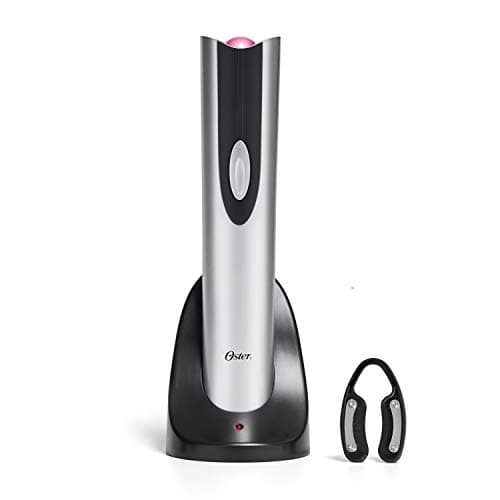
Two openers are here for two different reasons. The Oster FPSTBW8207-S is a cordless electric opener: press and hold, the motor drives the worm in and lifts the cork, then reverses to drop it. Oster publishes up to thirty bottles per charge and includes a foil cutter and charging base. For anyone who cannot or does not want to apply wrist force, that is not a gadget, it is access. Four other powered units are compared against it in best electric wine openers, including one that needs no button at all.
The Westmark Ah-So is the opposite kind of tool. Two unequal steel prongs slide down either side of the cork and twist it out whole, with nothing driven through the middle — which is the entire point on a bottle over about fifteen years old, where a worm tears the cork apart. It is genuinely hard to learn: the first attempts usually push the cork in rather than easing it out. It is also the cheapest insurance available for an older cellar. Every mechanism in the category is compared in best wine openers.
Knowing whether your storage works
The Govee H5075 is the cheapest product on this site and arguably the most useful one on this page, because it is the only item here that tells you a fact. It publishes temperature accuracy of ±0.5°F and humidity accuracy of ±3% RH, refreshes every two seconds, stores twenty days of history with CSV export, and has an LCD on the sensor itself — so you can read a glass-fronted cabinet through the door without opening it.
Two honest limits. It is Bluetooth only, so it tells you nothing while you are out of the house, and Govee publishes no measuring range for either temperature or humidity on its product page. If you want alerts while you are away, that is a Wi-Fi sensor and the class is ranked in best wine fridge thermometers. What the readings should say is in wine storage temperature and wine fridge humidity.
The sixth pick is the quiet one. The True Decanter Drying Stand holds a decanter inverted and clear of the counter on a rubber-coated arm, which is the only position a narrow-necked vessel actually dries in, and keeps it dust-free between bottles. If you own a decanter you already know why a tea towel does not work.
Consumables: the cost that is not on the price tag
Four of these six have no running cost at all: the Vacu Vin, the Corkcicle, the Westmark and the True stand are one-time purchases with nothing to refill. The Oster recharges. The Govee takes two AAA cells about every six months. That matters because the expensive preservation systems in this category run on argon capsules, which turns a one-off purchase into a cost per pour — a trade worth making for a serious bottle and not for a Tuesday one.
What to buy first
If you buy one thing, buy the Vacu Vin: it addresses the problem you actually have most weeks and it costs less than the wine it protects. If you buy two, add the Govee H5075, because it is the only way to know whether the cupboard or cabinet you are already using is doing its job. If your corks are old, the Westmark Ah-So will save a bottle that matters. Everything above $25 in this category is in best wine serving accessories under $100.
Questions people actually ask
▸ Is cheap wine gear worth buying, or is it all the same?
It is not all the same, but the differences are about mechanism rather than quality. A vacuum pump, an argon stopper and a freezer stick do three genuinely different things, and the cheapest version of the right mechanism beats the expensive version of the wrong one.
▸ Do I need an aerator as well as a decanter?
No. Both introduce air; a decanter also separates sediment, which an in-bottle aerator cannot. The Corkcicle Air aerates as it pours, which covers the casual case. Decanters are ranked in best wine decanters, and the aerators themselves — including the two that do filter sediment — in best wine aerators.